








- EDITIONS:
 Spanish News Today
 Alicante Today
 Andalucia Today
Spanish News Today Editors Roundup Weekly Bulletin April 24

TOP STORIES: "EU pet passports no longer valid for travel to Spain with dogs and cats" & "Get paid to recycle with Spain’s new deposit return scheme"
It’s one of those weeks where it’s all change – change of weather back to the colder and more drizzly (just as we were all changing from our winter to summer wardrobes!); a change in travel rules for people entering Spain and the EU with pets; plus changes are gonna come for Ryanair check-in at the airport and the way people recycle in Spain.
What’s not changing is the unbeatable quality of our Editor’s Roundup Weekly Bulletin, which is as smooth a transition as any to launch into this week’s edition!
Pet sounds

If you’re someone who regularly hops between the UK and Spain with a dog, cat or even a ferret, there’s a change coming that you really need to know about before you book anything.
Basically, checks on EU pet passports are to be tightened up and the authorities will close a big loophole. In practice, that means EU pet passports will no longer be accepted for UK residents travelling into the EU, even if they were issued in Europe or used without issues in the past.
The background to this goes back to the EU Animal Health Law from 2016. That set out that EU pet passports are meant for pets that are based in EU countries, basically animals living with owners who are resident in the EU.
After Brexit, pets travelling from Great Britain were classed as coming from outside the EU. Under the official rules, EU pet passports should not have been used for those journeys anymore.
In reality, a lot of people still managed to get EU-issued pet passports through vets in Spain and other EU countries, and carried on using them for travel between the UK and Europe without anyone batting an eyelid. It’s been something of a grey area at times, but that is now expected to come to an end as enforcement tightens.
It’s been confusing for quite a lot of people, especially because things have been a bit inconsistent since Brexit, so it helps to clear up what’s actually going on. Unfortunately, there is still not 100% agreement even among experts in the field as to what is required and when the rules are changing.
This was supposed to be coming in this Wednesday, but now some people are saying that there will still be flexibility with the rules until September, after the summer rush has died down.
So, assuming these changes are taking effect as of right now, what do you actually need instead if you’re travelling with a pet?
Well, for most UK residents, the key document is an Animal Health Certificate, usually called an AHC. This has to be issued by an Official Veterinarian before you travel.
There are a couple of important things to know here. The certificate must be issued within 10 days of your trip, it only covers one journey into the EU and you need a new one every time you travel.
In practical terms, that means booking a vet appointment before each trip, even if you’re doing the same journey quite often. Prices usually start at around £90 per pet, but that can vary depending on the vet.
These rules apply when travelling from Great Britain into the EU. The requirements for bringing your pet back into the UK stay the same for now.
For anyone regularly going back and forth between the UK and Spain with a pet, whether it’s for holidays, family visits or a second home, it does make things a bit more admin-heavy than before. Not to mention more expensive.
There isn’t really a shortcut around it anymore for UK residents, so it’s more about planning ahead, getting the vet appointment booked in good time and factoring in the extra cost each time you travel.
Before setting off it’s always worth double checking the latest official advice, just in case anything has changed. The Animal and Plant Health Agency is still the main place for up-to-date guidance on travelling with pets from the UK.
Can-do attitude: Spain stops bottling it up!

Here’s one that some of you northern Europeans will recognise from home, and probably welcome as a great addition for Spain. The country has decided this week to make a long-overdue shift in how it handles drink containers, á la countries like Germany, Norway and the Netherlands, in which it will pay people to bring their bottles and cans back for recycling.
It applies to plastic bottles, aluminium cans and cartons up to three litres, covering everything from water and soft drinks to beer and juice. All you have to do is take your empty back to a shop or a designated machine – and not even the same one you bought it from – and you’ll get a shiny 10-cent piece in your hand. Cashback!
Okay, so full disclosure right here: there is a flip side to this, and it’s that the price of each bottle of water and each can of Coke will go up by 10 cents (as if the cost of living weren’t going up enough already!). The idea is, though, that this is a kind of ‘deposit’, and if you recycle it gets refunded in full.
It’s not all happening at once, though. The scheme is slated to come into force beginning in November of this year, though knowing Spain there’s every likelihood that we could arrive in November and they could push it back by another six months.
Obviously, the idea is to encourage people to recycle more, but to be honest, it does feel like a bit of a slap in the face for those of us who regularly recycled all their bottles in the big yellow bins anyway. Still, you’d like to think they wouldn’t be doing it if it weren’t necessary.
I thought recycling was now a part of everyone’s daily consciousness – just something you do – but apparently that’s not so. Spain missed its EU recycling targets in 2023. At the moment, only around 40% of drinks containers are recycled nationwide, well short of the 90% target the EU is aiming for.
Countries that already run deposit schemes, such as Germany and the Netherlands, are comfortably hitting those levels, which is largely why this model has been adopted. It works in those places partly because it adds a practical incentive to recycle properly, turning what is often treated as a chore into something closer to a habit with a reward attached.
That said, there are still a few loose ends. It’s not yet clear who will manage the system at a national level, and many retailers are waiting for detailed guidance on how it will actually work in practice. Installing collection machines, updating tills and training staff is no small task, especially across hundreds of thousands of shops.
Glass bottles and other types of packaging are also not included for now, though that could change further down the line. However, with the deadline now fixed for cans and bottles just 7 months away, the rollout window is expected to be tight. Let’s hope Spain doesn’t bottle it!
Who takes checked luggage on a Ryanair flight, anyway?

Ryanair passengers heading through Spanish airports and the rest of its network are going to want to take note of a small but pretty important change coming in later this year.
From Monday November 10, the airline is making a slight alteration to its check-in deadline. The cut-off for baggage drop and check-in will move from 40 minutes before departure to a full hour before the flight.
It’s not a huge shift on paper, but it does mean anyone used to arriving at the airport on the tighter side will need to rethink their timing a little, especially when bags are involved.
The change applies across all Ryanair airports, including Spain, and covers both check-in desks and baggage drop-off points.
According to the airline, the idea is to ease pressure at airports and reduce the number of passengers who end up rushing through security or passport control, or even end up missing their flights because queues have held them up.
By bringing the deadline forward, Ryanair explained it should give people a bit more breathing room to get through the airport without the stress of watching the clock.
The bottom line is it’s only going to affect passengers checking in luggage. Ryanair says that’s around 20% of its customers. The remaining 80% travelling with hand luggage only and checking in online beforehand won’t see any real difference and can still head straight through security when they arrive.
Alongside this change, Ryanair is also rolling out more self-service baggage kiosks across its network. By October, more than 95% of its airports are expected to have them installed. These allow passengers to check in bags and print luggage tags themselves, which the airline says should help speed things up and cut down queues at busy times.
For anyone who hasn’t used them before, checked baggage pricing can vary depending on when it’s booked. A 20kg bag booked online usually ranges from €18.99 to €59.99, while paying at the airport tends to cost more, typically €33.99 to €54.99.
There’s also a 23kg option available for online booking only, usually priced between €29.99 and €80.99 per flight.
All checked bags must be dropped off before security and will travel in the aircraft hold. Ryanair also charges €13 per extra kilo if a bag goes over its allowance, something that can quickly add up if you’re not paying attention at the weighing scale.
Murcia
The main story from the Region of Murcia this week is the tragic incident that occurred on Monday when three people were found dead and two rescued from a drifting migrant boat off the Cartagena coast.
The vessel was spotted on Monday afternoon, April 20, around 21 miles off the coast by a French Navy patrol ship. Murcia’s Salvamento Marítimo rescue boat ‘Salvamar Draco’ was sent out to intercept it and bring those on board back to port.
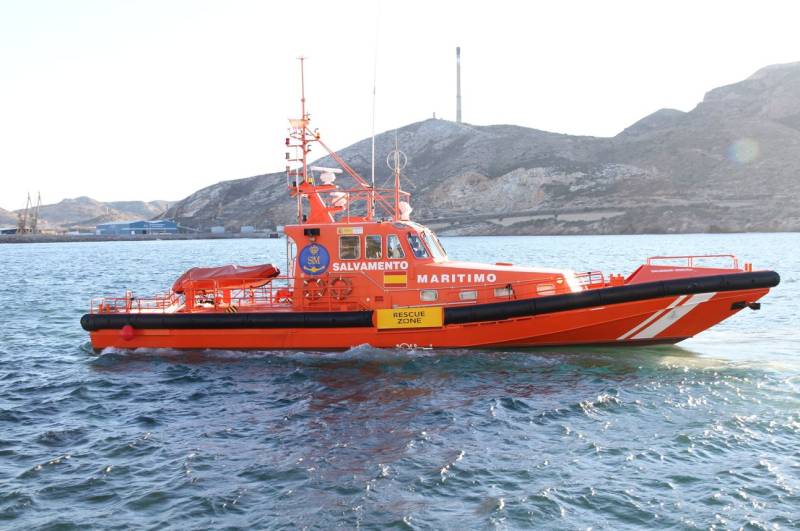 On board were five men, only two of whom were still alive. The three deceased were brought into the port of Santa Lucía in Cartagena, while the two survivors, described as exhausted, were treated by Cruz Roja before being taken to the hospital.
Initial statements suggest that, after setting off from northern Africa, those on board may have spent up to 20 days at sea when their motor suffered some sort of failure. Immediately, authorities suspected that there could have been more people on board the boat who never even made it into port, as it is very strange for such vessels to travel with such a light load.
This was half-confirmed when, not long after, crew members on board the Sapphire Princess cruise ship discovered five bodies floating in the sea around 140 miles off Cabo de Palos. The ship raised the alarm and searched the surrounding area before docking in Cartagena, where the bodies were transferred for post-mortem examination. Then, just this Friday morning, another dead body was found near Cabo de Palos lighthouse.
Police are now working to establish whether these subsequent victims were among those travelling on the same boat found earlier in the week. According to the two survivors, the vessel may have left Algeria with as many as 18 people on board, which would mean a significant number are still missing at sea.
One of the survivors has since been arrested on suspicion of manslaughter and facilitating illegal immigration, as investigators try to piece together what happened during what appears to have been a prolonged and desperate journey at sea.
Talking of the Cabo de Palos lighthouse, the area’s most famous landmark is set to undergo a €467,000 transformation that will improve access, safety and the overall visitor experience.
The project will see the reconstruction of the access staircase using materials designed to blend into the landscape, along with the addition of a new safety barrier and a viewpoint with benches.
Further work includes resurfacing the surrounding road and esplanade, restoring stone walls and updating drainage systems, as well as adding improved lighting and telecommunications infrastructure. Once it’s finished, it should make the area easier to access while still holding on to what makes Cabo de Palos so popular.
 It’s also been a big week for one of Murcia’s most recognisable names. Carlos Alcaraz has been named World Sportsman of the Year at the 2026 Laureus Awards, following his amazing 2025 season that saw him return to world number one and win both Roland Garros and the US Open.
The award was presented in Madrid and recognised what has been a remarkable run of success, with Alcaraz also completing the Career Grand Slam earlier this year at the Australian Open.
However, it’s not all good news for Carlitos at the moment, as he is currently dealing with a wrist injury, which has already forced him to withdraw from recent tournaments, and his return date remains uncertain. There is still hope he will be fit in time for Roland Garros, although that will depend on how his recovery progresses over the coming weeks.
Somewhere else blending sporting history with community pride is Fuente Álamo de Murcia, but in a much different way. The town’s abandoned La Torrica racetrack site, located close to the Hacienda del Álamo residential resort, is set to be transformed into a large public park after years of delays, failed plans and ongoing problems.
Originally intended as a motorsport venue, the site was never fully opened and instead became known for illegal gatherings, including a large rave in 2023 that drew thousands of people and left behind significant damage.
Now, after years of uncertainty, the council has decided to move away from motorsport altogether, cutting its losses, and to repurpose the area into a big public park that everyone can enjoy. About time – it should be a great development for the area!
Over in La Manga, local businesses made headlines as they called for changes to beach rules ahead of the busy season. One of the biggest headaches is how the rules for beach bars, our beloved chiringuitos, are being applied.
Right now, the law treats the bars and the sunbed rentals as two completely different businesses that have to be kept separate. This means there is often a massive 50-metre gap between your sunbed and the place you buy a drink. While that might look fine on a spreadsheet in an office, it’s a total pain for holidaymakers who have to trek across the hot sand just to get some lunch or a bottle of water.
The other major worry is safety out on the water, specifically when it comes to jet skis in the Mar Menor. The problem isn’t the rules themselves, but rather the fact that they aren’t being followed or enforced. There have been constant complaints about jet skis speeding into areas clearly marked out for swimmers. Regional officials have promised they will look into both issues.
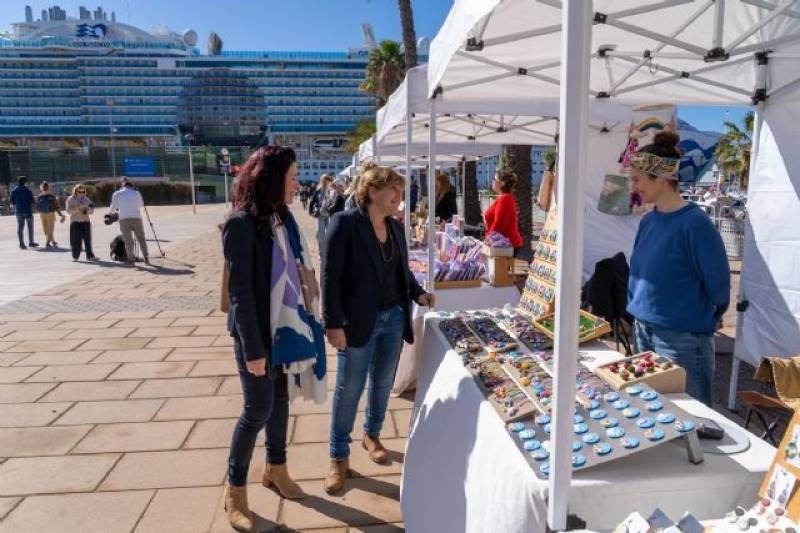 And finally, looking ahead to summer, plans have been confirmed for a dedicated artisan market in Plaza Bohemia in La Manga. The project will bring 30 stalls focused entirely on handmade crafts and jewellery to one of the area’s busiest spots, running from mid-June through to mid-September.
The project is intended to support small artisans and independent entrepreneurs. Plaza Bohemia is already a popular spot for strolling and meeting up with friends and family in the summer, and the artisan market will be a nice addition to the area.
Meanwhile, for this weekend just coming up, there are still spaces available on this guided tour IN ENGLISH of Gebas in the Sierra Espuña mountains on Saturday morning. For foodies, this weekend is also the last few days of the Red Prawn festival in Águilas, where you can try an almost infinite number of prawn-based tapas and dishes. Alternatively, if you prefer meat to seafood, you could head to The Burger Cup at the Parque Almenara shopping centre in Lorca, being held all weekend long.
See our EVENTS DIARY for more events and activities coming up soon in the Region of Murcia:
Spain
Spain has set out a major new housing push this week, with the government preparing to approve a State Housing Plan worth up to €7 billion between now and 2030. The plan marks a sizeable jump in funding, with the budget around three times larger than the previous programme, and its aim is to tackle the country’s housing problems from several angles at once.
Around 40% of the money is earmarked for public housing, 30% for renovations and the rest for measures to help younger people move out of the family home.
The funding will be split 60-40 between Madrid and the regional governments, with each region then managing its own share and launching its own grant schemes. It sounds unfair at first, but when you consider that the capital is far and away the biggest population centre in the country, it actually makes sense.
It’s also one of the places where the housing crisis is most out of control, with ordinary working people being priced out of both renting and buying due to a combination of factors: increasing demand, low construction in desirable areas, speculation by investment firms, a fear of squatters stopping people from renting out empty properties and, of course, the oft-touted tourist rental sector.

Hence, the government’s new Housing Plan, which also includes strong support for home improvements too, giving grants of up to €20,500 for energy-efficient renovations, plus extra help for accessibility and structural work.
Crucially, the plan includes incentives to bring empty homes back into use, as well as new support for first-time buyers and renters, with some young people able to receive up to €15,000 to buy in smaller towns. The government says the measures are designed to boost supply, improve affordability and restore confidence in the housing system. Time will tell whether it’s enough.
That broader sense of public concern runs through another issue this week, with health experts warning that measles is spreading again at a worrying pace. Spain has already recorded 101 cases in the first two months of 2026, making it the second most affected country in the EU so far this year.
The European Centre for Disease Prevention and Control says transmission typically rises in spring, which is why doctors are watching the situation closely.
Measles is highly contagious, spreads through the air and can linger for hours, meaning it can pass quickly in enclosed spaces. Experts say more than 90% of cases occur in unvaccinated people, while two doses of the MMR vaccine offer more than 95% protection.
Doctors are also clear that this is not a trivial illness, with possible complications including pneumonia, ear infections, seizures and, in more serious cases, encephalitis. Spain’s loss of measles-free status has been described as a wake-up call, and the message from health professionals is simple enough: check your vaccination status and stay alert.
And to holiday plans, now, the aviation sector has also been sending out mixed messages this week, leaving travellers to Spain wondering whether to book now or hold off. On one side, the Spanish airline industry insists there is no immediate danger to operations from the so-called fuel shortage, with supply chains and contracts in place to keep flights running more or less as normal.
Javier Gándara, president of the Spanish Airline Association, said kerosene prices have “doubled in recent weeks” because of the conflict in Iran, but stressed that supply at Spanish airports is “guaranteed” and that they “do not anticipate any further cancellations”. He also said around 80% of aviation fuel used in Spanish airports is refined locally, which helps cushion the impact. But the reassuring tone is not shared by everyone.
Ryanair, other budget carriers and ACI Europe have warned the EU about “growing concern” over jet fuel availability, while one professor said there is enough fuel for six weeks, which gives you an idea of how muddy the picture is.
For now, airlines are still urging passengers to book early to avoid higher fares, but the sector certainly does not sound fully settled yet.
Alicante
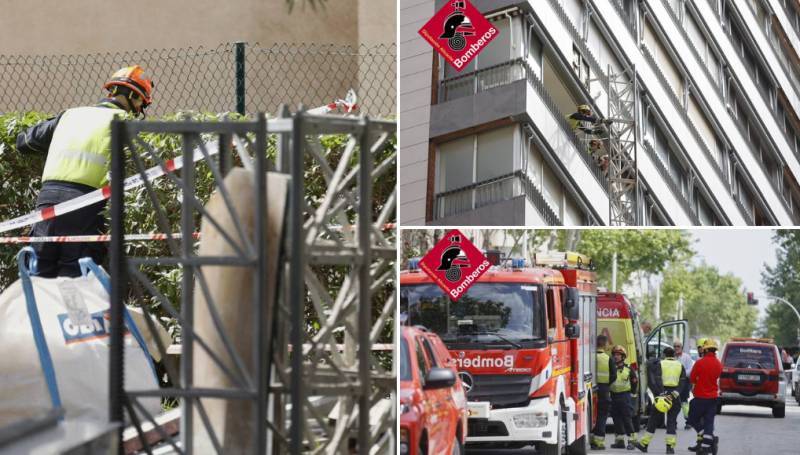
Tragedy struck the Costa Blanca this week when scaffolding collapsed from the 13th floor of a high-rise building on Benidorm’s Calle Ibiza late on Wednesday morning, killing two construction workers, aged 26 and 45. A third colleague survived after being left stranded partway down the building and was eventually helped to safety by people inside a nearby apartment.
The men had been working on façade renovations at the Principado Europa tower, a project that was reportedly nearing completion after more than a year on site. Witnesses described a sudden crash of metal and debris, followed by dust and confusion.
Emergency services responded quickly, but both victims were confirmed dead shortly afterwards. Investigators are now trying to establish exactly what caused the collapse, though as local officials acknowledged, accidents like this can be difficult to foresee.
Alicante is also home to Spain’s smallest inhabited island, the Isla de Tabarca, located about 3 miles off the coast of Santa Pola, where residents have begun the process of seeking administrative independence to break free of its overlord, the Ayuntamiento de Alicante.
With a winter population of around 60 people, the hope for the tabarquinos is that they will be able to gain more direct control over services and funding for their tight-knit little community.
And the thing is, despite being a well-known day-trip destination in summer, the island lacks basic infrastructure for those who actually live there year-round. Transport depends entirely on boats that can be cancelled at short notice, especially if there are winter storms or choppy waves; there is no permanent medical service, and maintenance of the island’s historic buildings is described as patchy at best.
Residents say requests for improvements have been going nowhere for more than a decade, and so now they’ve decided to try to take matters into their own hands and try to take fiscal responsibility for themselves instead of relying on handouts from the mainland.
By applying for ‘minor local entity’ status, Tabarca would be able to access funding more directly and manage certain services itself. The city council in Alicante, eager to defend its honour, disputes the idea that the island has been neglected, but for those living there, the move reflects a sense that waiting for solutions has not delivered much so far.
We might have to wait a while to see if they finally manage to achieve their independence, because – as with anything related to red tape – it could be a slow process. The Spanish even have a phrase for it: ‘Las cosas del palacio van despacio’ (roughly: ‘Palace business goes slowly’). One to whip out at your next meeting with officialdom in Spain!
 Back on the mainland, Torrevieja is taking a more proactive approach to shaping its future, with plans for a new gastronomic market that aims to do more than just sell fresh produce. The La Plasa project will combine a traditional market with a modern food hall, designed to keep the marketspace active throughout the day rather than shutting down after the morning rush.
Covering more than 2,000 square metres, the development is expected to bring together local traders, gourmet food outlets and places to eat on site, following a model that has already proved popular in cities like Madrid and Seville. The council hopes it will act as a focal point for both residents and visitors, helping to revitalise the town centre while creating jobs and supporting small businesses.
There is also a clear shift in how these kinds of spaces are being used. Markets are no longer just about buying ingredients; they are becoming social and cultural hubs in their own right. With around €1 million in private investment and opening planned for late 2026 or early 2027, Torrevieja is positioning itself to tap into that trend.
Andalucía
Seville’s famous April Fair is now in full swing, with the Real de Los Remedios once again transformed into a buzzing little city of its own, full of horses, music, glowing lights and more than 1,000 casetas. It is one of those wonderfully Andalusian scenes that feels both festive and completely singular, and this year it is expected to draw around 3 million visitors over the six-day run.
 The fair got underway with the traditional carriage driving exhibition, which marked its 40th anniversary and brought more than 11,000 people to the Plaza de Toros de la Real Maestranza. It was one of the first big moments of the week, and very much the sort of spectacle that sets the tone for everything that follows.
Of course, an event on this scale takes some serious organisation behind the scenes. Public transport has been bolstered with 1.7 million seats, extra shuttle services and, for the first time, a tram-bus connection to help people get in and out more easily. A mobile app has also been introduced so visitors can check which areas are busiest before heading off in search of their next caseta, and more than 3,000 workers have been employed to keep the fair running smoothly. Good for the local job market, anyway.
In Málaga, too, the latest labour market figures paint a picture of a province that is growing quickly, but not quite evenly enough to be called a shared success story. A new report from union CCOO says average employment in the province in 2025 rose to more than 795,000 people, yet the actual number of jobs stood at 738,000, leaving a sizeable gap that the union links to temporary contracts and job-sharing across the year. In other words, the headline numbers look strong, but the reality on the ground is a little more complicated.
The divide is especially clear for women, young people and for those in inland areas, which are still missing out on much of the coastal momentum. Female unemployment remains notably higher than the male rate, while women are also more likely to work part-time jobs and face greater job insecurity.
Geographically, most of the province’s employment is concentrated in Málaga city and along the Costa del Sol, leaving places such as Antequera, Guadalteba and Nororma on weaker footing.
The service sector is doing most of the heavy lifting, while construction has lost jobs and industry has only made modest gains. CCOO is now calling for a full employment plan and stronger public services, arguing that “economic growth cannot be sustained on precariousness or inequality”.
Meanwhile, an entirely separate new study has raised fresh questions about the Mediterranean coastline and what the future might hold. Recent research suggests that Spain’s Mediterranean coast could be more vulnerable to powerful tsunamis than many people realise, especially when you look at the evidence found at Cape Cope.
There, researchers identified huge boulders, some weighing nearly 18 tonnes, sitting several metres above sea level in formations that ordinary storm waves would struggle to explain. The study says weather alone could not have shifted them and points instead to a tsunami-scale event sometime within the last few thousand years.
What makes that more concerning is the coastline’s changing shape. Today, there is less natural protection, with urban development and erosion having removed some of the buffers, such as dunes and wide beaches, that once helped soften the force of the sea. Rising sea levels could also give any future wave more reach inland.
And finally, just so we don’t end on that dreary note, there’s good news as travel across Andalucía is also set to get a little easier again, with direct AVE services between Madrid and Málaga due to resume on Thursday April 30 at 12pm. The line has been out of action since early February after heavy rain caused a landslide near Álora, burying part of the track and forcing passengers onto long diversions and bus transfers via Antequera.
Adif has now confirmed that the direct service will return, although only one of the two tracks will be in use at first. Transport Minister Óscar Puente said it was hard to grasp “the magnitude of the work” needed in Álora, with crews working round the clock and moving around 200,000 tonnes of earth to stabilise the area.
The reopening ends weeks of disruption for travellers and businesses, even if some delays are still expected while repair work continues.

You may have missed…
- Local taxes in Spain: Everything property owners need to know.
IBI, Plusvalía, waste collection fees, vehicle tax and more... local taxes in Spain aren’t complicated, but they work rather differently to what you might be used to back home, and if you don’t know the basics, you’ll likely end up paying more than you should. Here’s a practical guide for anyone who owns property in Spain, courtesy of IberianTax. - What happens when local elderly care home residents plant trees in their neighbourhood.
A few weeks ago, residents of the Murcia elderly care and nursing home Caser Residencial Santo Ángel stepped outside their usual routine to take part in something simple yet meaningful: planting trees in their local neighbourhood. The activity forms part of the city council's Plan Foresta, an ambitious community initiative designed to increase green spaces across the municipality while encouraging environmental awareness among residents of all ages. For the residents of Caser Residencial Santo Ángel, it offered a chance to engage with the local community, spend time outdoors and take part in an initiative with a clear, positive impact, improving social wellbeing and mental health for the residents at the same time! - Where to find electric car charging points in Spain using this live map.
If you drive an electric car in Spain, knowing where to charge it can feel like a bit of a guessing game. The good news is there’s a simple way to see exactly what’s available near you or along your route, as this interactive map lets you find electric car charging points across the country in just a few clicks! - Child abductions in Spain rise sharply over the last decade.
Child abductions in Spain have risen by around 73% over the last 10 years, according to the annual missing persons report produced by the National Centre for Missing Persons at the Ministry of the Interior. - DGT Spain launches free helpline for road accident victims… and it’s available in English!
From this week, dialling 018 if you’re in Spain will connect you to a team of psychology, social work and legal professionals specialising in road accidents, offering guidance and support in 50 languages, 365 days a year!
And that’s the end of this week’s edition of the Editor’s Roundup Weekly Bulletin. There’ll be another one coming your way next Friday, even though it’s a national bank holiday for May Day. Remember that shops, schools, banks and business will be shut that day... but we’ll be here slogging away as always!
See you then! Have a great weekend 










Find more information by AREA, TOWN or URBANISATION .....
Cabo de Palos
Cartagena
El Carmoli
Islas Menores and Mar de Cristal
La Manga Club
La Manga del Mar Menor
La Puebla
La Torre Golf Resort
La Union
Los Alcazares
Los Belones
Los Nietos
Los Urrutias
Mar Menor Golf Resort
Pilar de la Horadada
Playa Honda / Playa Paraiso
Portman
Roldan and Lo Ferro
San Javier
San Pedro del Pinatar
Santa Rosalia Lake and Life resort
Terrazas de la Torre Golf Resort
Torre Pacheco
Cartagena
El Carmoli
Islas Menores and Mar de Cristal
La Manga Club
La Manga del Mar Menor
La Puebla
La Torre Golf Resort
La Union
Los Alcazares
Los Belones
Los Nietos
Los Urrutias
Mar Menor Golf Resort
Pilar de la Horadada
Playa Honda / Playa Paraiso
Portman
Roldan and Lo Ferro
San Javier
San Pedro del Pinatar
Santa Rosalia Lake and Life resort
Terrazas de la Torre Golf Resort
Torre Pacheco
Aguilas
Aledo
Alhama de Murcia
Bolnuevo
Camposol
Condado de Alhama
Fuente Alamo
Hacienda del Alamo Golf Resort
Lorca
Mazarron
Puerto de Mazarron
Puerto Lumbreras
Sierra Espuna
Totana
Aledo
Alhama de Murcia
Bolnuevo
Camposol
Condado de Alhama
Fuente Alamo
Hacienda del Alamo Golf Resort
Lorca
Mazarron
Puerto de Mazarron
Puerto Lumbreras
Sierra Espuna
Totana
Abanilla
Abaran
Alcantarilla
Archena
Blanca
Corvera
El Valle Golf Resort
Hacienda Riquelme Golf Resort
Lorqui
Molina de Segura
Mosa Trajectum
Murcia City
Peraleja Golf Resort
Ricote
Sucina
Abaran
Alcantarilla
Archena
Blanca
Corvera
El Valle Golf Resort
Hacienda Riquelme Golf Resort
Lorqui
Molina de Segura
Mosa Trajectum
Murcia City
Peraleja Golf Resort
Ricote
Sucina
Urbanisations
CamposolCondado de Alhama
El Valle Golf Resort
Hacienda del Alamo Golf Resort
Hacienda Riquelme Golf Resort
Islas Menores and Mar de Cristal
La Manga Club
La Torre Golf Resort
Mar Menor Golf Resort
Mazarron Country Club
Mosa Trajectum
Peraleja Golf Resort
Santa Rosalia Lake and Life resort
Terrazas de la Torre Golf Resort
La Zenia
Lomas de Cabo Roig
Important Topics:
CAMPOSOL TODAY Whats OnCartagena SpainCoronavirusCorvera Airport MurciaMurcia Gota Fria 2019Murcia property news generic threadWeekly Bulletin
CAMPOSOL TODAY Whats OnCartagena SpainCoronavirusCorvera Airport MurciaMurcia Gota Fria 2019Murcia property news generic threadWeekly Bulletin