Spanish News Today Editors Roundup Weekly Bulletin August 14

TOP STORIES: "Plastic bags, mini shampoos and wrapped fruit all set to vanish from Spanish shops" & "Buying a home in Spain with cash is becoming increasingly rare as prices push more buyers towards mortgages"
Welcome to this week's news round-up.
August is doing what August does best in Spain, bringing plenty of sunshine, a few dramatic storms and a very good excuse to slow things down a little. We’ve got the latest stories from around the country, including what’s happening with the new EU packaging rules, the aftermath of this week’s total solar eclipse and what the property market has been doing so far this year.
There’s plenty more besides, so grab a coffee, settle in and let’s get into this week’s biggest stories.
One quick bit of news from us before you do: there won’t be a bulletin next week. It seems half of Spain shuts down in August, so we’ve decided it’s our turn to take a well-earned summer break too. We’ll be back the following week with more news, stories and everything you need to know about life in Spain.
Pack it in
The Packaging and Packaging Waste Regulation (yes, that’s the actual name of it!), usually shortened to PPWR, is designed to tackle the mountain of packaging that ends up being thrown away every day. It covers everything from how packaging is designed and labelled to what happens to it once we’ve finished with it.
There’s no need to panic and start emptying the kitchen cupboards just yet. Most of the changes are being introduced gradually, with some of the more noticeable ones not arriving until 2027, 2028 or even 2030.
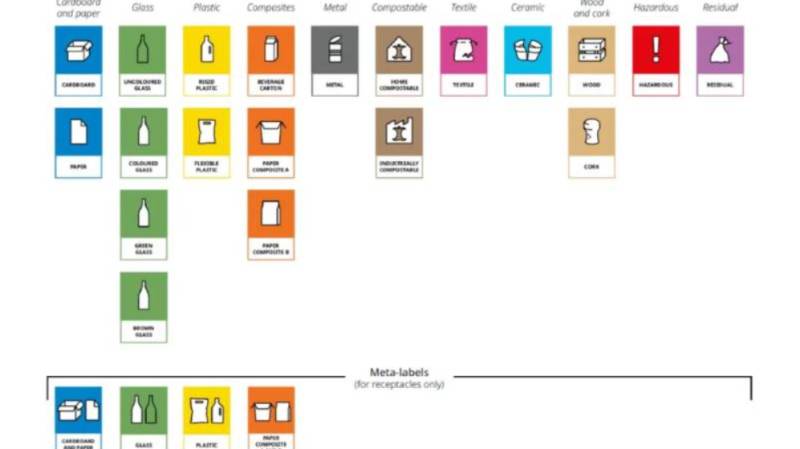
One of the first changes will involve packaging labels. New EU-wide markings will eventually make it easier to see what materials different items are made from and how they should be sorted for recycling. Matching information will also appear on waste containers as the system develops.
It sounds wonderfully straightforward until you remember that packaging can contain several different materials. A shampoo bottle might have plastic, a different type of plastic in its cap and other materials in its label, for example. So don’t be surprised if the new system takes a little getting used to.
The rules are also putting much greater responsibility on the companies producing packaging. Packaging placed on the EU market will have to meet new requirements covering recyclability and sustainability, while manufacturers will increasingly be responsible for what happens to their packaging throughout its life.
There are also restrictions on certain substances, including PFAS, the group of chemicals often nicknamed ‘forever chemicals’ because many of them persist in the environment for a very long time.
For shoppers, some of the more interesting changes are still a few years away.
From 2027, restaurants, cafés and other food businesses will have to allow customers to use their own containers for takeaway food in certain circumstances. From 2028, businesses will also have to provide reusable packaging options for some takeaway products.
Then comes 2030, when things get considerably more interesting in the supermarket.
Plastic packaging around fruit and vegetables weighing less than 1.5kg will be restricted, meaning those familiar plastic trays, bags and other wrappings could gradually become a thing of the past. Single-use plastic rings used to hold cans together will also be phased out unless they meet the rules for compostability.
The little sachets of ketchup, mayonnaise, salt and sugar that have become a fixture of Spanish cafés and restaurants are also heading for the packaging history books, with restrictions coming in from 2030. Hotels will face restrictions on those tiny bottles of shampoo, shower gel and other toiletries too, unless a guest specifically requests them.
Even your online shopping deliveries aren't escaping. The new rules are designed to reduce unnecessary empty space in packaging, so that enormous cardboard box containing something the size of a lipstick could eventually become a thing of the past. Quite why it ever needed to arrive in a box big enough to house a microwave is another question entirely.
There’s another major change on the horizon involving drink containers. EU rules require countries to move towards high levels of collection for single-use plastic bottles and metal drinks containers, with deposit return systems expected to play a major role. Spain is already working on its own system, although its introduction has been running into delays and regulatory complications.
So while you’re unlikely to walk into Mercadona tomorrow and find the fruit section completely transformed, the packaging we buy and throw away is set to look increasingly different over the next few years.
Is cash still king?
The figures behind this are straightforward enough. Between January and May, 288,176 properties changed hands in Spain, while 213,777 mortgages were signed for home purchases over the same period. That leaves roughly 74,400 homes bought without a loan, representing 25.8% of all transactions, down from 32.5% in the same period of 2025. You have to go back to 2021 to find a similarly low cash purchase rate.
It's a shift set against a backdrop of Spain's mortgage market having its strongest year in nearly two decades in 2025, and a housing scene in which foreign buyers, many of them paying in cash, have played an increasingly big part.
Ricardo Gulias, CEO of RN Tu Solución Hipotecaria, has a theory about what's behind it. "We're seeing buyers with savings, with a previously sold home, or with family support who, a few years ago, would have reached their goal without a mortgage, but today need to finance a significant portion of the purchase," he says. It's not that people's savings have disappeared, he adds, it's that rising prices have quietly chipped away at what that money can actually buy.
The average mortgage granted in May reached €174,866, up 9.7% on the same month last year. Borrowing to buy a home in Spain has become notably pricier over the past decade, with mortgage costs jumping 63% in that time, yet rates remain relatively attractive by historical standards, sitting at around 2.98% in May.
That combination is even prompting some cash-rich buyers to think again. Joaquín Fervari of Trioteca reckons taking out a mortgage can make good financial sense, even if you don't strictly need one. "I take advantage of my mortgage, and I use the rest of the money to generate returns in another type of investment," he explains.
Mortgage lending itself is starting to ease off. After months of double-digit growth, new loans dipped very slightly, by 0.1% year-on-year in May, the first decline in nearly two years. Gulias reads this as healthy rather than worrying. "The market is moderating, but it's not shutting down. What's changing isn't so much the desire to buy, but rather the actual ability to find a home that fits the price, location, and financing requirements."
Calling time

If you've ever answered the phone to someone pretending to be your bank, or sat through yet another unsolicited sales call you never asked for, here's some genuinely good news. Spain is bringing in a measure this autumn that should make those calls a lot easier to spot and avoid.
From October 17, every commercial call made in Spain will have to use a nine-digit number beginning with the prefix 400. Any commercial call that doesn't use it will be blocked by operators before it even reaches you. In short, if a number doesn't start with 400, it isn't a legitimate sales call, and you can treat it accordingly.
That's not the only change coming. From September 15, operators will start blocking any text message sent from a sender that isn't registered in a database held by the National Markets and Competition Commission. So if a dodgy text purporting to be from your bank or a delivery company isn't on that list, it won't get through.
Digital Transformation Minister Óscar López announced the measures and also revealed that Spain's anti-scam plan, launched in March last year, has already blocked more than 300 million calls and 26.6 million fraudulent messages.
The scale of the problem these steps are designed to tackle is worth noting. In the first six months of this year, the government's free cybersecurity helpline, 017, handled over 95,000 consultations, nearly double the same period last year. The most common issue, accounting for 40% of calls, was people being targeted by phone, text or email scams impersonating trusted organisations.
If you do run into a cybersecurity problem, 017 is free, confidential and open to everyone in Spain.
Home for the summer
August is traditionally a quieter month for many local businesses, with owners and staff taking holidays and plenty of people heading off for their own summer escapes. It made sense for us to take a little breather too and return when everyone is getting back into their usual routines.
September is always a great time to get things moving again, and our next edition will bring you plenty of ideas covering homes, gardens, food, travel, health, beauty, lifestyle and everything in between, all aimed at the international community living in Spain.
September is also a great time for businesses to get back in front of customers, so advertisers, now’s your chance to get ahead of the game. Whether you’re in property, home improvements, hospitality, gardening, beauty, travel or professional services, Home & Living gives you a chance to reach expats across the Costa Blanca and beyond.
We distribute from Alicante to Mojácar and are part of the STO Media Group, alongside Spain Today Online and TKO Radio, giving businesses the opportunity to reach the expat community in print, online and on air.
Enjoy August, stay cool and we’ll see you in September!
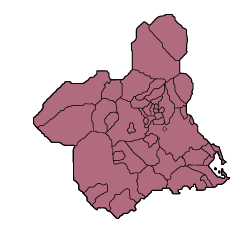
Murcia
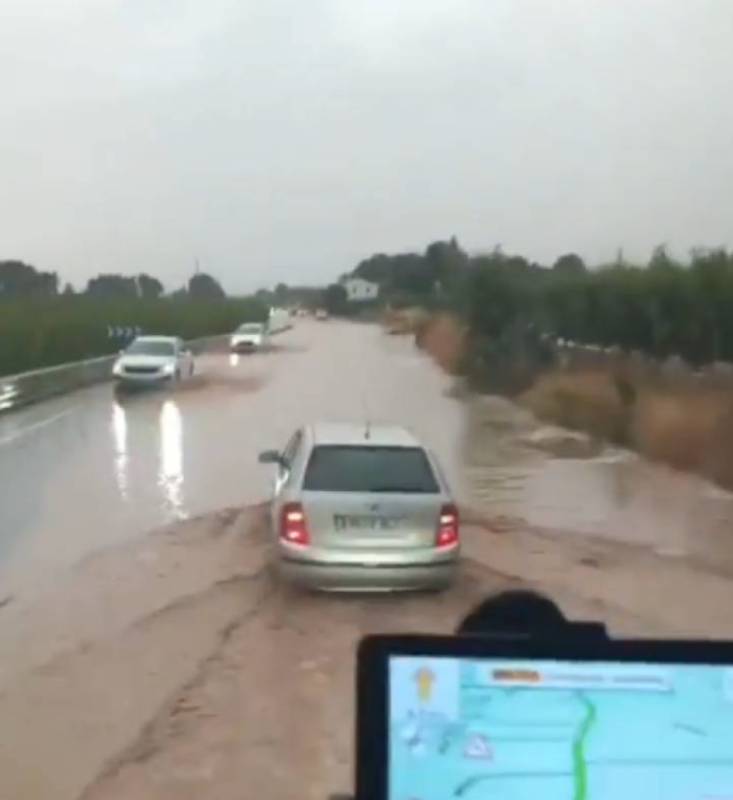
Calasparra, Cieza, Abarán and Cehegín were among the places hit hardest, with fallen trees, damaged buildings, flooded roads and overflowing normally dry channels reported as the storm swept through.
Abarán recorded 35.2 litres of rain per square metre in just one hour, while wind gusts reached 96km/h. Calasparra saw trees and branches brought down and damage to awnings, shutters, terraces and parts of balconies, while a section of the RM-50 between Calasparra and Socovos had to close after a tree fell across the road.
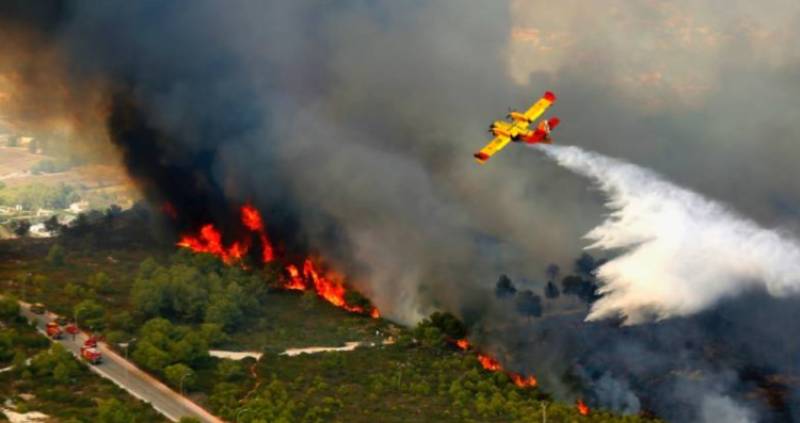
The storm also packed an impressive electrical punch, with around 50 lightning strikes a minute recorded at its peak. One strike is believed to have sparked a forest fire in the Cerro Maestre area of Jumilla, where firefighters spent several hours tackling the blaze with help from aircraft.
Farmers are now assessing whether the storm caused damage to crops, particularly almonds, olives and grapevines. The good news is that much of the stone fruit harvest has already been collected, although pears and other crops were still waiting to be picked in parts of Jumilla and Caravaca.
After all that drama, you might be hoping for a quiet weekend. The weather has other ideas.
Saturday August 15 should be a little calmer, with
weather alerts lifted across the Region, although that doesn’t mean the storms have packed their bags completely. Skies should be mostly clear, with some low cloud and morning mist possible around the Campo de Cartagena before cloud starts building inland. Showers and thunderstorms could develop during the afternoon, particularly in the northern and mountainous parts of the Region, and some could be locally heavy. Temperatures will stay high, with maximums reaching around 38ºC in some areas.
Sunday August 16 looks a little more settled again, although inland mountain areas could still see isolated showers and thunderstorms as cloud builds during the day. Along the coast, there could be some low cloud during the morning, while temperatures should ease slightly, with highs of around 35ºC.
So, basically, it’s still very much August in Murcia. Pack the sun cream, keep an eye on the clouds and don’t be too surprised if the weather decides to throw in a thunderstorm just to keep things interesting.
Away from the weather, there was more encouraging news this week for anyone who has been waiting patiently, and sometimes very patiently indeed, for better rail connections between Murcia and Almería.
Transport Minister Óscar Puente has reaffirmed that
work on the high-speed line remains on track, although he stopped short of giving passengers a definite date for when they’ll actually be able to climb aboard. During a visit to Almería, he said there was no reason to change the government's timetable and confirmed that the authorisation process with Spain's State Railway Safety Agency is expected to begin during the final quarter of this year.
More than €2.7 billion of the €3.6 billion budget for the Murcia-Almería section has already been spent, with work now well into the construction, track-laying and electrification stages. The government expects the works to be completed towards the end of 2026, although completing the railway and actually starting passenger services aren't quite the same thing.
The project is part of the Mediterranean Corridor and is intended to improve connections between Andalucía, the Region of Murcia and the rest of Spain and Europe. For people living in the southeast, the prospect of being able to make the journey by high-speed train rather than spending hours on the road is certainly something worth waiting for.
While the rail news is all about connecting people, a disturbing case in Totana this week involved a very different kind of arrangement.

Police have arrested four Honduran nationals over
the alleged illegal adoption of a two-year-old girl, with investigators claiming that payments totalling around €20,000 were involved. The case came to light after social services raised concerns about the child's situation and alerted the National Police's Juvenile Unit.
According to investigators, the girl's parents had allegedly agreed for another family to take over her care in exchange for a series of weekly and monthly payments, while also covering her living expenses and other costs. Police say the people involved then went to considerable lengths to make the arrangement appear legitimate.
The families were allegedly led to believe that a specialist lawyer was dealing with the necessary paperwork and that the director of the girl's nursery could confirm everything was above board. Investigators say fake telephone calls were even used as part of the scheme.
The four suspects, who include the girl's parents and the couple seeking to “adopt” her, are being investigated for alleged illegal adoption, fraud and identity theft. The child has been placed under the protection of the relevant authorities while the investigation continues.
A total of 456 people took part in this year's ‘1m² against litter’ campaign, carrying out clean-ups at 33 locations and removing 1.1 tonnes of waste. The national campaign, organised by the Libera Project with SEO/BirdLife and Ecoembes, brought together more than 13,700 volunteers across Spain.
The Murcia clean-ups covered an impressive variety of locations, including beaches, mountains, dry riverbeds and protected natural areas. Volunteers worked in places such as the El Valle y Carrascoy Regional Park, along the Segura River in Beniel and at Las Amoladeras beach in Cartagena, with councils, schools, businesses, associations and community groups all pitching in.
The volunteers also recorded what they found using the Basuraleza app, producing a rather depressing reminder of just how much plastic still ends up where it shouldn't. Plastic accounted for 54% of the rubbish collected in Murcia, which can remain in the environment for years and pose a serious threat to wildlife.
And there was another big show of community spirit around the Region last weekend, this time with people literally joining hands to show their support for one of Murcia's most precious natural spaces.
One of the biggest gatherings was at Los Espejos beach in Los Alcázares, where hundreds of residents and visitors took part. Similar displays were organised around La Manga del Mar Menor, Santiago de la Ribera and elsewhere in the Region, while the idea has also spread to other parts of Spain.
The campaign began during some of the darkest days for the Mar Menor, following major episodes of oxygen depletion that resulted in huge numbers of fish dying. Thousands of dead fish washed up at Villananitos beach in San Pedro del Pinatar in 2019, while another major crisis in 2021 saw more than 4.5 tonnes of dead fish removed from the southern part of the lagoon.
Conditions in the Mar Menor have improved since those devastating events, but the people taking part in the human chain clearly aren't prepared to take that improvement for granted. For a few minutes on Saturday, people around the lagoon stood hand in hand to make sure the message was impossible to miss.
To see any events coming up soon in the Murcia area, have a look at our EVENTS DIARY:
Spain
For months, people across Spain had been looking forward to Wednesday’s total solar eclipse, with viewing spots booked, eclipse glasses at the ready and plenty of people planning exactly where they’d be when the Moon finally slipped in front of the Sun.
Then the clouds arrived.
Alicante was one of the hardest-hit areas, with around 20,000 people gathering at locations including Tabarca, Serra Grossa and around Santa Bárbara hoping to see totality. Instead, many had to make do with the eerie darkness that swept across the city as the eclipse passed overhead.
Murcia, La Manga and Lorca also had their share of cloud-related disappointment, while people in places including Mallorca, Dénia, Asturias, Cantabria and the Pyrenees reported similar problems. Social media was soon full of jokes about Spain's famously sunny weather choosing the one day when everyone actually needed it to behave.
There were some spectacular views elsewhere, of course, and anyone who found themselves under a clear patch of sky was treated to a pretty extraordinary sight as daylight suddenly faded.
If your eclipse experience involved more staring at clouds than staring at the Sun, however, there’s already another opportunity on the horizon. Monday August 2, 2027 will bring another total solar eclipse to Spain, this time with the path of totality passing through much of Cádiz, parts of Málaga and the southern areas of Granada and Almería, as well as Ceuta and Melilla.
The timing should also make things considerably easier for viewers in the south. Totality will take place at around 10.50am, rather than close to sunset as it did this year, with Ceuta getting the longest period of darkness at 4 minutes and 48 seconds. Cádiz will see almost three minutes of totality, while Málaga will get around 1 minute and 48 seconds.
Spain is actually in for a remarkable run of three solar eclipses in three years. After this year's total eclipse and the one coming in 2027, an annular eclipse will cross the country on January 26, 2028. It’ll be visible as an annular eclipse from places including Seville, Málaga, Murcia and Valencia, although the Moon won't completely cover the Sun.
So, if the clouds spoiled your big eclipse moment this time around, southern Spain gets another bite of the cosmic cherry next summer.
Around 25% of flights within the EU cover less than 500 kilometres, according to the European Union Aviation Safety Agency, making shorter journeys a logical place to start when it comes to replacing conventional aircraft with electric or hybrid alternatives.
Routes between the Balearic and Canary Islands and shorter connections such as Barcelona to Valencia or Palma are among those that could eventually benefit, although we’re still some way from seeing electric planes taking over Spain's airports.
Spanish-Australian company Dovetail is already working on the technology and is taking a slightly different approach from companies designing completely new aircraft. Instead, it’s converting existing small planes that can carry around 10 to 12 passengers from kerosene to electric power.
The company has permission from Spain's aviation safety authority to carry out experimental flights and has been testing its batteries and electric motors on the ground. Its initial aim is to develop fully electric flights covering around 100 to 150 kilometres, eventually increasing that to somewhere between 200 and 300 kilometres.
A hybrid version is also being developed, combining electric batteries with an engine that could run on sustainable aviation fuel or other renewable gases.
As well as making flights greener, smaller electric aircraft could also make some routes financially viable again. Some short regional connections have disappeared because operating small conventional aircraft was simply too expensive. Electric propulsion could reduce those running costs and allow airlines to serve smaller destinations without having to fill a much larger plane.
Other European companies are working on considerably bigger electric aircraft, including projects involving planes carrying dozens of passengers. The technology still has a long way to go before electric aircraft become a familiar sight at Spanish airports, particularly for longer journeys, but short regional flights could be where the electric aviation revolution gets off the ground.
That means your local supermarket may not be following its usual Saturday routine. Mercadona, Carrefour, Lidl, Aldi and DIA all have stores with different opening arrangements, and the rules can vary depending on the town, autonomous community and whether the area is a major tourist destination.
Some supermarkets will open, some will have reduced hours and others will shut for the day, so it’s worth checking your individual store before heading out for that essential weekend shop. Nobody wants to discover at the supermarket door that the milk emergency will have to wait until Monday.
The big chains have store locators on their websites showing opening times for individual branches, which is the safest way to check before setting off. Tourist areas are particularly likely to have supermarkets open on public holidays, but even there, opening hours can vary from one branch to another.
So if you’re planning a supermarket run on Saturday, spend 30 seconds checking first. It could save you a trip, a lot of unnecessary grumbling and possibly a very important trip to the corner shop instead.
Alicante

New figures from the Department of Health show that the provincial surgical waiting list has grown by 8.5% in just six months, with almost 30,000 people now waiting for an operation. The average wait is close to 100 days.
Vinalopó Hospital currently has the shortest average wait at 44 days, closely followed by Torrevieja at 45. Alcoi stands at 51 days and Marina Baixa Hospital in Vila Joiosa at 52.
At the other end of the table, Alicante General Hospital has an average wait of 145 days. That’s more than three times the figure at Vinalopó. Sant Joan d'Alacant is at 118 days and Elche General at 116.
Across the province, more than 10,200 people have now been waiting for surgery for over six months, representing roughly 35% of everyone on the list. The number waiting between 91 and 180 days has also jumped by 35%, with more than 1,300 additional patients falling into that category.
Some hospitals have actually managed to bring their waiting times down. Torrevieja has cut its average by 25 days over the past six months, while Elche General has reduced its figure by 21 days.
At least 27 people were injured during the Castell de l'Olla display in the early hours of Sunday, with 11 requiring treatment at a specialist burns unit. The shell landed near the El Cranc beach bar on La Olla beach, where hundreds of people had gathered to watch the show.
Fourteen people were taken to IMED Levante Hospital and another 11 were treated at the burns unit at Alicante University General Hospital. Two other people, a 55-year-old man and a 24-year-old woman, were taken by ambulance from Altea health centre to Marina Baixa Hospital in Vila Joiosa after suffering burns. A 19-year-old man was also taken to IMED with bruising.
The president of the fishermen's guild, José Pérez, explained that one of the fireworks had travelled further than expected before coming down among the crowd. He said most of the injuries were not caused directly by the shell but happened as people tried to get away, with some falling over rocks on the beach in the rush.
The couple had been taking part in the activity on Monday afternoon when the tether connecting their parachute to the boat apparently broke. The parachute was then blown from the Levante area towards Rincón de Loix before hitting the rocks.
Emergency services received the alert at around 6.50pm. The woman suffered multiple traumatic injuries and went into cardiac arrest following the impact. Paramedics took her to the Port of Benidorm, where they managed to revive her before she was transferred to Marina Baixa Hospital in Villajoyosa. She later died at the hospital.
Her 47-year-old husband also suffered multiple injuries and was taken to the University Hospital of Sant Joan d'Alacant for treatment.
The accident happened after a day of very high temperatures and humidity in Benidorm, which recorded 35.7ºC, the highest temperature in the Valencian Community that day. Conditions then changed rapidly during the early evening, with rain and a strong gust of wind arriving at around 6pm.
The boat had initially been operating under a yellow flag, which allows activities to continue with certain precautions, but a red flag was raised as conditions deteriorated.
The Guardia Civil is investigating the accident and is looking into the condition of the equipment, the boat and the weather at the time. Investigators are also speaking to witnesses and those involved in running the parasailing activity.
The exact cause of the accident has not yet been established and the investigation remains ongoing.
Andalucía
We start with
the wildfire near Niebla, Huleva, which has kept firefighters on the back foot since it broke out. On the third day, more than 600 personnel, including Infoca crews, Military Emergency Unit troops and security forces, were battling a blaze that had already doubled to around 8,000 hectares, with constant changes in wind direction sending burning embers over three kilometres beyond the fire line. Antonio Sanz, Andalucía's Minister of the Presidency, Health and Emergencies, called it "a marathon, not a sprint."
Things got considerably worse from there. By day five the fire had swallowed close to 20,000 hectares, an area roughly the size of Paris, and crossed into Seville province, with officials admitting it was "beyond the capacity to extinguish", not for lack of resources but because of how unpredictably it was behaving. Water dropped from aircraft was evaporating before it hit the ground, and nearly 800 people were evacuated across both provinces.
Then came a small but welcome change of fortune on day six: a shift to easterly winds opened what officials described as a "window of opportunity", even as the fire reached 25,000 hectares. Sanz urged "absolute caution" regardless, and with around 681 people still away from home and ten roads closed, the operation continues.
While Huelva battles flames, other parts of the coast are dealing with a rather different kind of invasion, one that arrives every summer without fail.
Asian seaweed has returned to Andalucía's beaches in force, and scientists say there's no getting rid of it for good. In Mijas alone, the council has removed 1,890 tonnes so far this year at a cost of more than €1.5 million, all from its own budget.
The species, Rugulopteryx okamurae, first appeared in the Strait of Gibraltar in 2015 and every fragment that breaks off can grow into a new plant, which is why researchers have stopped talking about eradication altogether. "Eradication in the marine environment is a myth, it's impossible," says María García of the Blanes Center for Advanced Studies. Councils clear it, and it's back the next morning.
Bleeding and disoriented, likely after a run-in with a jet ski or fishing gear, it sent swimmers dashing for the sand before the mood turned from panic to rescue mission.
British expat Jade Bloomberg waded in to check whether it was tangled in netting: "It was huge, so beautiful. It was in so much distress."
In the end, a group of beachgoers used sun loungers to guide the fish back out to sea, giving everyone on the beach that day a story they won't forget in a hurry.
After all that drama, it's time for something a bit more celebratory.
The Málaga Fair kicks off on Friday August 14, and this year's opening promises to be spectacular. At 11.50pm, 440 drones will launch simultaneous light shows from the Levante and San Andrés docks, followed just after midnight by a 20 minute fireworks display using more than a tonne of pyrotechnics, set to music including Ronan Keating's Smalltown Boy.
The fair proper gets going on Saturday August 15 with the traditional pilgrimage to the Sanctuary of La Victoria, and runs until Saturday August 22 across both the city centre and the main fairground at Cortijo de Torres.
There will be around 200 free concerts, nightly DJ sessions, bullfighting at La Malagueta, and a children's area for the little ones, with Sunday August 23 the cheapest day for rides if you fancy stretching it out that little bit longer.

That’s all for this week. Thank you for reading. Don't forget, there won't be a bulletin next Friday August 21 but we'll see yo again on the 28th.
’Til then!









 Spanish News Today
 Alicante Today
 Andalucia Today


 One final thing to remember if you’re heading out to do the weekly shop this weekend: Saturday August 15 is a national public holiday in Spain for the Feast of Our Lady of the Assumption.
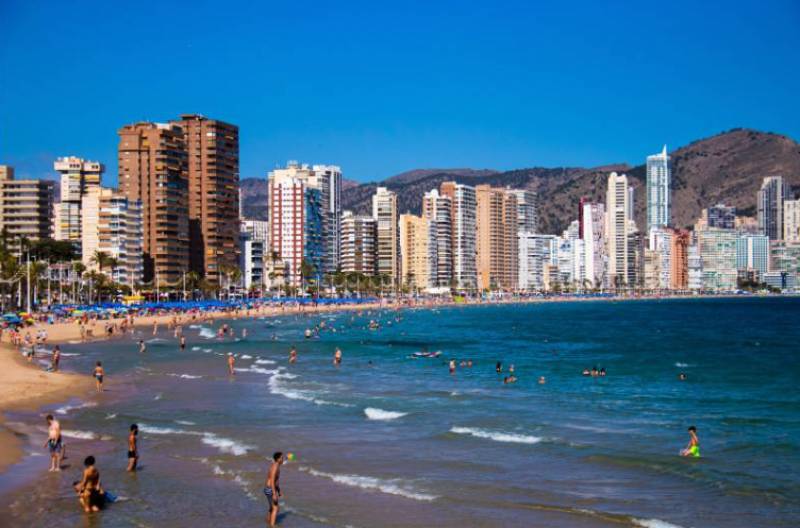 Another investigation is under way following a fatal accident off Benidorm's Levante Beach, where a 66-year-old British woman died after the parasail she was using with her husband was carried out of control by a sudden change in the weather.