








- EDITIONS:
 Spanish News Today
 Alicante Today
 Andalucia Today
Spanish News Today Editors Roundup Weekly Bulletin Dec 12
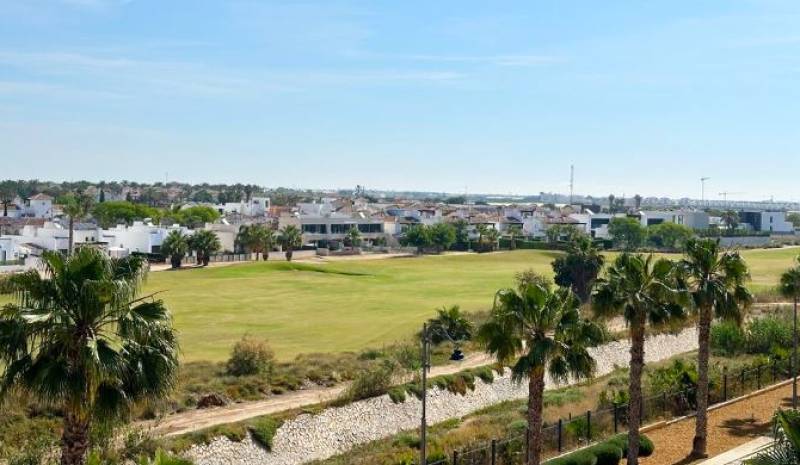
TOP STORIES: "Residential golf resorts are surging back amid housing crisis" & "The dark truth about Spain’s public health service"
It’s the twelfth day of the twelfth month, and around 12 days until Christmas, and the start of the 12 days of Christmas, which run from Christmas Day until the Día de los Reyes Magos – the Spanish holiday based around the adoration of the magi when the Three Wise Men brought gifts to baby Jesus in his manger.
And in that spirit, we’ve got dozens of stories for you about property trends, the Spanish health service and a curious new initiative ‘driving’ the future. Plus, your usual mix of Murcia, Alicante, Andalucía and Spanish news. Let’s go!
Resort report
Twenty years ago, in the early 2000s, Murcia was plastered across glossy brochures promising sun-soaked golf resorts, international prestige and famous names like Jack Nicklaus and Severiano Ballesteros sprinkling star dust over the Region.
British buyers, particularly, snapped up off-plan homes as if they were going out of fashion, along with Belgian, Dutch, German, Scandinavian and a host of other foreign buyers, all of them convinced they were buying into a booming paradise of gated tranquillity and manicured greens.
Then 2008 arrived, the property bubble burst and the dream of the Spanish south went south. Half-built resorts were left abandoned, golf courses browned with neglect and more than 25,000 homes languished unsold between 2013 and 2014.
So far, so familiar. Now, though, here we are two decades later and those ghost resorts are stirring back to life once again. Prices have rebounded sharply, driven by strong post-pandemic demand and a revitalised international market.
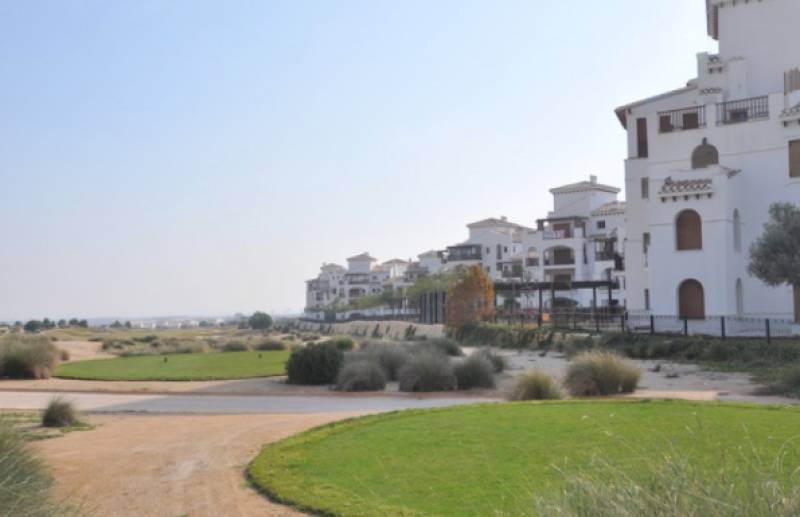
Estate agents who survived the terrors of the financial crash and the Covid slump say values are now around 80% of their pre-crisis peak, with properties at places like Hacienda Riquelme Golf Resort recovering fast.
Real demand is back too: Suzanne Cherry of Chersun Properties reports that anything between €80,000 and €200,000 is selling almost as soon as it appears. Stock is thin on the ground – barely 800 properties are currently for sale across all of Murcia’s golf resorts – and new construction is creeping back to life at places like Peraleja Golf and La Manga Club.
The buyer profile has shifted too. True, Brits still dominate but Brexit and past economic bruising have made them more cautious. Into that space stepped the Belgians, who have practically kept some resorts afloat and now form half the ownership at Las Colinas in nearby Orihuela Costa.
They’ve been joined by Dutch, Scandinavian, French, German, Swiss, Irish, Australian, South American, Russian and Eastern European buyers, all hunting for sunshine and high-end living. And high-end is now the expectation: the old notion of Spain as a cheap destination is long gone, replaced by demand for premium finishes and resort-style luxury.
All of this sounds good on paper, but there are two sides to every story. Believe it or not, Murcia is mired in a steadily worsening housing crisis, with first-time buyers and lower income families unable to afford a home from among the small stock available. The thriving resort market is both a reflection of the problem and, some argue, part of the cause.
Region-wide, property prices jumped 22.5% in the past year alone, and current values are now just shy of the 2006 peak. Worse still, the supply of available homes has collapsed; Murcia city has seen a 50% drop in stock and the Region overall has lost nearly a third of its housing availability in the last 5 years.
According to idealista’s Francisco Iñareta, Murcia would need to build more than 14,000 homes per year to catch up with demand, yet it has averaged only 2,700 annually. By 2027, that shortfall will top 57,000 properties. Nationwide, Spain is heading towards a deficit of 700,000 homes in the next decade, unless something changes radically.
Meanwhile, the affordable housing sector has all but vanished. Not a single provisional approval for subsidised, council housing has been issued anywhere in the Region of Murcia in the past three years. Compare that with the 7,516 authorisations granted between 2008 and 2010, and the scale of the collapse is startling. Luxury villas for rent on golf resorts are fetching €6,000 a week, while ordinary families – even middle-income earners – are being priced out completely.
So yes, the resurrection of Murcia’s golf resorts is vibrant, profitable and, for many buyers, downright idyllic. But it also highlights a widening divide between those who can afford to buy into the dream and those simply trying to find an affordable place to live. The boom has returned, just not for everyone.
(One of) The problem(s) with Spain’s public health system

A new report just released by the Ministry of Health has exposed a big shift in Spain’s public healthcare: 3 out of 10 public hospitals in the country are now privately managed, up 36.8% from 106 in 2011 to 145 by 2023, while at the same time public spending on them has surged 85% to €4.8 billion last year.
How can this be? Why is tax money from the Spanish government coffers being used to prop up private healthcare? Well, what started as a rare fix is now standard practice, the Ministry of Health says.
“Collaboration with private entities has gone from being an exceptional resource to becoming a structural practice, which implies diverting a growing part of the public budget to companies whose logic responds to profit, not to the general interest.”
Private centres now claim 17.8% of Spanish NHS beds (up from 13.7%) and 10.7% of operating rooms (up from 8%).
This is especially stark in autonomous communities like Catalonia and Navarra, where private setups loom large. Public money funds over a third of stays and 17.6% of discharges in private hospitals, plus 21% of major outpatient surgeries.
Furthermore, the Ministry of Health report doubts real efficiency gains in this shift towards private, flagging major oversight risks as cash flows to private firms. For example, there was scandal at Madrid’s Torrejón de Ardoz hospital (managed by Ribera Salud) when audio leaked of the hospital’s manager allegedly urging staff to lengthen patient wait times, cut procedures and prioritise profits.
Health Minister Mónica García said pithily, “This report shows the reality, the Torrejón crisis shows the consequences, and the future public management law shows the solution.”
She plans a new public management law for early 2026 to limit these partnerships and curb the influence of private investment funds. For users of the Spanish public health system, it’s a wake-up call that private hands are steering public health more than ever. And hopefully they can get a handle on it next year before the crisis gets worse.
From drains to drives

Now just imagine something for a second: what if the secret to powering tomorrow’s electric cars was hiding in the stuff we flush away every day? That’s the intriguing (and maybe a little bit disgusting) idea coming out of Córdoba this week, where a team of Spanish scientists has turned sewage sludge into a promising new battery material.
Working at the University of Córdoba’s Chemical Institute for Energy and the Environment (Iquema), alongside a wastewater treatment plant in Villaviciosa, the researchers have found a clever way to transform municipal sewage sludge, urban waste which is usually seen as nothing but a headache, into activated carbon. As they put it, this “now has value”.
The process is straightforward but clever: they dry the sludge, treat it with potash to tweak its structure, then heat it to around 800°C in pyrolysis. What comes out is a porous, conductive carbon perfect for mixing with sulphur to create battery cathodes.
Why does this matter? Sulphur batteries could pack more energy than the lithium-ion ones we rely on today, without needing scarce, pricey metals like lithium or cobalt, all materials whose mining often wreaks havoc on the environment and sparks geopolitical headaches. Plus, it tackles the sludge problem head-on, turning pollution into potential power.
Early lab tests show the carbon conducts electricity well and slots into standard battery-making methods. Sure, challenges remain, like boosting long-term stability and scaling up for real-world use. But the team sees “real hope for cheaper, cleaner and more sustainable electric cars”.
It’s a win for the much-touted circular economy, with waste from our drains fuelling the drives of the future, or as the researchers summed it up, “transforming waste into solutions, pollution into electricity, and garbage into opportunities.”
For now, it’s still research, not ready for your commercial usage, but imagine the day your EV’s spark comes straight from the sewers. Who knew what lay beneath our streets could light the way ahead?
Murcia
I know we’ve mentioned it before, but the flu season really has arrived in the Region of Murcia with a vengeance, and the timing could hardly be worse. Just as flu infections suddenly skyrocketed by an eye-watering 110% in a single week, that surge collided with a four-day national doctors’ strike
that began this Tuesday December 9. The result is a health system bracing itself for what could be one of the most challenging weeks of the winter.
 Murcia’s regional government, unwilling to wait for the national health alert system to reach higher risk levels, has taken matters into its own hands by reintroducing mandatory mask-wearing in all hospitals and health centres, public and private.
Officially the rule will stay in place until the end of the year, though authorities plan to review it every two weeks. Given the rapid rise in respiratory viruses across the board, no one would be surprised if it lingers well into January. Hospitals have already activated contingency plans to reinforce the most pressured departments, especially A&E and Internal Medicine, where flu-related admissions are climbing fast.
And as a brief public service reminder: flu vaccines work. They save lives. Despite what RFK says, they are safe, proven to be effective and are consistently the fastest way to reduce pressure on a health system currently stretched to the limit. If you are eligible to get a vaccine, just go get one.
In addition, residents across the Region of Murcia are feeling a different kind of pressure: steep increases in water bills. The town of Alguazas has sparked the biggest outcry after approving an 80% hike in tariffs, a rise the Consumers’ Union of Spain has slammed as “unjustified” and “disproportionate”.
The Alguazas mayor insists the ayuntamiento had little choice, pointing to a court ruling that forced them to tackle a multimillion-euro shortfall, an outdated contract and a water network operating at barely 47% efficiency. Investments have improved performance, he says, but the debt still needs to be covered. Critics argue that residents should not be penalised for years of administrative mismanagement and are demanding the rise be suspended.
Other towns have also increased prices, though less dramatically. Campos del Río and Fuente Álamo have brought in rises of just over 23%, the former to cover the real costs of the supply network and the latter due to contractual obligations linked to inflation. Several more towns have approved smaller but still notable increases, and while mayors stress that these changes are needed to maintain essential services, many households will nonetheless feel the pinch.
 Perhaps that’s what prompted one chancer to try and rob the La Caixa bank on the Camposol urbanisation last weekend. Responding to the alarm of an attempted break-in, officers arrived quickly at the scene to find the door smashed open and the suspect still inside. He was immediately arrested, and while police have not yet confirmed whether anything was taken, the damage to the bank was significant.
Additional officers – already on duty for the town’s patron saint festivities – helped secure the scene while the Guardia Civil opened an investigation. For now, the suspect’s identity remains undisclosed.
Meanwhile, Cartagena has been enjoying a boost from a corner of the tourism industry that it has been trying very hard to attract. While enormous cruise liners usually grab the headlines, this year it’s the smaller boutique cruise ships that have demonstrated their real value to the local economy.
Only 31 of these boutique, luxury vessels visited in the past year, bringing between 3,600 and 4,000 passengers, but their spending power far exceeds their numbers. These travellers reliably head ashore for meals, shopping, guided tours and museum visits, contributing an estimated €700,000 annually, with crew members adding up to another €65,000.
Luxury cruise lines such as Ponant and Windstar frequently call at Cartagena, and their passengers tend to spend more time – and money – in the city than those aboard the larger all-inclusive ships. Better still, boutique cruises dock from March to December, helping to keep local businesses afloat throughout the quieter months.
Good news has also arrived for residents of La Manga and Cabo de Palos, where the local consortium has approved a €421,000 budget for 2026. Part of the money goes towards maintaining public transport discounts on key intercity routes, a scheme introduced in early 2025 and warmly received by bus passengers.
Not only that, but cultural and sporting activities will also benefit, with additional funds allocated for festivals, neighbourhood events and collaborations aimed at revitalising the area. The budget increase is largely thanks to higher contributions from Cartagena and San Javier, ensuring that La Manga’s transport and community initiatives remain accessible and well-funded into next year.
For events coming up around the Region, tonight there is a screening of the Christmas classic It’s a Wonderful Life in its original English-language version in Los Alcázares, while tomorrow, Saturday December 13, you can catch ‘Friends, A Musical Parody’ of the classic Jennifer Anniston, Courtney Cox sitcom in Jumilla. Could be pretty funny. And then on Sunday 14, you’ve got a testing hike in the 1500-metre mountains of Alhama and Totana if you fancy a bit of fresh air and exercise.
See our EVENTS DIARY for more events and activities coming up soon in the Region of Murcia:
Spain
There’s been some interesting movement on the housing front this week and it’s about time really. Anyone who owns rental property in Spain knows it’s been a pretty thankless business for years now, what with tenants who stop paying and squatters who seem to have more rights than the actual property owners. The government’s finally doing something about it, and the Council of Ministers is set to approve a public insurance scheme that could make a real difference.
The idea is pretty straightforward. If you’re renting your place out below the state reference price and your tenant is either under 35 or considered vulnerable, the new scheme will cover you if they stop paying. The state insurance steps in and guarantees all the unpaid rent until you get your property back. It also covers any damage the tenant causes and utility bills you’ve had to cover.
The one snag is that you’ll need to wait until the place is empty before you can actually claim, but it’s still a massive step forward from where things have been.
All of this ties into a much bigger housing plan the government is rolling out. Minister Isabel Rodríguez announced they’re rolling out something called Casa 47, which is basically a new public company to manage Spain’s public housing and try to do something about these sky-high property prices.
They’re planning to start offering affordable public rentals in 2026 through an online portal, with prices capped at 30% of the average local income. The leases would run for 14 years initially but could be extended up to 75 years, renewable every seven years as long as tenants still qualify.
According to Ms Rodríguez, 60% of Spaniards would be eligible for these Casa 47 apartments because they’re targeting families earning between 2 and 7.5 times the IPREM, which works out at roughly €16,800 to €63,000 a year. The government is committing €13 billion over ten years to make it happen, starting with €1.3 billion next year.
 On a completely different note, there’s been some tension at EU level over a new migration policy. The interior ministers pushed through a major tightening of the rules on Monday, but Spain’s made it very clear they’re not a bit happy about it.
The new agreement basically allows for faster deportations and the creation of detention centres outside EU borders, which Spain’s Interior Minister, Fernando Grande-Marlaska, thinks goes way too far.
He was pretty blunt about it, saying that sending people to detention facilities in non-EU countries “could violate international law and human rights”.
He’s also concerned about proposals that would allow people to be held in these centres for two years, potentially extended indefinitely, plus lifetime bans on coming back to EU territory.
The most controversial bit is the endorsement of holding migrants in third countries that are deemed “safe”. Italy’s already doing this with Albania, and several Northern European governments have been pushing for the EU to expand the model.
The reforms are also about speeding up deportations across the board. One key change is that all member states would recognise each other's return decisions, so someone ordered to leave one EU country could be removed by another without reopening the case.
And finally, there’s been a terrible tragedy in Los Gigantes in Tenerife. A fifth person has died following that awful wave incident at the natural pool. The woman suffered a cardiorespiratory arrest after being hit by the wave and passed away in hospital.
Four of the victims were foreign tourists, including a 35-year-old man, a 55-year-old woman and another man whose age hasn’t been given, while the fifth is a local fisherman originally from Italy.
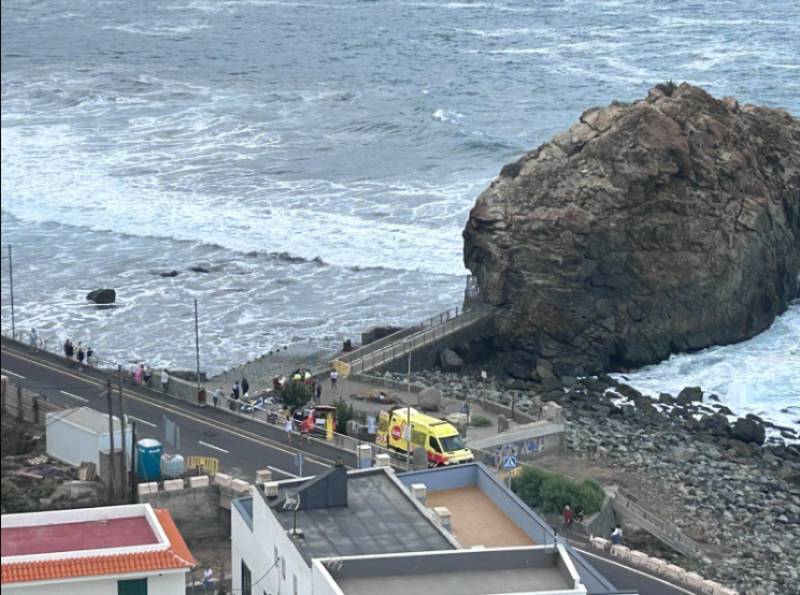 The whole tragic accident happened just after 4pm at the Acantilado pool. About 20 people were there, mostly tourists from different countries including some from mainland Spain, and they’d ignored the warnings. Santiago del Teide mayor Emilio Navarro explained the area was fenced off with signs in Spanish, English and German making the dangers absolutely clear.
“The victims ignored warnings not to enter the area,” he said, pointing out there was a pre-alert for waves up to three metres high, particularly dangerous given that it was just an hour after high tide.
Two of those who died were said to be Romanian and one was Slovakian, though that’s not been officially confirmed yet.
The rescue services did everything they could. The Helimer helicopter managed to get one person out safely and recovered a man who’d already died. Three others, one man and two women, were pulled from the water alive. A 39-year-old woman with injuries was taken to Hospiten Sur Hospital by ambulance, and several others got treatment on the spot for bruises and cuts from the Canary Islands Emergency Service teams.
Alicante
There’s some fantastic news for anyone who regularly uses the Alicante city bypass: the AP-7 toll is now permanently free. The Council of Ministers gave it the final stamp of approval on Tuesday after confirming “the effectiveness of the trial period of free passage established in July 2024”.
So that’s it, no more tolls on that super busy stretch of road.
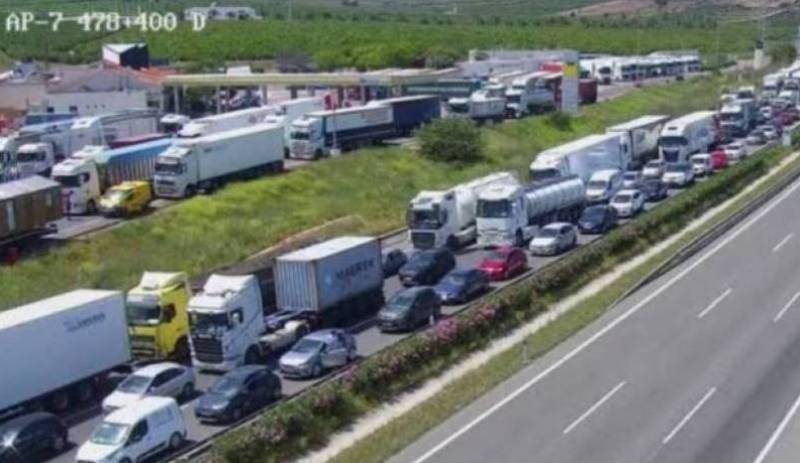 This section of the AP-7 runs from Alicante down along the Murcia coast and into Andalucía, and it’s been free since July when they kicked off a trial to see if it would work as a proper alternative to the A-70 dual carriageway.
The A-70 had been absolutely groaning under the weight of traffic and was pretty much at breaking point. The latest figures show the free toll has bumped up traffic on the AP-7 by 10 to 15%, which has done exactly what they hoped and taken some serious pressure off the A-70.
There was a frightening incident in Torrevieja this Tuesday evening that has left the community pretty shaken. A Dutch woman in her 50s went on what can only be described as a knife rampage through the Rocío del Mar urbanisation, attacking staff and customers at two different restaurants.
Eyewitnesses say she turned up at this busy social hub at around 8.30pm looking visibly upset and agitated. She went into El Botijo bar first, where she started brandishing knives and even threatened a customer before nicking his phone.
Once she was back outside, she stabbed a postman in the forearm as she walked past him. Then she went into a Chinese restaurant called Yoku on Avenida de las Olas, where she cut a waiter’s hand and slashed a customer across the chest.
Two of the victims got treated at the scene but the waiter had to be rushed to Torrevieja University Hospital for surgery.
The Orihuela Costa Local Police got there first because Rocío del Mar sits right on the border between Orihuela and Torrevieja, and they managed to calm her down and detain her until the Torrevieja Local Police turned up.
She’s been handed over to the Guardia Civil and is due to be evaluated by a psychiatrist to work out if she’s got any mental health issues. Nobody seems to know what triggered the whole thing, which makes it all the more unsettling.
On a much nicer note, there was a lovely bit of wildlife rescue in Torrevieja on Monday that shows the best side of the local community. A violet stingray got stranded on some rocks and was spotted just in time. These particular stingrays aren’t seen very often around Torrevieja, so it was a bit unusual.
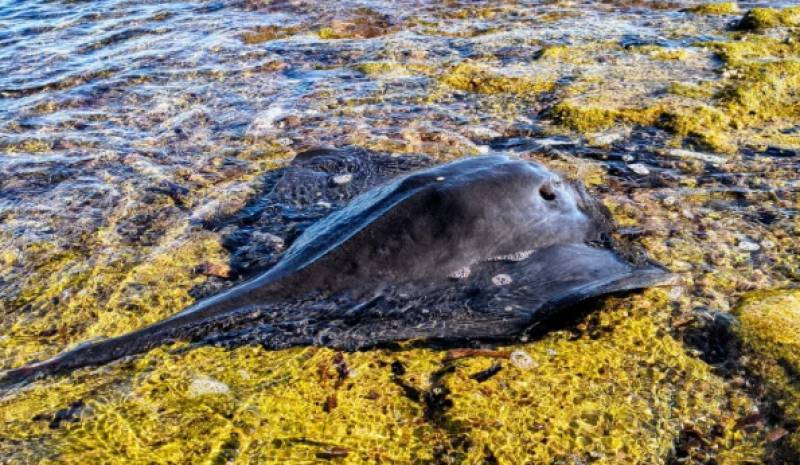
Someone called 112 and the Torrevieja Local Police Environmental Unit got there quickly. They worked with technicians from Oceanogràfic's ARCA del Mar and people from the council’s Environment Department to check her over and decided she had a decent chance if they could get her back in the water.
The tricky bit was that there’s not a huge amount of knowledge about treating this particular species, but with some help from sailors at the Real Club Náutico de Torrevieja, the environmental team pulled it off. She swam away strongly once they released her, which must have been a real moment of relief for everyone watching.
Andalucía
The week began with heartbreaking news from the Granada-Almería border, where the long search for missing British resident Geraldine Ann came to a tragic end.
A body believed to be that of the 73-year-old was discovered under vegetation beside the A-92 motorway, near Cúllar, not far from the village of Chirivel where she disappeared in September after leaving home late at night to feed some stray cats.
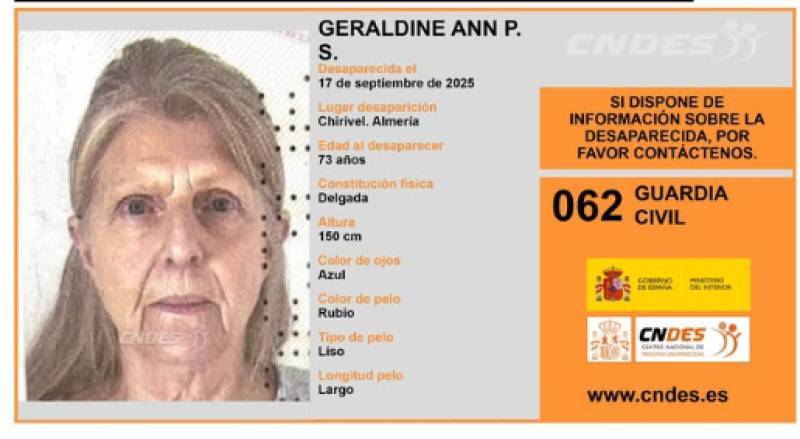
Local officials confirmed that DNA tests are under way, though police currently say there’s no evidence of foul play.
Geraldine, who suffered from dementia, was last seen wearing pyjamas and flip flops. Her disappearance prompted a huge response from residents, including British expats, who volunteered alongside the Guardia Civil and local rescue teams.
In a statement, Chirivel Town Hall said, “We profoundly regret to have to inform you that a body has been found… pending official confirmation from the authorities.”
The mayor also expressed gratitude to all those who helped search tirelessly for her. The small community remains shaken, but united in support for her husband and family as they await official confirmation.
While that story brought sorrow to one corner of Andalucía, there’s a glimmer of hope elsewhere in the region’s natural landscapes. Conservation officials this week revealed that fewer Iberian lynx have been killed on the roads this year. Still too many, mind you, but a big improvement nonetheless.
The 57 fatalities so far in 2025 mark a welcome drop from last year’s 78. The Junta de Andalucía credits ongoing efforts to make roads safer for wildlife, including over 1,600 crossings, tunnels and overpasses designed to give the endangered cats a fighting chance against busy traffic.
That might sound like a lot of engineering, but it’s paying off. Lynx are popping up in new areas, even making a remarkable return to the Córdoba mountains after half a century. The current population stands at more than 830, a huge leap from the 50 or so left when recovery efforts began in 2002.
As one environment technician put it, “Every life lost is a setback, but the overall trend gives us hope.” The final census won’t be ready until mid-2026, but all signs suggest the lynx is reclaiming its place in Andalucía’s wilds.
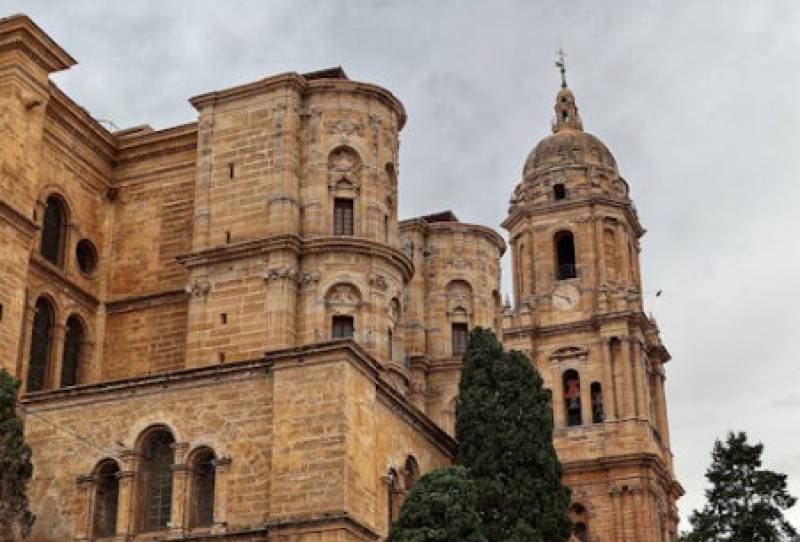
And speaking of restoration, something rather grander, and a little higher up, is also taking shape in Málaga. Anyone strolling past the city’s cathedral may have noticed the cranes and scaffolding around its roof, which, as it turns out, will be staying there a bit longer than planned. The €22.5 million cathedral renovation has been delayed until mid-2027, pushed back nearly a year due to design tweaks requested by fire safety experts.
Cathedral dean Juan Manuel Ferrary explained that the wooden structure needed a redesign to meet modern fire standards, and a new stone façade is being added to complete the main front.
To top it off, the finished façade will include ten new sculptures and a balustrade, promising a final flourish worthy of Málaga’s skyline. For now, locals will just have to wait a little longer to see the cathedral restored to its full glory. It will surely be worth it.
You may have missed…
- Can I test my new V-16 beacon at home without alerting the emergency services?
The DGT handy as ever with answers to all your burning questions… - Spain proposes bumping up the minimum wage in 2026.
The lowest salaries in Spain could increase by between 3.1% and 4.7% next year. Nice - How to renew your TIE as a British expat resident in Spain: Foreigner's identity card renewal instructions post-Brexit.
Is your TIE renewal period coming up? Have a look at the expiry date on your TIE card, then read this clear step-by-step guide on how to go about getting yourself a new one. - Mar Menor begins showing early signs of recovery.
New IEO findings point to the first modest recovery of native seagrass since the dramatic 2016 collapse. - Spain’s straightest road: The 23km line that never bends!
Spain has plenty of winding mountain roads and coastal bends, but one stretch in the middle of the country does the exact opposite. It just goes on and on in a perfectly straight line. For drivers who like a bit of road trivia, this is one of the quirkiest pieces of tarmac in Spain.
And there we have it for another week. Just a heads up: we will have a bulletin going out next week (Friday 19) and the following one, too (Friday 26), but after that we will be taking a bit of a break for the Christmas holidays.
See you next week!









Find more information by AREA, TOWN or URBANISATION .....
Cabo de Palos
Cartagena
El Carmoli
Islas Menores and Mar de Cristal
La Manga Club
La Manga del Mar Menor
La Puebla
La Torre Golf Resort
La Union
Los Alcazares
Los Belones
Los Nietos
Los Urrutias
Mar Menor Golf Resort
Pilar de la Horadada
Playa Honda / Playa Paraiso
Portman
Roldan and Lo Ferro
San Javier
San Pedro del Pinatar
Santa Rosalia Lake and Life resort
Terrazas de la Torre Golf Resort
Torre Pacheco
Cartagena
El Carmoli
Islas Menores and Mar de Cristal
La Manga Club
La Manga del Mar Menor
La Puebla
La Torre Golf Resort
La Union
Los Alcazares
Los Belones
Los Nietos
Los Urrutias
Mar Menor Golf Resort
Pilar de la Horadada
Playa Honda / Playa Paraiso
Portman
Roldan and Lo Ferro
San Javier
San Pedro del Pinatar
Santa Rosalia Lake and Life resort
Terrazas de la Torre Golf Resort
Torre Pacheco
Aguilas
Aledo
Alhama de Murcia
Bolnuevo
Camposol
Condado de Alhama
Fuente Alamo
Hacienda del Alamo Golf Resort
Lorca
Mazarron
Puerto de Mazarron
Puerto Lumbreras
Sierra Espuna
Totana
Aledo
Alhama de Murcia
Bolnuevo
Camposol
Condado de Alhama
Fuente Alamo
Hacienda del Alamo Golf Resort
Lorca
Mazarron
Puerto de Mazarron
Puerto Lumbreras
Sierra Espuna
Totana
Abanilla
Abaran
Alcantarilla
Archena
Blanca
Corvera
El Valle Golf Resort
Hacienda Riquelme Golf Resort
Lorqui
Molina de Segura
Mosa Trajectum
Murcia City
Peraleja Golf Resort
Ricote
Sucina
Abaran
Alcantarilla
Archena
Blanca
Corvera
El Valle Golf Resort
Hacienda Riquelme Golf Resort
Lorqui
Molina de Segura
Mosa Trajectum
Murcia City
Peraleja Golf Resort
Ricote
Sucina
Urbanisations
CamposolCondado de Alhama
El Valle Golf Resort
Hacienda del Alamo Golf Resort
Hacienda Riquelme Golf Resort
Islas Menores and Mar de Cristal
La Manga Club
La Torre Golf Resort
Mar Menor Golf Resort
Mazarron Country Club
Mosa Trajectum
Peraleja Golf Resort
Santa Rosalia Lake and Life resort
Terrazas de la Torre Golf Resort
La Zenia
Lomas de Cabo Roig
Important Topics:
CAMPOSOL TODAY Whats OnCartagena SpainCoronavirusCorvera Airport MurciaMurcia Gota Fria 2019Murcia property news generic threadWeekly Bulletin
CAMPOSOL TODAY Whats OnCartagena SpainCoronavirusCorvera Airport MurciaMurcia Gota Fria 2019Murcia property news generic threadWeekly Bulletin