Date Published: 03/12/2021
Spanish News Today Editors Roundup Weekly Bulletin Dec 4
It’s not many people who study Greek these days (except probably Greek schoolchildren), but we’re all starting to become experts on, and slightly terrified of, certain letters of the Greek alphabet.
First it was Delta (Δ) that had everyone shaking in their boots, and now it’s the Omicron (Ο) variant of coronavirus that is causing worldwide panic as it’s allegedly more contagious than any previous mutation of the 2019-nCov virus. It hardly bears thinking about what will happen when we get to Omega (Ω) – the end of days, perhaps?
If it is, we’re determined to document it, and here’s the bumper Omicron edition of the Editor’s Roundup Weekly Bulletin to prove it.
Coronavirus restrictions and travel changes
As a general rule, viruses tend to be less lethal and dangerous the more infectious they are, while the deadliest viruses are harder to catch. Thus, just about everyone has had the common cold at some point or another and not suffered any serious or lasting consequences from it, whereas only about half of the few people who have had Ebola have lived to tell the tale.
So it is with Omicron, which at first sight appears to be far more contagious than previous incarnations of Covid, but is not leaving too many seriously ill victims. Though it is still an extremely new strain of coronavirus and not much is known about it yet, early indications suggest that most people who have caught Omicron so far have been adults in the younger age bracket, and are not being hit particularly hard by it.
Still, the unknown is always scary, and that’s why national governments, regional authorities and private enterprises the world over are being particularly cautious when it comes to Omicron.
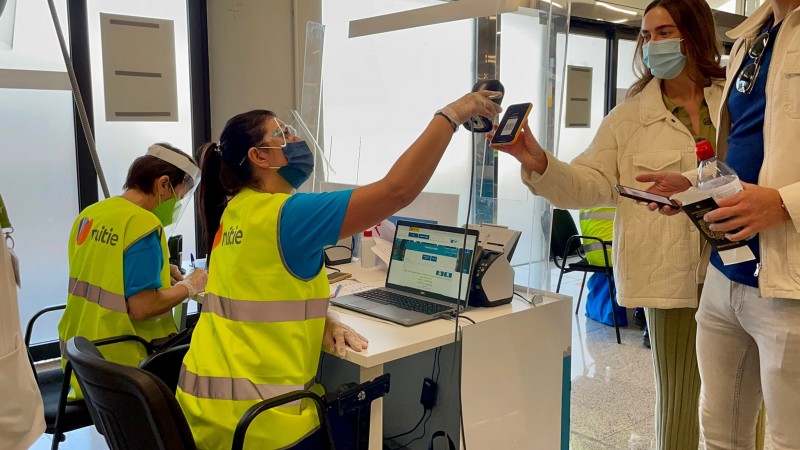
This puts a spanner in the works for those who haven’t had both their vaccines yet, then. Anyone who had already bought their trip to Spain will suddenly find themselves on the wrong end of a sudden change in rules through no fault of their own. This includes children between 12 and 18 years old, who in many places have only had time to receive their first jab. In an uncharacteristic display of Christmas spirit,
easyJet have offered to ease the burden on families considerably by allowing free cancellation and full refunds for those with children aged between 12 and 18 who are affected by these new changes. Customers with children who will not be vaccinated in time to enter Spain and have trips booked up until December 31 will be eligible for the refund, but families need to be quick as the offer expires at midnight on December 5. Bah, humbug!
The UK, for its part, have bumped their Day-2 rapid test requirement up to a PCR. Anyone aged 12 or over coming into the country from abroad now need to do a full PCR test (which can be booked online at authorised providers), whether or not they are vaccinated. Depending on the results of the PCR, travellers will either have to self-isolate for 10 days or not.
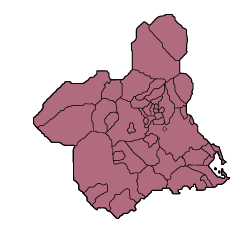
In the Region of Murcia, too, new restrictions are being put in place in certain municipalities which have reached the ‘high’ and ‘very high’ risk categories. The former includes
Cartagena, San Pedro del Pinatar, Cieza, Jumilla, Calasparra, Cehegín, Totana and Yecla, where the maximum capacity allowed at indoor venues like bars, restaurants, nightclubs and event venues for weddings and other celebrations has been reduced to 50%.
The latter, with cumulative incidence rates of over 300 infections per 100,000 people, includes the municipalities of
Mazarrón, Torre Pacheco, Alhama de Murcia, Abarán and Fuente Álamo. In these places, the capacity has been reduced to just 30%, in what will surely be another blow for the Murcian hospitality sector, just when things were starting to turn around after the last wave of coronavirus. There are already
question marks over whether Christmas meals and New Year’s parties will be able to go ahead as planned in Murcia. As a solution, representatives of nightlife, entertainment and leisure
venues in Spain are demanding that the Covid certificate be made compulsory for entry into bars and clubs, though these are
only needed in venues where capacity is at 100% in Murcia, with implementation of the certificate rules being patchy and piecemeal across each of the rest of Spain’s autonomous communities.
The Spanish tourism industry is already reporting
increased cancellations of bookings from the Netherlands, Belgium and Austria, although for now there haven’t been a significant slew of Germans or Brits cancelling their trips to Spain. While this latest wave of coronavirus will undoubtedly make things harder for many businesses and may even be the final nail in the coffin for a few who were just barely hanging on, the truth remains that public health must come first and it’s more important for us all to remain safe than to grow the economy. It benefits no one to be the richest country in the cemetery.
And for at least 30 days from Friday December 3, the Covid certificate will also be required to visit hospitals and elderly residences, as well as to attend music festivals, events and celebrations with more than 500 attendees. The court ruled that “the implementation of the Covid passport throughout the Valencian Community is justified in view of the continued upward trend of the pandemic curve throughout the region, the foreseeable crowds in the run-up to Christmas and the appearance of new variants of the Sars-Cov-2.”
Coronavirus vaccines
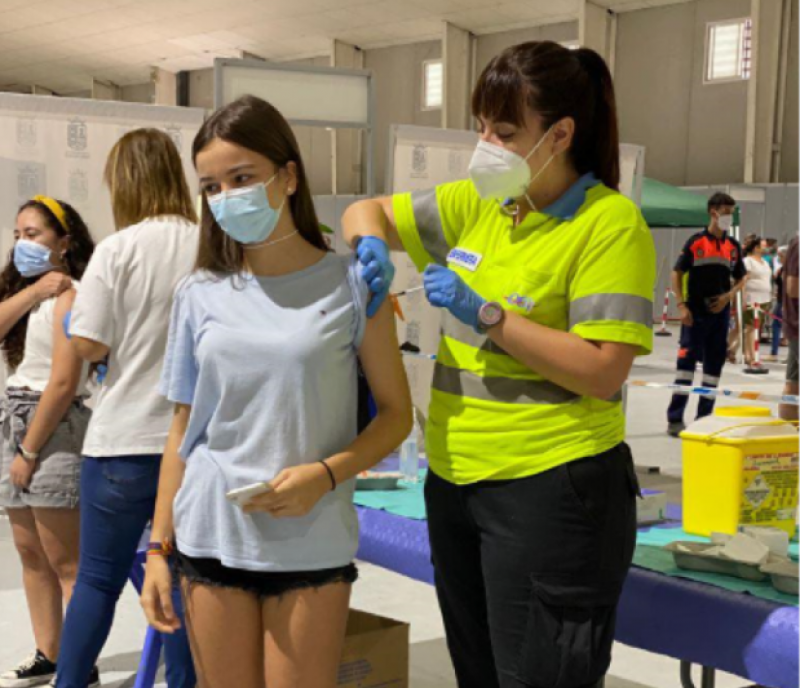
While many parents are understandably nervous about vaccinating their children with such a new and relatively untested vaccine, the decision may be taken out of their hands shortly as
Brussels has actually called for a debate on whether Covid jabs should be made mandatory across Europe, in a move that is sure to divide those who cry civil liberty and personal freedom versus those who understand that the hard science of vaccination keeps us all safe. Even if it isn’t written into law, though, the imposition of the Covid certificate as a requirement to get into many establishments, use public transport and more make getting vaccinated as good as mandatory anyway, for those who actually want to go out, do stuff and have a social life, at least.
The vaccination campaign in Spain seems to have lost a bit of steam, with 89.4% of the target population double jabbed. Mobile walk-in vaccination points are popping up around the country to accommodate those who haven’t yet had any vaccinations, and there are scenes of queues around the block of people who figure that now, in the midst of the sixth wave, is as good a time as any to start getting jabbed. Well, better late than never.
At the same time, 65.8% of people over 70 have now received a booster dose, and over-60s are now getting their turn in many parts of the country. In Murcia, for example,
anyone over the age of 60 can book their booster jab very easily either online on the Murciasalud website, on the SMS health service app, or by going into their local health centre in person.
How many corona cases are there?
The cumulative incidence rate in the Region of Murcia now stands at
270.3 cases per 100,000 inhabitants in the past 14 days, whereas at the end of last week it was 187.7. That’s almost 100 points, a 40% increase, in just one week! Some of the highest incidence rates in the Region can be found in Albudeite (800), Campos del Río (639.8), Torre Pacheco (617) and Cartagena (379.9).
In the Valencia region, including Alicante, Monday’s health data revealed
new infections had soared by 60% in a week with the Ministry of Health reporting a staggering 2,863 new cases just for that day – the highest since mid-August. The bleak data also saw the 14-day cumulative incidence rate surpass 220 cases per 100,000 inhabitants, a far cry from the beginning of November when the Valencia region had a rate of 55 cases, and the summer months when the three provinces of Alicante, Valencia and Castellón had one of the lowest incidence rates in Spain.
Instead, the Valencian region now has the
highest number of Covid-infected healthcare workers in the country, with 350 infections detected amongst hospital and clinic staff in the last fortnight, 200 in just seven days. In light of the concerning situation, the College of Nurses of Valencia (CEOV) revealed it has “begged” the region’s Minister for Health, Ana Barceló, to “maximise” prevention measures against Covid infections in clinical settings, pointing out that the number of health workers who had tested positive for coronavirus had risen by more than 1,000 to an “exorbitant” 15,495.
We’re taking this health crisis seriously, and are of the opinion that the better informed everyone is about the latest of the fast-changing developments, the more protected we all are. That’s why we endeavour to bring you all the most up-to-date coronavirus news as it comes out, which you can always consult using the link above.
Murcia
At the beginning of the week,
those in the south of the Region of Murcia were likely to have heard two rather loud bangs, which left many wondering what had happened. Although many locals in Cartagena, Lorca, Los Alcázares and even further north may have been alarmed by the sound, with some concerned members of the public even calling the emergency 112 number, there was a simple explanation; two military planes flying over the Mar Menor broke the sound barrier during a training exercise, causing an incredibly loud sonic boom.
For those who enjoy spending the festive season taking part in fun activities with family and friends,
two ice-skating rinks are set to be installed in the municipality of Murcia, one on Avenida de la Libertad and another in La Finca, along with a third ice rink in Cartagena’s port. There is also an almost endless list of carolling sessions, festive concerts and Christmas markets in most municipalities in the Region.
Spain
The good folks at the DGT are at it again this week and have helpfully reminded drivers of yet another
fine they could face on Spanish roads: 80 euros for wearing bulky winter clothes. Yes, you read that right. The traffic authorities have warned that padding up like the Michelin man or wearing oversized boots – really, any clothing that impairs the driver’s ability to move freely and safely in the vehicle – could be picked up on by officers and be classed as an infraction.
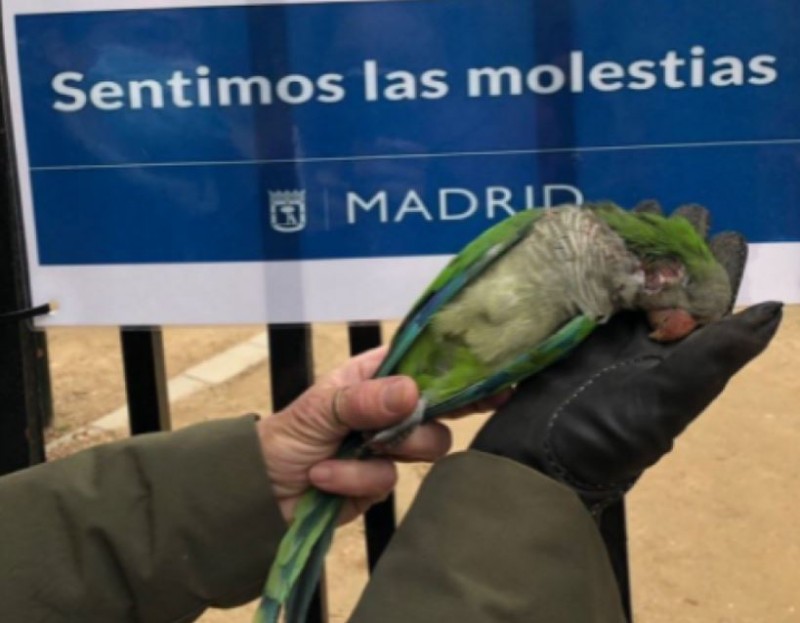
Parrots are having a hard time of it too, and in Madrid locals and activists are up in arms as the regional government has invested 2.9 million euros in culling the feathered beauties. Some
13,000 birds were killed with compressed air rifles in one day alone, but the authorities have argued against sentimentality. The parrots might look pretty, but they do actually carry any number of unpleasant diseases and, being an invasive species, cause untold damage to the native flora and fauna.
It wouldn’t be a week in Spain without commenting on the extortionate price of electricity, and in recent days this country (along with Portugal) won the dubious title of having
the highest energy prices in all of Europe. Despite this, the government continues to claim that customers will pay the same amount this year as they did in 2018, something which consumer groups claim is impossible. It all comes down to semantics really, as the government’s assertion is correct if you only count the “average citizen”, when in reality, leccy bills are at least 9% dearer than they were three years ago.
Alicante
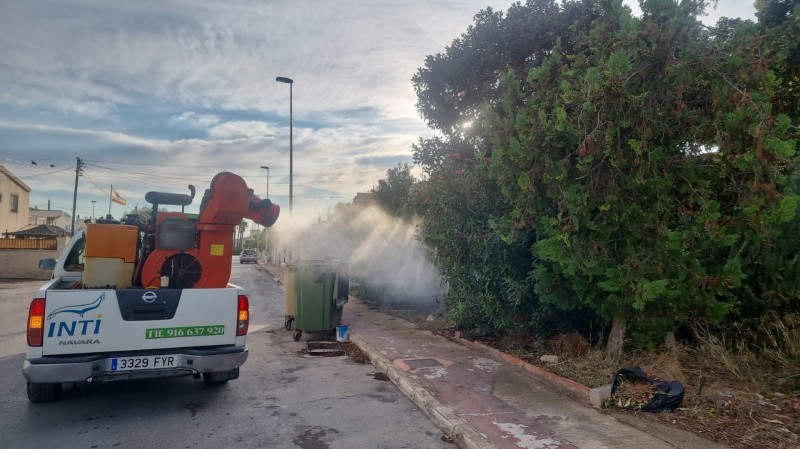
The winds replaced the humid conditions and heavy rain of recent weeks, which have left residents living on urbanisations close to Torrevieja lagoon reeling amid
a fourth plague of mosquitos this year. The local council has been receiving complaints about the pesky mozzies since the end of March, but despite an extensive spraying campaign, residents claim the area around the salt water lakes remain overrun with moquitos, affecting their day-to-day life.
A campaign of a different kind has been launched in Alicante following the shooting of a cyclist who was injured after being hit with dozens of pellets by a hunter who mistook him for a rabbit. The injured
cyclist was riding through Mount Orgegia forest when he was shot, prompting calls to ban hunting in the natural park by Alicante’s Compromís political party. Several neighbourhood organisations complained to the council about hunting activity in the area earlier in the year, warning “it seriously endangers people of all ages who frequent the mountain for hiking, cycling, horse riding and other outdoor activities”. Well, if a cyclist getting shot is what it takes for a hunting ban to finally be put on the table, then we’ll just chalk him up as a martyr to the cause.
Andalucía
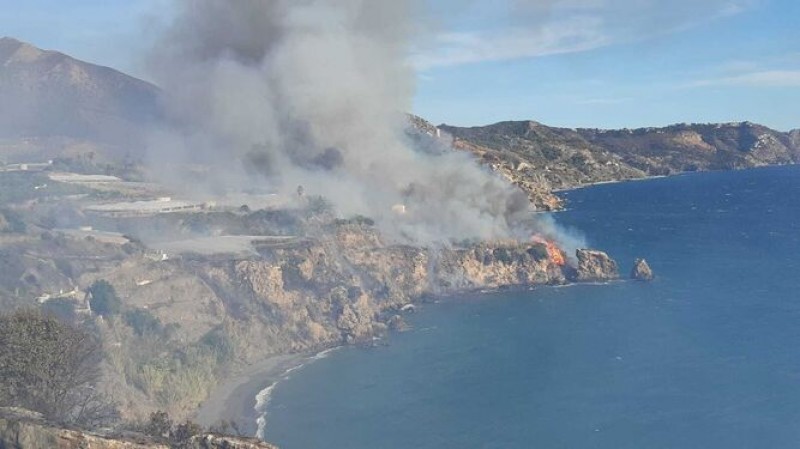
While it’s not unheard of to have wildfires as late in the year in November, they are not normally as large or as dangerous as those that can take place in the dry, tinderbox summer. The forest fire was brought under control in just under 24 hours and was extinguished by Monday morning, but not before it caused the N-340 road to be closed around kilometre 297 for a few hours.
At the same time, other municipalities along the Costa del Sol were feeling the tremors from an
earthquake coming from Benalmádena. Registering 4.1 on the Richter scale, the quake had its epicentre in the Málaga town but was also felt in Fuengirola, Estepona and Torremolinos, though thankfully it didn’t cause any serious damage.
The new rules have been welcomed by homeowners’ associations as “long overdue”, though it will be up to local town halls to enforce the changes to the law, something they are as yet reluctant to do. Could it be for the good of protected land in the countryside to avoid delicate areas being trampled by bulldozers? Could it be that elected public bodies are actually taking an interest in the environment for the environment’s sake? One can only hope…
From unauthorised emigration to illicit importation,
police in Algeciras in Cádiz province have recovered eleven classic cars that were stolen from Paris, France. It’s believed that the collectors’ vehicles were to be transported via the Spanish ports of Tarifa or Algeciras to Morocco, where they would be sent on new fake documentation to wealthy African clients. Trafficking classic cars to Africa is not an uncommon practice around Europe, but in this case five perpetrators were arrested and the vehicles returned to their rightful owners.
You may have missed…
Temperatures are forecast to drop even further all across Spain from next week.
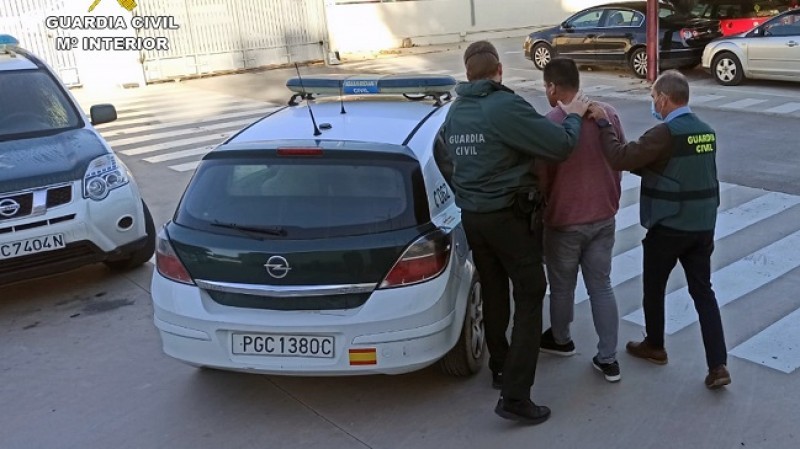
The Guardia Civil stopped a Polish man who was driving a high-end luxury car at a staggering 194 km/h along the RM-19 highway between San Javier and Murcia, a stretch of road that has a maximum speed limit of 100 kilometres.
The regulations will increase the number of penalty points for many infractions.
A photovoltaic plant in Totana has become a refuge for dozens of bird species, many of which are endangered.
The shop, dubbed the ‘Primark of Holland’, is the second in the Region of Murcia.
And that’s all for now. Remember that shops may be shut early next week because Monday December 6 and Wednesday December 8 are both public holidays (if you’re interested in finding out why, we’ve got
a little history here).
Enjoy your bank holiday weekend, folks, and we’ll see you next Saturday!
Got a business in Spain? Advertise with us.
Murciatoday.com and its affiliated Spain Today Online sites can help
bring your business to a wider audience – over 350,000 unique readers every month. We’ll provide you with
custom-made banner ads, a personalised listing in our
Business Directory and special feature articles about your particular business niche.
Don’t limit yourself to the
yellow pages. Get online! After Covid, can you afford not to?
Contact us today to find out how we can get wider exposure for your business.



 Welcome To