








- EDITIONS:
 Spanish News Today
 Alicante Today
 Andalucia Today
Spanish News Today Editors Roundup Weekly Bulletin Feb 27

TOP STORIES: "Six planets are lining up in the Spanish sky this February 28" & "The curious reason why smoke alarms are still so rare in Spanish homes"
We have something exciting coming up this weekend: a rare planetary alignment visible in the night sky with just the naked eye. It’s sure to be a real spectacle, but not as exciting as the prospect of sitting down to read this week’s Editor’s Roundup Weekly Bulletin, with the biggest news story of the week according to the Spanish papers – which dates back 45 years – and an incongruence when it comes to safety features in Spanish homes that anyone living here may already have noticed…
Happy reading!
The planets are in alignment
If you only do one thing this weekend, make it this: look up into the night sky on Saturday February 28, when six planets will be strung across the night sky in a single sweeping arc from one horizon to the other, the kind of thing that definitely doesn’t come around very often!
Mercury, Venus, Jupiter, Saturn, Uranus and Neptune will all be visible along the same curved path, and the great news is that you don’t need any fancy equipment to enjoy most of the show.
Venus will be the first thing you spot, blazing brightly in the west and impossible to miss. Jupiter is almost as striking and will be sitting right next to the Moon, which makes it ridiculously easy to find. Saturn has a lovely warm yellowish tint that sets it apart and Mercury will also be visible, although it sits low on the horizon so you’ll want a clear, unobstructed view to the west to catch it.
Uranus and Neptune are the trickier two. Binoculars will help with Uranus but Neptune is faint enough that a proper telescope is really your best bet.

NASA suggests waiting about an hour after sunset before you start looking up, as the lingering twilight tends to wash out the fainter planets. Find somewhere with as little light pollution as possible – like a remote beach or mountain – give your eyes a few minutes to adjust and scan from west to east along the sky.
The good news is that if Saturday evening turns out to be cloudy where you are is that the planets will stay in roughly this formation into the early days of March, so you’ll have a second chance.
One fun footnote: almost exactly the same thing happened on February 28 last year, with one difference – Mars was part of the line-up in 2025 and this time it’s a no-show, having apparently decided to sit this one out.
Why Spain is still asleep on smoke alarms
If you’ve got window bars tougher than a nightclub bouncer but no smoke alarm beeping in your Spanish home, you’re not alone. In Britain and many other countries, smoke alarms in the home are taken for granted, that piercing wail saving any number of burnt Sunday roasts, not to mention LIVES, yet here they’re rarer than a dry February. It’s a bit of a headscratcher, isn’t it?
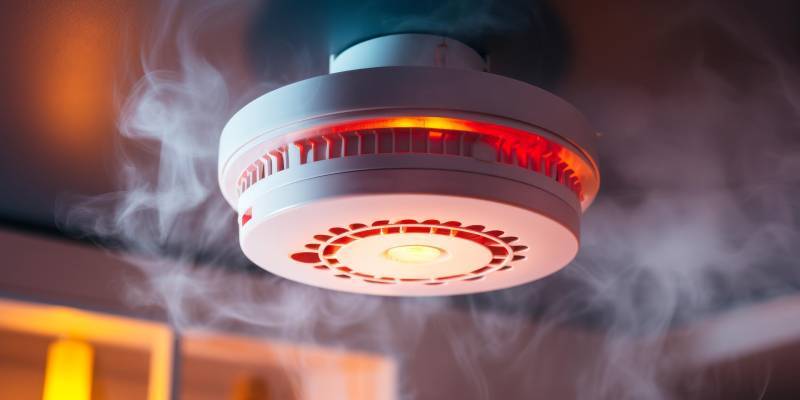
Recent tragedies hammer it home: 21 lives lost in residential fires between December 24 and January 6 alone, with 2024’s grim total hitting 162 deaths from 19,411 blazes. Nearly 70% succumbed to smoke or toxic gases, and over half the 85 winter victims were 65-plus, often solo and caught by night-time electrical faults.
Madrid Fire Department chief Javier García puts it straight: “Most fires happen at night and evolve very quickly. Detectors are not very expensive, and the warning gives you time to leave the house or close the room before the smoke spreads.”
At just €15 a pop, they’re a no-brainer, yet only one in four homes has one, says the Professional Association of Fire Technicians and Mapfre Foundation. Younger, wealthier families lead the charge. Association president Carlos Touriñán adds, “Our recommendation is always to install it. It emits an enormous sound intensity when you are sleeping, so you can wake up and get out.”
Public spots like hotels and schools must have them, and the city of Valladolid, in northwestern Castilla y León, made them mandatory for new builds since April last year. From May, factories got stricter with the need to install alarms and sensors too, but for private homes in Spain there’s no national rule yet. True, the Technical Building Code nudges new ones from November, rolling out in 2026, but it’s far from the obligatory installation needed.
These days you can even get ‘smart’ smoke detectors that ping your phone – very handy for peace of mind, and especially if you’re not at home at the time!
As a reminder: the best place in the house to put a smoke alarm is on the hallway ceiling near bedrooms (not your kitchen so you can dodge false alarms), and be sure to test them monthly, dusting them off frequently and swapping out batteries when they run out. If you live in a multi-storey house the advice is to get several smoke alarms, and don’t forget heat detectors for garages, too. For €15, it’s daft not to, especially when your home is already a fortress against burglars but may well sleep through a fire.
Time to wake up and let those alarms raise the roof, Spain!
Coup of the decade (the ‘80s)
The world has seen its share of explosive document releases recently, and now Spain has released its own. In what became one of the biggest news stories across the country this week – at least in the Spanish-language media – the death of Antonio Tejero, the former lieutenant colonel who led Spain’s infamous 23-F coup attempt, has coincided with the Spanish government’s planned release of over 160 previously classified documents. These declassified documents provide a detailed look at the plot that shook Spain’s fledgling democracy on February 23, 1981.
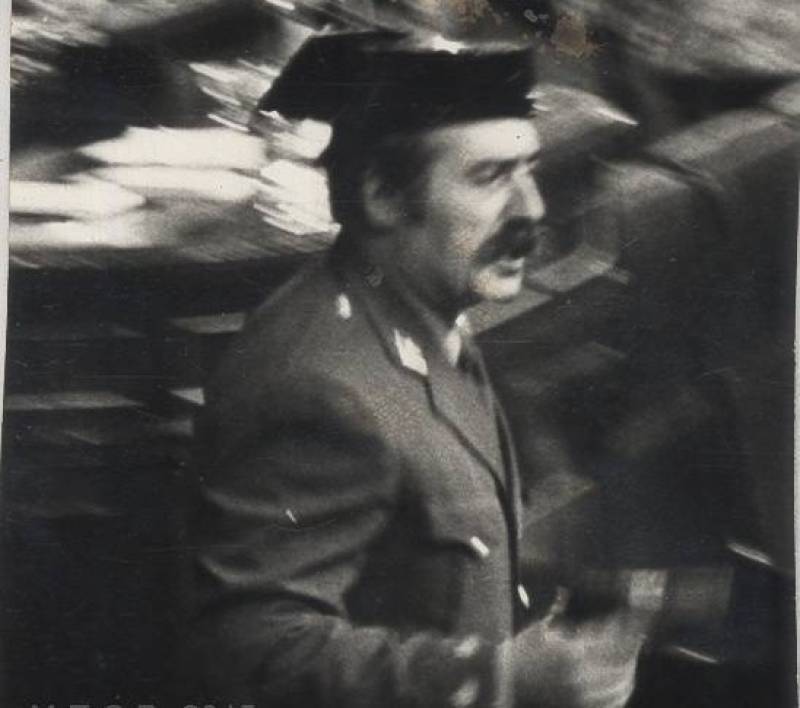 Antonio Tejero made history for all the wrong reasons when he stormed the Congress of Deputies during the investiture vote for Prime Minister Leopoldo Calvo-Sotelo. He fired shots into the ceiling and held members of parliament hostage for nearly 18 hours, including acting Prime Minister Adolfo Suárez. The standoff became a turning point for Spain's young democracy. Scenes such as Tejero shouting “Everyone freeze,” as he fired rounds into the ceiling, and his confrontation with Vice President General Manuel Gutiérrez Mellado sound like something straight out of a movie but were terrifyingly real.
The newly declassified documents reveal even more. They show that the planning for the coup had begun months before, with intelligence and military assessments planning civilian, military, and joint civilian-military operations.
The files also reveal just how decisive the role of King Juan Carlos I was in stopping the coup. From the moment Tejero entered parliament, the king ordered military leaders to remain loyal to the constitution and not to give in to the rebels’ demands. The documents detail efforts by some to spread false information that tried to implicate the king in the conspiracy.
With the 23-F files now public, some politicians have said it could be a good moment for the exiled King Juan Carlos I to return to Spain, because of the decisive role he played in stopping the coup.
Antonio Tejero was sentenced to 30 years in prison for military rebellion, serving just under 16 before his release in 1996. In later years, he denied being a central figure, claiming he was merely “an actor” in the events. As researchers continue to dig into the documents and more details emerge, it will be interesting to see how events unfold.
Murcia
There were shockwaves throughout the Camposol community and surrounding area last weekend after 42-year-old British resident Shannon Miles died following a devastating car crash on the A-7 motorway in Totana.
The accident happened at around lunchtime last Saturday. The van in which Shannon was travelling with her family crashed into the trailer of an articulated lorry. Her 7-year-old daughter and 18-year-old son were in the car with her at the time, as was her husband Mark Miles, the beloved local window cleaner.
Emergency services at the scene described it as “extremely serious”, with one person thrown from the vehicle and lying on the road after the impact. Despite the efforts of paramedics, the woman was pronounced dead at the scene.
Her 18-year-old son suffered very serious injuries and was transferred to the Virgen de la Arrixaca hospital in Murcia, while the car’s other two occupants sustained less serious injuries. The two men travelling in the cab of the lorry were treated for minor injuries.
A fundraiser has been set up on GoFundMe by Mark Miles’s brother, Paul, to raise money for the family to rebuild and have some time to grieve without money worries. You can donate here.
2,000 miles away in Doha, another Murciano gave cause for celebration when El Palmar’s own Carlos Alcaraz continued his extraordinary rise by winning the Qatar ExxonMobil Open, defeating France’s Arthur Fils 6-2, 6-1 in just 50 minutes.
 It was one of the quickest finals of Alcaraz’s career and marked his ninth ATP 500 title, drawing him level with Andy Murray for the fourth-highest number of ATP 500 titles since the series began in 2009. Of 34 career finals, he has won 26, giving him a success rate of 76.4%, surpassing the career percentages of many established greats.
Spain’s other great tennis player of our time, Rafael Nadal, retired with a finals win rate of 70.2%, while Novak Djokovic stands at 69.6%, Roger Federer finished with 65.6% and Alcaraz’s current rival Jannik Sinner has 72.7%. Already one of the all-time greats, and a true ambassador for Spain and Murcia on the world stage.
In other Murcia news, IKEA is preparing to close its small planning store at the Espacio Mediterráneo shopping centre in Cartagena. The 75-square-metre outlet, which was opened in 2022 as the first of its kind in the Region of Murcia, offered customers personalised design consultations for kitchens, wardrobes and other home projects rather than immediate product collection. It was designed to complement the larger IKEA branch in Murcia city, which will remain open; no exact closing date has been confirmed for the Cartagena mini-store, but the shutdown is scheduled for March some time.
But while IKEA is downsizing, other facilities across the Region are upscaling rapidly: the gap between urban and rural communities in Murcia, of which the latter are quite common, is narrowing as 5G coverage extends beyond the main population centres.
Telecoms company MasOrange has led the most recent rollout, bringing 5G services to a dozen towns with fewer than 10,000 residents, among them Lorquí, Moratalla, Blanca, Abanilla, Librilla, Pliego, Villanueva del Río Segura, Campos del Río, Albudeite and Ricote, while even small communities such as Ulea and Ojós now benefit from faster connections. Coverage in most of these municipalities exceeds 95%, with further improvements already in the planning.
Telefónica has increased its 5G presence from 28 to 37 towns over the past year, and Vodafone now serves 36 municipalities, focusing on speed and improved indoor reception. Supported in part by EU-funded initiatives including the Unico-5G Redes Activas programme, all this busy expansion work is designed to reduce the digital divide, support businesses and public services, and enable residents to access high-speed downloads, stable video calls and uninterrupted streaming. Shame it causes Covid (joke!).
However, while we welcome the spread of improved connectivity, there have been other infrastructure safety concerns come to the fore this week, namely high-voltage power lines that pose a threat to protected bird species.
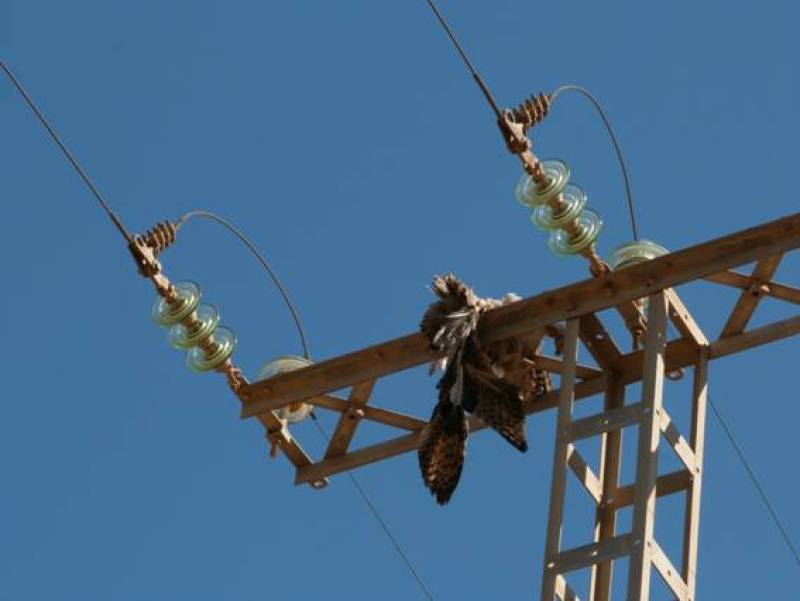
The Murcia regional government’s Department for the Environment has received 216 safety plans from 130 power line owners outlining potential protection measures such as insulating cables, modifying hazardous supports and installing visual markers to prevent collisions. However, there are still around 50 owners who have yet to respond to requests for corrective action, prompting warnings of possible sanctions.
Among those yet to submit plans are local town councils, irrigation and industrial firms and property developers, with many of the most dangerous lines located in rural areas. Those who do submit protection plans can hope to benefit not only from the knowledge that they have helped to prevent the deaths of innocent animals, but also from a share of €1.88 million in aid money. If they don’t want it, I’ll write the safety plan for them!
And lastly, the Region of Murcia International Airport in Corvera, has been named best small airport in Europe for the fourth consecutive year. The award, presented in the category for airports that process fewer than two million passengers each year, is based entirely on passenger feedback assessing cleanliness, waiting times, security, facilities and staff service. It certainly is a clean airport, that much is true.
Having previously won in 2021, 2022 and 2023, the airport continues to build a reputation for high standards despite operating under a concession arrangement that excludes it from Aena’s planned €13 billion investment programme for 2027 to 2031, as we reported last week.
Since opening in January 2019, the airport has relied on its own growth and profitability to fund improvements, which over the past year have included upgraded lighting, new specialised toilets for passengers with ostomy bags, enhanced assistance for travellers with reduced mobility, a book exchange point and expanded commercial facilities featuring a refurbished duty free shop and two additional outlets.
This weekend, you can enjoy a screening of the classic John Wayne western ‘El Dorado’ in its original English-language version at Los Alcázares Town Hall on Friday evening, free paddle yoga sessions at the nearby Playa Manzanares beach on Saturday morning or a free classical music concert in Alhama de Murcia on Saturday evening. Oh, and there are still carnival celebrations taking place in Torre Pacheco, amongst others.
For more activities and events coming up soon in the Region of Murcia, all you have to do is take a look at our EVENTS DIARY:
Spain
I know we’ve banged on about this plenty of times before, but if you’ve been putting off buying one of the new V16 emergency beacons for your car, now really is the time to sort it out. The first fines have already been issued, with a driver in Valencia becoming the unhappy recipient of the inaugural €80 penalty, and traffic police are under no obligation to hold back from handing out more.
The DGT’s handling of the whole transition has been widely criticised as confusing, and even the head of the DGT’s Telematics Department has acknowledged that the communication around it left a lot to be desired.
The rules have technically been on the books since 2021, but became a firm legal requirement at the start of this year, with no clear end date ever given for the grace period.
If you do get caught without one and want to appeal the fine, there is a legal argument based on the principle of legitimate expectation, which essentially says authorities must be clear and consistent in how they apply the law, and a Supreme Court ruling from 2004 lends some weight to that case.
Worth knowing about for sure, though obviously how far it gets you will depend on the individual situation. Best just to shell out the 30 quid or so it costs and keep it in your car.
Most of the country has had to put up with some annoying calima dust over the past few days, but poor Lanzarote has had quite the week. After the recent front brought a thick layer of Saharan dust and strong winds, the island is now dealing with something rather more alive.
A swarm of locusts has arrived, carried across on the same winds, and according to Paco Fabelo, head of the Environment Department at Lanzarote Island Council, the conditions were pretty much perfect for it. He explained that locusts don’t actually travel under their own steam over long distances but instead hitch a ride on the wind, and the recent weather gave them exactly the lift they needed.
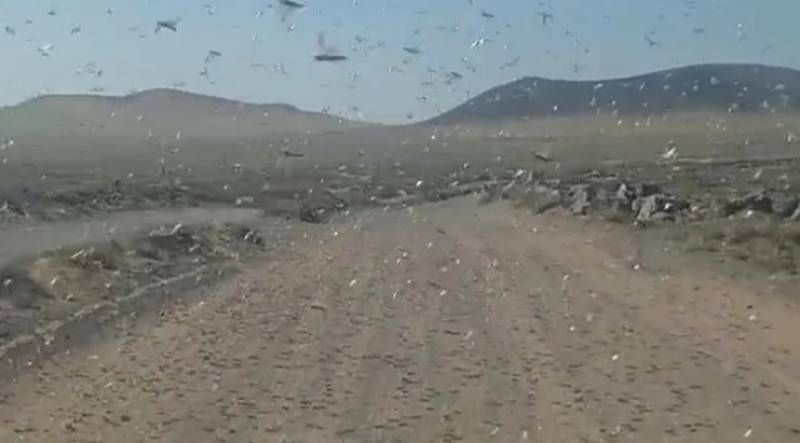
A wetter than usual winter along the North African coast has also meant the insects have been reproducing at a rate that Mr Fabelo described as essentially unchecked. For now, officials expect them to stay scattered rather than forming a dense swarm, with most of the activity concentrated along the island’s west coast, although a few have already been spotted as far as Arrecife.
The main concern at this point is rain. If Lanzarote gets a significant downpour, the damp soil could give the locusts everything they need to start breeding locally, which is very much not the outcome anyone is hoping for.
Back on the mainland, the government is moving to tackle a different kind of threat to young people’s health as Spain is soon set to ban the sale of energy drinks to under-16s.
 Minister for Consumer Affairs Pablo Bustinduy announced the plan in Barcelona, explaining that it forms part of a big national strategy to steer children towards healthier habits. For drinks with more than 32mg of caffeine per 100ml, the age limit will go up to 18.
According to figures from the Spanish Agency for Food Safety and Nutrition, 9 out of 10 people in Spain are in favour of the move, which gives ministers a pretty solid mandate to push ahead.
The government pointed out that similar restrictions are already in place in countries including Germany and Lithuania, as well as in the Spanish regions of Galicia and Asturias, so a national rule would simply bring consistency across the board.
It won’t stop there either, with a separate proposal in the works to tighten up the rules around advertising unhealthy food to children. Spanish officials noted that children are currently exposed to more than 4,000 television adverts a year for junk food and unhealthy products, a figure that climbs significantly once social media is thrown into the mix.
Alicante
A 20-year-old French student had a very lucky escape in the early hours Thursday last week, February 19, after falling into the water at Alicante’s port while drunk and spending what must have felt like an eternity struggling to stay afloat.
It was around 6.15am when a passer-by spotted him clinging to the rocks near La Concha and called the Policía Nacional. Officers arrived to find him exhausted, hypothermic and barely keeping his head above water, with injuries to his arms, hands and legs from repeatedly trying to haul himself out.
One eyewitness described him as “practically invisible and stuck to the wall of the dock like a lizard”.
Police used ropes to pull him to safety and he was rushed to Doctor Balmis General Hospital to recover. He later told officers he’d come to Alicante from Pau in southwest France to visit friends, had drunk heavily the night before and lost his footing when he got too close to the edge.
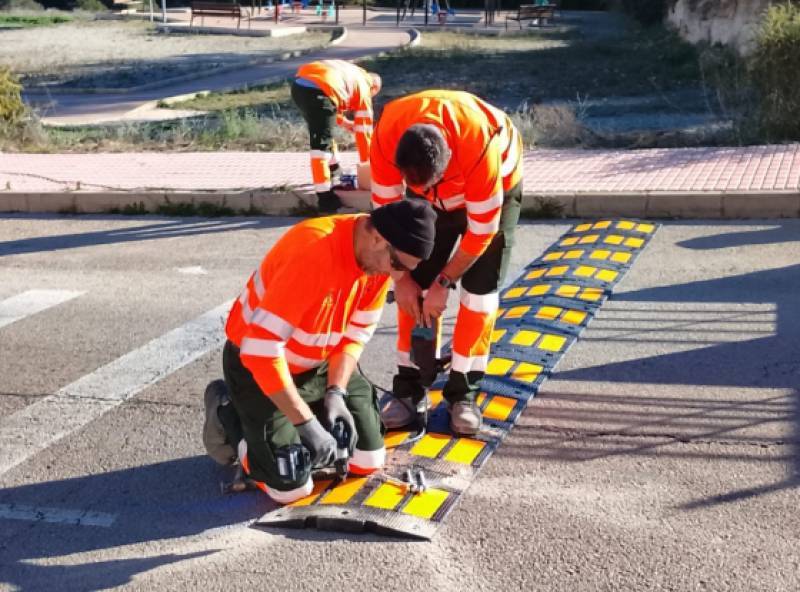 If you live in Orihuela Costa and you’ve ever wished there was an easier way to flag a pothole or a broken footpath without disappearing into a maze of phone calls and bureaucracy, good news. The town hall has launched a new website through municipal company Ecoplan Servicios that lets residents report problems with roads and public spaces quickly and simply, in English, German, French and Spanish.
All you need to do is take a photo, drop a pin on a map and hit send, and it can all be done in seconds from your phone.
Potholes, damaged kerbs, faded road markings, dodgy beach walkways, broken street signs… it’s all covered. For anyone who has spent years watching the same crumbling bit of pavement get ignored, it’s a very welcome development.
And rounding off the local news on a high note, Torrevieja’s long-awaited Paseo del Mar leisure complex at the port is finally, properly (nearly) here. After a string of missed opening dates, the concessionaire has confirmed a launch window between the end of April and the beginning of May.
 Most of the private construction work has been done for a while, but delays to the surrounding council-led seafront improvements slowed things down. Now that those works are progressing, businesses fitting out their units have been pushing hard to get ready, with work continuing even at weekends.
The waterfront complex covers more than 20,000m² overlooking the bay, with 27 retail and hospitality units across 8,500m², around 80% of which are already leased and 100% committed.
A multiplex cinema and American-style bowling alley are among the expected highlights, along with LED lighting, big screens and landscaped areas designed to give the whole seafront a fresh, modern feel.
The overall investment has topped €50 million, more than double the original estimate, with a 50-year concession in place. It’s been a long time coming for Torrevieja, but spring is shaping up to be quite a moment for the town.
Another exciting moment this weekend is bound to be the Orihuela Costa Carnival parade, which returns to Playa Flamenca this Saturday. Don’t miss it!
For other events and activities happening in the area, check out the What’s On page of Alicante Today or join the Costa Blanca What’s On and Where to Go Facebook group
Andalucía
This Saturday is the Día de Andalucía, when andaluces enjoy flamenco dancing, their traditional breakfast of tomato and jamón serrano on toast, and loads more typical Andalusian things. Join the party!
(Oh, and schools are taking a long weekend and some shops will probably be closed, too, so do go and check opening times at your local supermarket.)
It comes just ahead of what is sure to be a moment that feels like history in the making down in the Campo de Gibraltar. The decades-old border fence between La Línea de la Concepción and Gibraltar is officially coming down. First Vice President of Spain and Finance Minister, María Jesús Montero, confirmed this Monday that President Pedro Sánchez will soon visit the area to mark the “definitive dismantling” of the fence; an event she describes as the fulfilment of a “historic aspiration” for the region.
The announcement arrives in the same week as Brussels has published its full legal text outlining Gibraltar’s post-Brexit relationship with the EU. The draft UK-EU treaty on Gibraltar establishes a new post-Brexit framework governing borders, trade, aviation and workers’ rights while explicitly stating that sovereignty remains unaffected.
Spain will apply Schengen controls at Gibraltar’s port and airport, with the power to reject residence permits and certain asylum cases, even after the physical land border fence is removed. Meanwhile, Gibraltar will enter a bespoke customs union with the EU, with Spain overseeing customs checks at designated posts in Spain and strict rules introduced on taxation and tobacco to prevent smuggling and market distortion.
The agreement also creates a joint Gibraltar-Spain framework for operating the airport under EU rules, enabling potential EU flights, and guarantees protections for cross-border workers, including employment rights, Social Security coordination, pensions and healthcare, providing long-term legal certainty for the 15,000 people who cross the border daily.
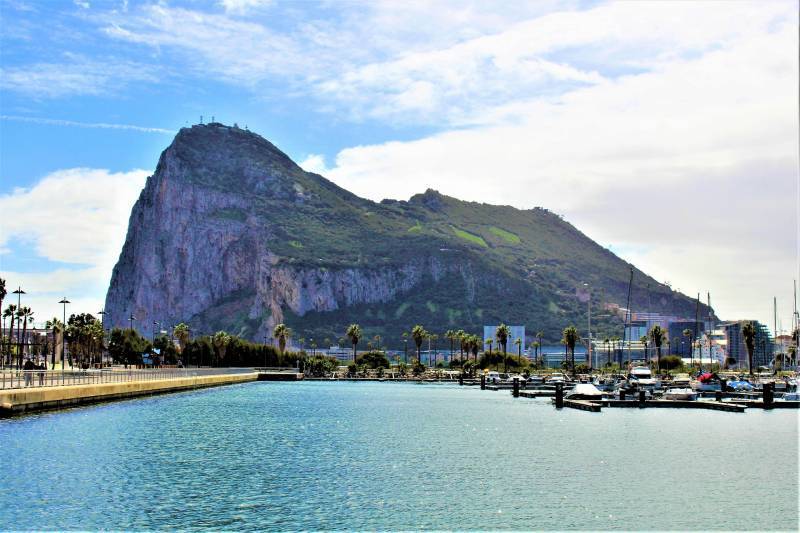
The agreement still needs to go through parliaments in both London and Europe but could start being applied as early as April 10. Montero says it’s “magnificent news” for Cádiz, adding warmly that “with Pedro Sánchez’s government, it will become a reality.” She also stressed that strict financial checks will ensure fairness for businesses on both sides of the border.
For locals, the end of the fence is more than a political milestone; it’s the end of an era. Soon, everyone going between La Línea and Gibraltar may be able to stroll or drive across freely for the first time in generations. Not a bad way to start the spring.
And speaking of spring, another, but more unpleasant, arrival is already making itself known… mosquitoes. With all the rain we’ve had lately, experts are warning of an itchier few months ahead. Jordi Figuerola from the Doñana Biological Station says simply, “With the abundant rainfall and high temperatures, there will be more mosquitoes this season,” and he’s urging everyone to do their bit to stop them breeding.
The warning covers wetter zones like the Lower Guadalquivir, La Janda in Cádiz and the Costa del Sol, where mosquitoes that can spread the West Nile virus are most active. And then there’s the tiger mosquito, that little striped menace that loves gardens and needs just five days of stagnant water to get going. As Zoology Professor Raimundo Real explains, “If there is no standing water for five days, the tiger mosquito cannot complete its cycle.” So yes, that forgotten bucket of rainwater on your terrace could be trouble.
Local councils are already gearing up: Seville and Huelva have kicked off early mosquito control programmes, and Málaga is keeping close watch at the Guadalhorce river mouth. But Figuerola warns that “fumigating for the sake of fumigating is useless” and stresses prevention as the best cure. A friendly reminder, then: now’s the perfect time to do a quick garden check before the buzzing begins in earnest.
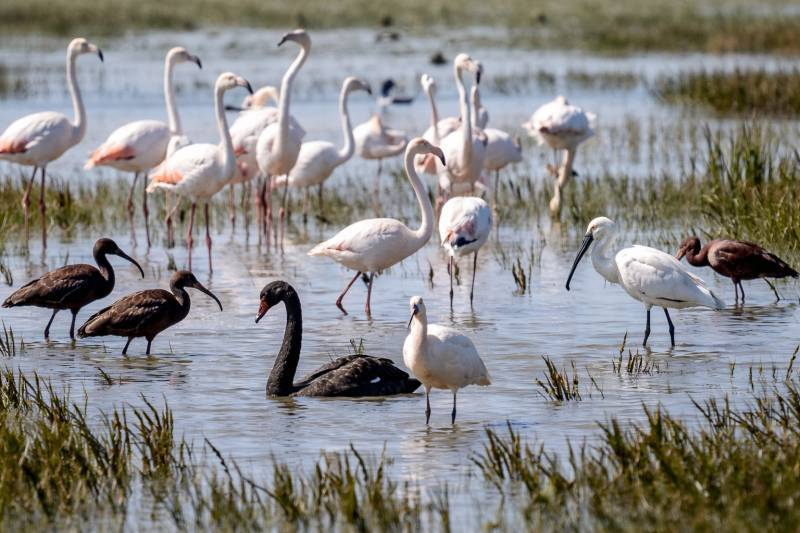
The same downpours feeding those mosquitoes, however, have been an absolute blessing for Doñana. After years of drought and despair, the wetlands are alive again, and with them, the skies over Huelva and the Guadalquivir marshes are once more teeming with birds.
More than 385,600 waterbirds have been recorded this winter, spreading across 88 species. That’s a big leap from recent years and a hopeful sign that the park is bouncing back. The numbers of spoonbills have soared, reaching over 120,000, and ducks like the common pochard are also flourishing. Even rare visitors, such as black storks, squacco herons and glossy ibises, have made an appearance.
Researchers at the Environmental Monitoring Group say it’s proof of Doñana’s resilience when conditions improve.
“The evolution of waterfowl confirms that Doñana responds immediately when water is available,” said researcher Rubén Rodríguez. It’s wonderful proof that a bit (or a lot) of rain can breathe life back into one of Europe’s most important natural treasures.
You may have missed…
- Tributes pour in for British man found dead in Tenerife hotel as woman arrested on murder suspicion.
Friends of Russell Watts, a 63-year-old man from Rotherham found dead in a Tenerife hotel room last month, have shared heartfelt tributes as a murder investigation got underway this week. - Iberia introduces new baggage surcharge of up to €140 for irregular items.
Passengers flying with Iberia, to and from Spain, are being warned about a new surcharge that could add as much as €140 to the cost of their journey if their suitcase does not meet standard shape requirements. - These are the towns with the most traffic accidents in Andalucía.
New figures from the Spanish traffic authorities, the DGT, show how road accidents were spread across Andalucía in 2024. Overall, the region had 358 fatalities, 48 more than the previous year unfortunately. - Campervans are taking over Murcia’s shopping centre car parks.
What was once a straightforward place to leave your car at Murcia’s Thader shopping centre has transformed into something resembling a permanent campsite, with motorhomes, water containers and solar panels spreading across the parking spaces. And now, because that area has become so overcrowded, the overflow has started appearing at a second location near the Enrique Roca stadium and the Nueva Condomina shopping centre! - Thousands in Spain could retire 10 years early under new health rules.
Spain has been overhauling its approach to retirement over the past year or so and the latest change is a significant one for tens of thousands of people living with serious long-term health conditions, including spina bifida, Parkinson’s disease, Huntington’s disease and more.
And that’s all we have for you for another week. As ever, thank you so much for reading all the way to the end (assuming you actually did and didn’t just skip down to this part!).
Have a great weekend!










Find more information by AREA, TOWN or URBANISATION .....
Cabo de Palos
Cartagena
El Carmoli
Islas Menores and Mar de Cristal
La Manga Club
La Manga del Mar Menor
La Puebla
La Torre Golf Resort
La Union
Los Alcazares
Los Belones
Los Nietos
Los Urrutias
Mar Menor Golf Resort
Pilar de la Horadada
Playa Honda / Playa Paraiso
Portman
Roldan and Lo Ferro
San Javier
San Pedro del Pinatar
Santa Rosalia Lake and Life resort
Terrazas de la Torre Golf Resort
Torre Pacheco
Cartagena
El Carmoli
Islas Menores and Mar de Cristal
La Manga Club
La Manga del Mar Menor
La Puebla
La Torre Golf Resort
La Union
Los Alcazares
Los Belones
Los Nietos
Los Urrutias
Mar Menor Golf Resort
Pilar de la Horadada
Playa Honda / Playa Paraiso
Portman
Roldan and Lo Ferro
San Javier
San Pedro del Pinatar
Santa Rosalia Lake and Life resort
Terrazas de la Torre Golf Resort
Torre Pacheco
Aguilas
Aledo
Alhama de Murcia
Bolnuevo
Camposol
Condado de Alhama
Fuente Alamo
Hacienda del Alamo Golf Resort
Lorca
Mazarron
Puerto de Mazarron
Puerto Lumbreras
Sierra Espuna
Totana
Aledo
Alhama de Murcia
Bolnuevo
Camposol
Condado de Alhama
Fuente Alamo
Hacienda del Alamo Golf Resort
Lorca
Mazarron
Puerto de Mazarron
Puerto Lumbreras
Sierra Espuna
Totana
Abanilla
Abaran
Alcantarilla
Archena
Blanca
Corvera
El Valle Golf Resort
Hacienda Riquelme Golf Resort
Lorqui
Molina de Segura
Mosa Trajectum
Murcia City
Peraleja Golf Resort
Ricote
Sucina
Abaran
Alcantarilla
Archena
Blanca
Corvera
El Valle Golf Resort
Hacienda Riquelme Golf Resort
Lorqui
Molina de Segura
Mosa Trajectum
Murcia City
Peraleja Golf Resort
Ricote
Sucina
Urbanisations
CamposolCondado de Alhama
El Valle Golf Resort
Hacienda del Alamo Golf Resort
Hacienda Riquelme Golf Resort
Islas Menores and Mar de Cristal
La Manga Club
La Torre Golf Resort
Mar Menor Golf Resort
Mazarron Country Club
Mosa Trajectum
Peraleja Golf Resort
Santa Rosalia Lake and Life resort
Terrazas de la Torre Golf Resort
La Zenia
Lomas de Cabo Roig
Important Topics:
CAMPOSOL TODAY Whats OnCartagena SpainCoronavirusCorvera Airport MurciaMurcia Gota Fria 2019Murcia property news generic threadWeekly Bulletin
CAMPOSOL TODAY Whats OnCartagena SpainCoronavirusCorvera Airport MurciaMurcia Gota Fria 2019Murcia property news generic threadWeekly Bulletin