








- EDITIONS:
 Spanish News Today
 Alicante Today
 Andalucia Today
Spanish News Today Editors Roundup Weekly Bulletin Feb 6
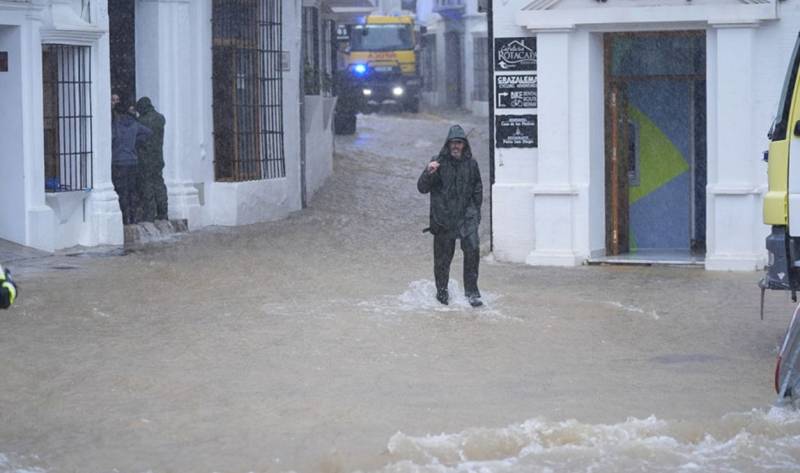
TOP STORIES: "Thousands evacuated as southern Spain suffers historic storm and flooding" & "Spain vows to follow Australia and ban social media for under-16s"
It’s been another very wet week, especially for Andalucía, which has seen red alerts for winds and excessively strong rainfall, forcing whole towns to be evacuated, shutting down airports and roads, and generally causing more mayhem… and with each successive storm the severity of the situation just gets compounded. What’s worse, the forecast is only for more rain to come.
Read all about it here, along with your usual mix of other news stories from around Spain:
The ‘¡ay!’ of the storm
#BorrascaLeonardo | Auxilio a cerca de 200 personas en Granada #AuxiliosGC
— Guardia Civil (@guardiacivil) February 5, 2026
📍 Huétor Tájar, Villanueva de Mesía y Dúdar.
🚁 Especialistas de diferentes unidades de #GuardiaCivil evalúan los daños y garantizan el apoyo a la ciudadanía. Dos municipios permanecen aislados.
⚖️ Se… pic.twitter.com/nIP9JPujsy
If you’ve been staring out at relentless downpours or listening to the wind rattling your windows this week, Storm Leonardo’s been the main culprit keeping everyone on edge, at least in Andalucía. It’s lashed the region with heavy rain, fierce gusts and swollen rivers, triggering evacuations, road closures and school shutdowns across pretty much all eight provinces.
Early Wednesday in San Fernando near Cádiz, winds gusted to 81.7kmh around 4am, with 21 litres of rain soaking the ground in 24 hours. The mayor shared a relieved update on social media: “The night ends with hardly any incidents in San Fernando,” thanking residents for hunkering down sensibly and emergency teams for their overnight vigilance.
Things grew dicier in other parts, though. Aemet issued red alerts for the Strait of Gibraltar, the Sierra de Grazalema and Serranía de Ronda, warning of up to 120 litres of rain per hour. Over 3,000 people were evacuated from flood-prone areas in Cádiz, Jaén and Málaga, including 36 overnight in Algeciras after the Pícaro River overflowed its banks.
President of the Junta de Andalucía, Juanma Moreno, suspended in-person classes on Wednesday and Thursday, switching to online (for some schools) after an emergency huddle.
With six rivers at red alert and 18 more on orange, the official advice was “to anticipate and act preventively”, which is why dozens of roads stayed shut too.
More than just a spot of bad weather, the situation is so serious for Andalucía precisely because of the relentless nature of the storms in an area that is just not used to them.
You see, weeks of almost continuous rain have left the ground completely saturated. Normally dry soil can only absorb so much water, and once it reaches its limit, any further rainfall simply runs off the surface. That water quickly ends up in streets, rivers and low-lying areas, which is why flash flooding is happening even in places that rarely see it.
In coastal areas, strong winds and waves have weakened beaches and promenades, stripping away sand and damaging seafront infrastructure. Inland, the risks are different but just as dangerous. Waterlogged hillsides become unstable, leading to landslides, falling rocks and road failures, especially in mountainous areas.
At the same time, dams and reservoirs have had to release water to prevent overflow and structural damage. When these controlled releases happen during heavy rain, river levels can rise fast and spill into towns, farmland and residential areas.
This is why, although it’s tempting for those of us who hail from areas further north that regularly receive much more rain than this to say, “it’s just a bit of rain, what’s all the fuss about?”, authorities here are treating the situation with such urgency.
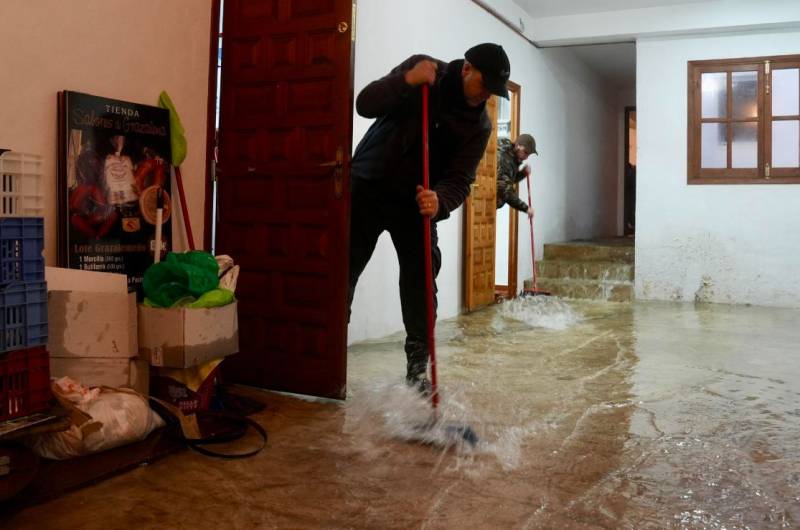
But if despite all that you’ve still been braving the weather to reach the office, here's some reassurance for you: you have a legal right to stay home on paid leave during orange or red alerts.
The Ministry of Work and Labour made it clear this week, reminding people that bosses must tweak hours, cut shifts or grant up to four days’ justified absence if roads flood or buses halt with no pay docked and no comebacks.
Farmers are feeling the squeeze too. Farming association Asaja Andalucía’s Ricardo Serra described it as “total paralysis”, with fields too sodden for tractors to even move. Winter wheat sits 50% unsown past the December 15 deadline in Seville, Córdoba and Cádiz with some patches underwater for 25 days already.
Potato planting has also stalled since December, sunflowers are lagging behind, and citrus harvests are grinding to a halt.
“It’s clear we need water,” Serra said, “but we also need a little bit of clear weather to be able to do our work.”
Amid all the gloom, there’s been a couple of bright spots: reservoirs now stand at 61.26% capacity holding 6,790 cubic hectometres (hm³). That’s a massive near-1,000hm³ jump in just seven days – 20 points above decade averages and 23 better than last year at this time. The Guadalquivir basin led the charge, gaining 758hm³ to hit 59%, while nationally Spain’s sitting pretty at 67.3%, so at least drought fears are fading fast.
Even Doñana’s marshes are perking up, with heavy rains flooding 90% of the parkland, almost double the historical average. Eloy Revilla from the Doñana Biological Station called it a positive step for the aquifer’s slow recovery, especially as flooding hit early enough for breeding birds.
“The difference is that it’s happening much earlier,” he noted. “If the rain stops at some point and the water levels stabilise, they’ll start to recede, and they’ll be able to begin breeding. I’m confident we’ll have a very strong breeding season this year.”
While the 2024-2025 cycle brought 675mm of rain (above the 530mm norm), experts caution the aquifer’s still vulnerable to overexploitation – good news for wildlife, though continued monitoring and protection will be essential.
Maxin’, relaxin’, it ain’t too taxin’

Okay, I know it’s only the beginning of February and most of us are still just settling in to the new year, but the Spanish tax man never sleeps and his eye is already firmly trained on what, for many of us, has become the dreaded season: Income Tax Return time, or what’s officially called Declaración de la Renta.
It’s due to kick off on April 8, one day earlier than last year, and while employees, business owners and freelancers will all be required to file their returns this 2026 springtime, the figures we submit will actually relate to 2025.
These days, most people choose to file their income tax return online. It’s not exactly what you’d call straightforward, and you will need at least a rudimentary knowledge of Spanish (or a very good translation tool), but it’s definitely the quickest option.
However, there are a couple more ways to do it. Taxpayers can ring the Tax Agency and file over the phone between May 6 and June 30. Although it’s only a phone call, you’ll still need to make an appointment for this. Appointments can be requested between April 29 and June 29.
For those who prefer to get the job done themselves, in-person appointments will be available this year from June 1 until June 30. Again, you’ll need an appointment and the booking period runs from May 29 to June 29.
Of course, if you want to avoid the whole thing altogether, you can just hire an asesor to take care of the whole thing for you, and wipe your hands of the entire affair.
Whichever option you choose, be it online, over the phone, in person or delegating to someone else, you have to file your 2025 income tax return before June 30, 2026. Once this deadline passes, fines will be imposed and the interest racks up pretty rapidly.
On the flip side, the Tax Agency has six months from the filing deadline to issue any refunds. After that, you’ll be entitled to interest on the amount owed to you.
Of course, it’s not just the Tax Man whose eyes are trained on your bank balance, and cybercriminals are forever searching for gaps in the system to rip us off. One such cocky criminal who claims he accessed the tax data of practically every registered citizen in Spain has taken to the internet to boast about his accomplishment and try to make a quick buck.
Last Friday, someone using the moniker “HaciendaSec” posted a message on the Dark Web saying he had obtained “the updated tax database” from the Ministry of Finance’s website. That includes full names, national identity and tax identification numbers, postal addresses, telephone numbers, email addresses and bank account numbers, as well as tax information of some 47.3 million people, which the hacker was trying to flog for a small fortune.
While the authorities are taking the cyberattack very seriously, investigators have already smelled a bit if a rat and say the criminal’s claims could be entirely false or, at least, wildly exaggerated. In any case, taxpayers are being advised to be extremely cautious.
Experts warn that phishing campaigns (where scammers send fake emails or messages pretending to be from trusted organisations like banks or government offices to trick you into sharing personal details such as passwords or bank information) often follow high-profile breaches, using very realistic-looking communications from official bodies.
People are being urged to treat any unexpected messages that seem to come from the Ministry of Finance with caution, especially if they ask for personal or banking details, and to verify anything suspicious through official channels before responding.
Europe looks Down Under for inspiration

In a move that’s sparked huge debate both in Spain and internationally, Government President Pedro Sánchez announced this week that he will ban access to social media for anyone under 16. The aim, his political party says, is to protect children from exposure to harmful content online, including addiction, abuse, pornography and manipulation.
He also wants to make sure that tech companies are held legally accountable for what happens on their platforms. The proposal would require platforms to use effective age verification systems (not just checkboxes) and potentially make executives liable for failing to remove illegal or hateful content.
The motivation behind the proposal is undoubtedly noble and fits in nicely with Spain’s broader digital safety reform. It’s not exactly novel either, as Australia has already introduced a similar ban for teenagers and other countries like France, Denmark, Greece, Portugal and the UK are also considering following the Aussies’ examples, implementing age limits and restrictions.
However, it does throw up a couple of important questions: Is the government responsible for parenting and protecting our children? And at what point does law and legislation cross a line and turn the country into a nanny nation?
Never shy about sharing his opinion, the owner of X, Elon Musk, blasted President Sánchez on X, calling him a “tyrant” and “fascist totalitarian,” framing the ban as an infringement on tech freedoms and criticising the Spanish government’s stance.
Pavel Durov, founder of Telegram, also condemned the plan, warning that it could threaten privacy and internet freedom and accusing the government of misleading people.
Social media and less formal debate, on the other hand, shows mixed opinions. Some people have applauded the tighter controls, while others are understandably worried about privacy, since the rules will require age verification using personal ID. Still more are concerned that an outright ban could result in kids migrating to underground or less safe platforms.
The proposal is still in the very early stages and is sure to evolve as intense discussions continue over the coming weeks and months, but at least it does attempt to address what is very clearly a growing problem with how young people access online networks.
Murcia
 Talking of Australia, Murcia’s favourite tennis player Carlos Alcaraz won the Australian Open last Sunday, beating Novak Djokovic and lifting the one Grand Slam trophy missing from his cabinet, becoming the youngest player ever to win all four majors at the age of just 22.
The match itself had all the drama you would expect, with Alcaraz shaking off a slow start to come back and win in four sets over three intense hours. Djokovic missed out on a record-breaking 25th Grand Slam, but the night belonged to Alcaraz, who now joins an elite group of tennis legends and becomes only the second Spanish player ever to win the Australian Open (the other being Rafa Nadal, of course).
Back home, nobody was missing it. Big screens went up, bars filled, neighbours gathered and in Carlitos’s native El Palmar the sense of pride was almost tangible. It was not just about tennis, but about seeing someone who grew up locally conquer the world stage.
On the court, Alcaraz is undoubtedly a slippery customer to try to beat, but another slippy, slimy critter has been making headlines in Murcia this week after the Spanish government announced plans to give the European eel full legal protection by classifying it as an endangered species.
Eel numbers have been collapsing for decades and coastal lagoons like the Mar Menor are among their most important habitats. While the eel is already listed as critically endangered internationally, this move would finally bring tougher fishing restrictions, habitat protection and real support for recovery projects.
Chefs have also joined the conversation, backing a campaign that politely but firmly says no to eating eels, traditionally a Spanish delicacy.
A more dangerous animal is the pine processionary caterpillar, which has appeared earlier than usual this year. Warmer conditions mean they are already coming down from trees and, worryingly, they are not confined to forests. Residential areas are now being affected and the first serious cases in dogs have already been reported.
As you may already know, contact with these caterpillars can cause severe swelling, vomiting and even tissue damage to a dog’s tongue, and quick action is vital. The message from vets is simple but important: keep dogs on a lead and stay alert on walks. And don’t touch them yourself, because they can also be dangerous for people!
There was more positive news for nature lovers, though, with figures showing a steady rise in visitors to protected natural areas across the Region. More than 68,000 people took part in activities, visits and educational programmes last year, from guided walks to workshops and family-friendly events.
The growing popularity of these spaces suggests people are not just looking for somewhere pretty to walk, but are genuinely interested in understanding and respecting the environment around them. That kind of engagement is quietly encouraging, especially in a region where natural landscapes are both precious and vulnerable.
When it comes to tourist accommodation, though, the government is continuing to step up its crackdown on illegal holiday rentals. More than 2,100 listings in the Region of Murcia have been flagged and ordered off platforms like Airbnb and Booking.com after failing to meet legal requirements.
It is part of then much larger national operation, of course, due to the ongoing efforts to regulate short-term lets more tightly, trying to ease housing pressures and unregulated rentals, and a story that will likely reappear again and again as enforcement catches up to the rules.
 Meanwhile, Los Alcázares is taking a significant step towards improving care for its older residents as plans are moving ahead for a new senior citizens’ residence, with around 140 beds, to be built on an existing municipal site that has lain untouched for donkey’s years.
With almost a quarter of the town’s population over 60 and long waiting lists for care places, the project has been widely welcomed. Alongside the recently expanded Day Centre, it just goes to show there’s a push to ensure older residents can stay close to home, families and familiar surroundings rather than having to look elsewhere for support.
And finally, proof that not all good ideas need official backing came from Camposol, where a casual Facebook group for golfers has turned into something of a small local phenomenon. Set up by resident Henry Kelshaw, who simply wanted people to play with without the formality of a club, the group has grown to more than 800 members in just a few months!
It is open to players of all abilities, men and women alike, and they play at courses around the Region and over in neighbouring Almería. It’s really about meeting people and enjoying the game, so if you want a relaxed, social, grassroots golfing community, do be sure to join “The Golf Club Murcia 25” Facebook group!
Remember, to see more sporting and other activities and events coming up soon in the Region of Murcia, all you have to do is take a look at our EVENTS DIARY:
Spain
Police are warning drivers across Spain about the rise in thefts from inside vehicles, with the new V-16 emergency beacon now firmly on thieves’ radar. The device became compulsory on January 1, and officers say its presence in almost every car has made it an easy target.
Nearly 1,000 reports of thefts from vehicles and stolen V-16 beacons have been filed nationwide so far, and police say this is higher than usual for this time of year. While not all cases are directly linked to the beacon, they believe its mandatory use has added to the problem.
The V16 beacons must have disappeared from the shelves in Granada, as the issue has been particularly bad there. The police even had to set up a special unit after 109 vehicle break-ins were reported in just one month.
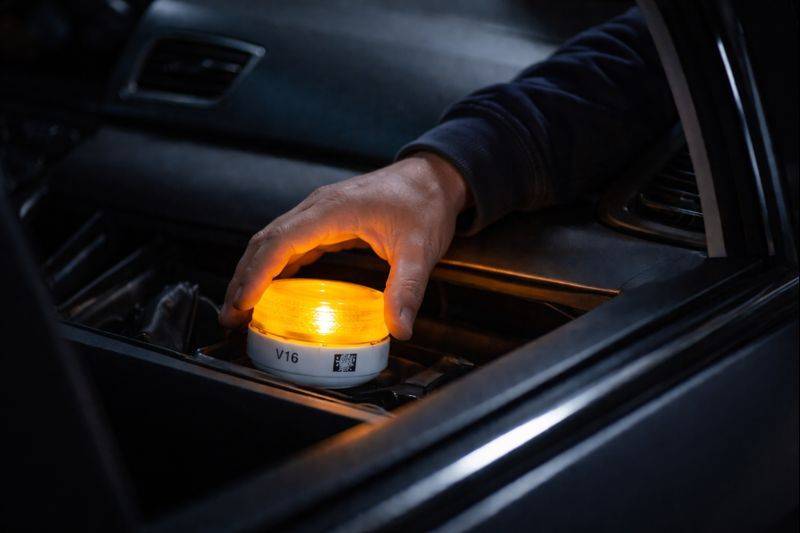 Most of the incidents happened overnight, with side windows smashed in cars parked on the street. Twelve people have been arrested in recent weeks, including one suspect detained four times in just a few days. Police say prison sentences are unlikely as the stolen items are low value.
Similar spikes have been reported elsewhere, including Alicante, Madrid and Málaga. In San Vicente del Raspeig, around 20 vehicles were damaged in a vacant parking area.
Police say these thefts are not linked to organised gangs. Instead, those arrested are usually drug users looking for items they can sell quickly, such as sunglasses, handbags and of course the V-16 beacons. With official prices around €40, stolen beacons are reportedly being resold for as little as €5 to €10.
So don’t leave the device visible inside the car; pop it in the glove box. Also be sure to note down its IMEI number so you could report it stolen if you need to, and buy only from authorised sellers. Police have also warned they may seek court approval to track stolen beacons using their built-in geolocation systems.
Another worry for motorists is the fake DGT emails popping up in inboxes around the country. Claiming to come from Spain’s traffic authority, the DGT, which falsely states that an unpaid fine will double if it is not paid immediately.
The emails, reported through Maldita.es, are designed to create panic, warning that fines could rise to as much as €400 within 24 hours. The DGT has confirmed it is not sending these messages and says they are fraudulent.
The messages usually include links to fake websites made to look like official DGT pages, where recipients are asked to enter personal and banking details. The National Cybersecurity Institute (INCIBE) says this type of phishing scam has been doing the rounds for some time.
Drivers are reminded that the DGT only communicates fines through its official app, website or by post, never through unsolicited urgent emails. Anyone who has clicked a link or shared information is advised to contact their bank straight away, keep evidence of the message and report the incident.
Away from just the roads, in cities and towns across Spain, environmental health experts are warning that rat sightings are becoming more common. The National Association of Environmental Health Companies (ANECPLA) says the problem is growing and needs to be taken seriously.

Recent complaints have been reported in areas including Mazarrón, Alicante and Málaga. In Alicante, the issue attracted attention last year after reports of dead rats appeared along parts of the coastline. In Málaga and other towns and cities, residents have also reported seeing more rats in streets and residential neighbourhoods.
ANECPLA says the problem will only get worse without a long-term plan. There are two main challenges. First, some rats have become resistant to traditional rodenticides, like some kind of super rat, and second, tighter European rules now limit how and where these products can be used.
The association warns that quick fixes do not work and is calling for coordinated action. They also stress that pest control should only be carried out by companies registered with ROESB. So drop your brushes and rat sprays: this is a job for professionals!
Alicante
Torrevieja is undergoing a huge transformation at the moment but the latest plans for an impressive new green space could well prove to be the nicest spot in town.
Plans have just been unveiled for the Alto de la Casilla park, a huge urban park that will stretch across more than 30,000 square metres.
If everything goes to schedule, building work could start as early as May, with the park finished by February or March 2027, with a hefty budget of €11.9 million.
The park will have two large, themed play zones that sound fantastic. The first is called the Pink Lagoon area, inspired by Torrevieja’s famous salt lakes. It’ll have space for up to 230 kids at a time, with 22 different games and activities.
The second zone, Nautical World, is all about Torrevieja’s seafaring history and will include attractions such as the Ship of Torrevieja, a giant shark feature and a 13-metre lighthouse structure that’s set to become one of the park’s standout landmarks. This section will cater for another 164 children.
The plans also include a café with seating for 170 people, parking for nearly 90 cars, bike parking and public toilets, so it’s clearly being designed as a place people can spend real time in. There’ll also be a panoramic viewpoint with sweeping vistas over both salt lagoons and out to sea. Sounds cool.
Plans for a private hospital in Orihuela Costa are also moving forward, finally, with construction work expected to begin in April.
The project will be built on a 33,304-square-metre plot between Calle Pimienta and Calle Clavo, close to the Villamartín road and Los Dolses. The public consultation period is now open.
Once the initial groundwork is completed, the aim is to have a private clinic with operating rooms up and running by the end of the year.
The site will also include a small shopping area, although earlier plans for a nursing home have been dropped.
Located very close to Zenia Boulevard shopping centre, around 500 metres from the AP-7 motorway, the development will feature a two-storey building. Most of the land will be used for green spaces, roads and footpaths, with 16,000 square metres set aside for healthcare and commercial use.
Developers say the hospital will serve around 30,000 year-round residents, many of them foreign nationals who typically use private health insurance. That figure increases significantly during the busy summer season.
 Meanwhile, in Torrevieja, the city council has agreed to hand over 12,000 square metres of land for the expansion of Torrevieja University Hospital.
While that move is seen as progress, the expansion project currently has no confirmed budget or detailed building plan.
The developments follow years of complaints from campaigners who say local health services are struggling to cope with more than 220,000 registered patients across ten municipalities in the Vega Baja.
Now, if you were at home in Orihuela Costa or Torrevieja on Wednesday afternoon and nearly spilled your coffee when a huge bang rattled the windows, you were definitely not imagining what sounded like a massive explosion.
At exactly 4.12pm on February 4, a sudden thunderous noise rolled across the area. It only lasted a few seconds, but it was loud enough to have plenty of people jumping up and peering outside to figure out what on earth was going on.
With no storms around and no earthquakes reported, the usual suspects were quickly ruled out. Local residents are used to seeing training flights from San Javier along the coast, but those normally happen in the mornings, not late afternoon.
It turns out the likely cause was Eurofighter jets carrying out military exercises in the area. Because they switch off their transponders during training, they don’t appear on normal flight tracking apps, which made the whole thing even more mysterious at the time.
The noise also ties in with the Tactical Leadership Programme, an international military training exercise currently taking place until February 6.
So the good news is that nothing dramatic was happening at all, just a few very fast military jets going about their business and accidentally giving half the Costa Blanca a small heart attack.
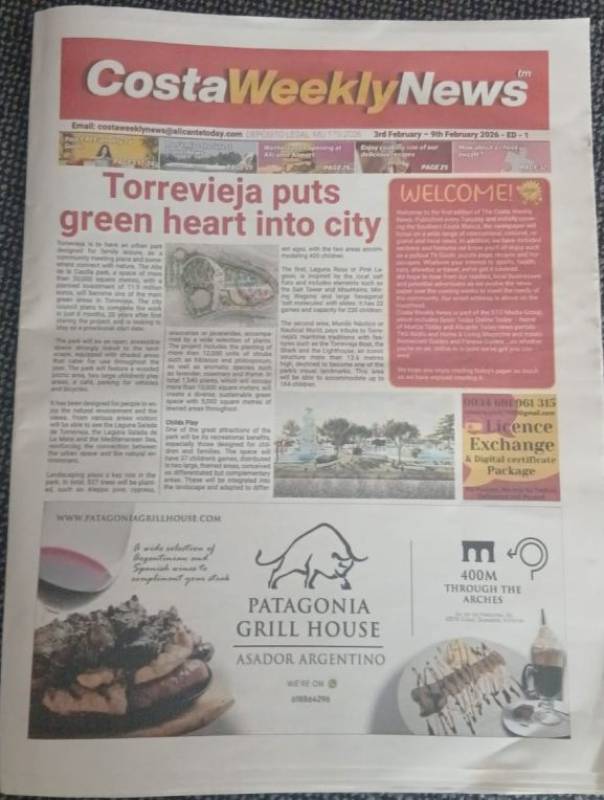 And finally, a brand-new English-language weekly print newspaper, the Costa Weekly News, has launched to serve the Costa Blanca and is available free from businesses across Alicante province.
Aimed at expats and international residents, it features local news, sport, travel and entertainment, alongside health, beauty, motoring, recipes, horoscopes, puzzles and a pull-out TV guide. Published every Tuesday, it initially covers the southern Costa Blanca, from La Marina to Mil Palmeras and Campoverde.
I should point out, the paper is part of Spain Today Online S.L, which also owns our news websites, plus the Home & Living Magazine and TKO Radio. (Just a bit of shameless self-promotion there!)
Andalucía
Málaga’s just broken ground on what will be Andalucía’s largest hospital, the Virgen de la Esperanza, and it’s set to be a game-changer for public healthcare by 2032.
Tucked between the current Civil Hospital and Maternity and Children’s Hospital, this mega-complex spans over 400,000 square metres with four interconnected towers offering 815 single rooms, 48 operating theatres, 158 specialist consulting rooms and 80 intensive care beds.
The hospital is a long-awaited fix for Málaga’s shocking shortfall: back in 2019, the province had just 118 public beds per 100,000 people versus Spain’s average of 236. Terrifying numbers, especially given the area’s annual population growth of 21,000. With a €543 million build price tag (plus gear and a €245 million metro extension), it’s nearly a billion-euro bet on world-class care.
 In Seville, the river port is riding a cruise wave that’s reshaping its waterfront. Last year saw 23,800 passengers (up 11.7%) and 82 ship calls (up 9.3%), a far cry from 2015’s meagre 23 planned visits.
It’s part of Andalucía’s cruise boom, with 2026 already booking 47 ships plus Cadiz-based Belle cruises. First up: Almazara Journey docks at Muelle de las Delicias on February 26, returning March 12, 27 and 31, before Vidanta World’s Elegant closes things on December 29.
Familiar faces like Azamara Quest (600-700 guests), 135m Star Legend (330 passengers) and Silver Shadow (388 aboard) will charm visitors who step right into Seville’s heart, with the cathedral, Alcázar and Torre del Oro just a stroll away.
Behind the glamour, Global Ports and Ocean Platform Marinas snagged 25-year management rights with a €5 million+ investment for a new terminal in a historic building, better docks and smoother passenger flow. Inland access keeps Seville irresistible to posh lines – perfect for tourists loving those culture-packed stops.
And speaking of parties that get everyone dressed up, Cádiz Carnival kicks off on February 12 for ten madcap days of satire, song and street magic – one of Spain's biggest, providing it’s not rained off, that is!
This festival of International Tourist Interest turns Cádiz city into a giant open-air stage where locals roast politicians through chirigotas, comparsas and choirs each year. Don’t miss the Gran Teatro Falla finale for top groups on February 13, the Plaza de San Antonio opener the very next day, the massive parade and choir fest on February 15, or the local holiday tango explosion the day after on February 16.
The second weekend (February 20-22) brings the grand finale. Things kick off early with Gambada Popular at La Perla and the Chicharronada Popular in Plaza de la Catedral.
Everyone joins in – no spectators, just performers filling flamenco bars and squares with that famous gaditano wit. So, hoping that things don’t get rained off, it’s time to grab your costume and dive into the chaos!

You may have missed…
- Ryanair confirms Corvera Airport safe from cuts: UK and Ireland summer 2026 routes announced.
Ryanair is keeping eight international routes from Murcia this summer, with 48 weekly flights and expected passenger growth of 12%. - VIDEO: Man climbs on Vueling plane roof causing a two-hour delay in Valencia.
It’s not every day you see someone climb onto the roof of a plane, but that's exactly what happened at Valencia’s Manises Airport last Saturday. A 24-year-old man somehow made his way onto the top of a Vueling aircraft that was due to fly to Amsterdam, causing a two-hour delay to the flight! - Spanish airline ranks among world’s 25 safest airlines for 2026.
Spanish carrier Iberia comes in at number 20 while budget airline Vueling makes the low-cost safety list. - Spanish banks on track for best mortgage year since 2008.
Spanish banks are gearing up for their strongest year of mortgage lending since 2008, back when the country's housing bubble was still inflating. Despite property prices climbing to eye-watering levels in many areas, people are still queuing up to borrow. - Spanish hospital performs the world’s first face transplant with a euthanasia donor.
A Barcelona hospital has made medical history by performing the world’s first face transplant using tissue donated by a person who had received euthanasia.
There we have it for this week. Thank you for reading, and we’ll be back again next week for more.
Have a good weekend, and stay dry if you can!









Find more information by AREA, TOWN or URBANISATION .....
Cabo de Palos
Cartagena
El Carmoli
Islas Menores and Mar de Cristal
La Manga Club
La Manga del Mar Menor
La Puebla
La Torre Golf Resort
La Union
Los Alcazares
Los Belones
Los Nietos
Los Urrutias
Mar Menor Golf Resort
Pilar de la Horadada
Playa Honda / Playa Paraiso
Portman
Roldan and Lo Ferro
San Javier
San Pedro del Pinatar
Santa Rosalia Lake and Life resort
Terrazas de la Torre Golf Resort
Torre Pacheco
Cartagena
El Carmoli
Islas Menores and Mar de Cristal
La Manga Club
La Manga del Mar Menor
La Puebla
La Torre Golf Resort
La Union
Los Alcazares
Los Belones
Los Nietos
Los Urrutias
Mar Menor Golf Resort
Pilar de la Horadada
Playa Honda / Playa Paraiso
Portman
Roldan and Lo Ferro
San Javier
San Pedro del Pinatar
Santa Rosalia Lake and Life resort
Terrazas de la Torre Golf Resort
Torre Pacheco
Aguilas
Aledo
Alhama de Murcia
Bolnuevo
Camposol
Condado de Alhama
Fuente Alamo
Hacienda del Alamo Golf Resort
Lorca
Mazarron
Puerto de Mazarron
Puerto Lumbreras
Sierra Espuna
Totana
Aledo
Alhama de Murcia
Bolnuevo
Camposol
Condado de Alhama
Fuente Alamo
Hacienda del Alamo Golf Resort
Lorca
Mazarron
Puerto de Mazarron
Puerto Lumbreras
Sierra Espuna
Totana
Abanilla
Abaran
Alcantarilla
Archena
Blanca
Corvera
El Valle Golf Resort
Hacienda Riquelme Golf Resort
Lorqui
Molina de Segura
Mosa Trajectum
Murcia City
Peraleja Golf Resort
Ricote
Sucina
Abaran
Alcantarilla
Archena
Blanca
Corvera
El Valle Golf Resort
Hacienda Riquelme Golf Resort
Lorqui
Molina de Segura
Mosa Trajectum
Murcia City
Peraleja Golf Resort
Ricote
Sucina
Urbanisations
CamposolCondado de Alhama
El Valle Golf Resort
Hacienda del Alamo Golf Resort
Hacienda Riquelme Golf Resort
Islas Menores and Mar de Cristal
La Manga Club
La Torre Golf Resort
Mar Menor Golf Resort
Mazarron Country Club
Mosa Trajectum
Peraleja Golf Resort
Santa Rosalia Lake and Life resort
Terrazas de la Torre Golf Resort
La Zenia
Lomas de Cabo Roig
Important Topics:
CAMPOSOL TODAY Whats OnCartagena SpainCoronavirusCorvera Airport MurciaMurcia Gota Fria 2019Murcia property news generic threadWeekly Bulletin
CAMPOSOL TODAY Whats OnCartagena SpainCoronavirusCorvera Airport MurciaMurcia Gota Fria 2019Murcia property news generic threadWeekly Bulletin