








- EDITIONS:
 Spanish News Today
 Alicante Today
 Andalucia Today
Spanish News Today Editors Roundup Weekly Bulletin June 12
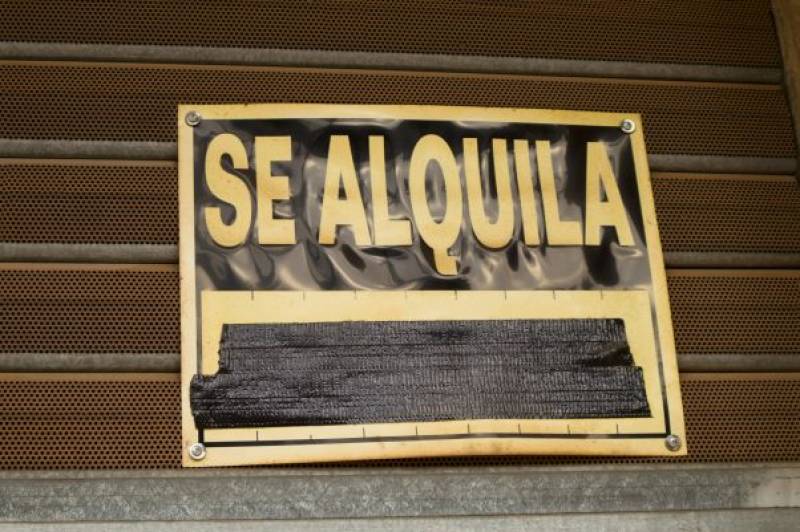
TOP STORY: "Spain's property rental turns into a battleground as apartments disappear in 24 hours"
As we approach the midway point of June, the temperatures continues to rise in Spain, just ahead of those searing, torrid months we know so well. This week, your news roundup contains the latest info on Spain’s heated rental market, a hot-take on the Pope’s visit to Spain and some welcome driving news that’s sure to cool down anyone who’s hot under the collar.
Let’s go!
The renting race
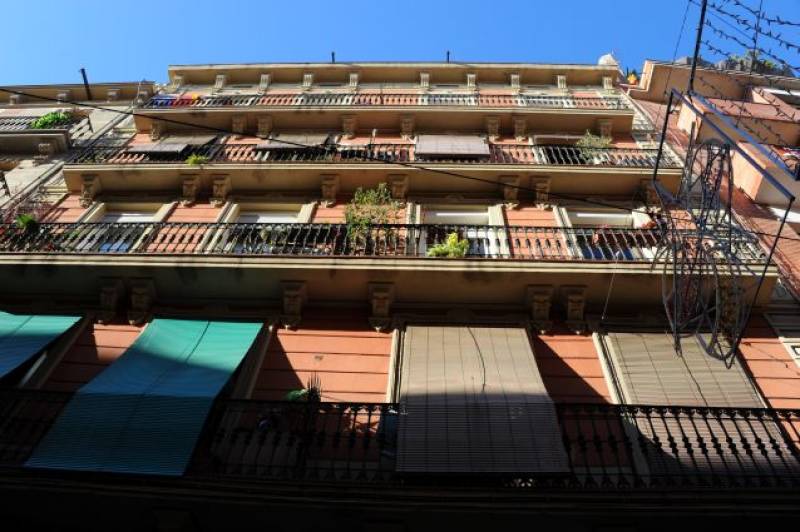
Spain’s rental market was back in the headlines this week after property portal idealista released new figures showing just how competitive things have become for tenants across the country.
According to the latest data, 16% of rental properties advertised during the first quarter of 2026 were snapped up in less than 24 hours. That means roughly one in every six homes listed for rent disappeared from the market within a day. While that might seem surprising, it is becoming the norm in some parts of Spain. The figure has risen from 14% a year ago, suggesting competition for available homes is continuing to intensify.
The cities feeling the greatest pressure are Barcelona and San Sebastián, where rental listings can vanish almost as quickly as they appear online. In both locations, around four in every 10 properties are now rented within 24 hours. San Sebastián has seen one of the sharpest increases, with the share of so-called ‘express rentals’ rising significantly over the past year. Barcelona was already experiencing the trend in 2025, and properties continue to be snapped up at a remarkable speed.
It is perhaps no coincidence that both cities are also among the most expensive places to rent in Spain. Average rents in San Sebastián are now approaching €1,500 per month for a typical 80-square-metre apartment, while Barcelona remains even more expensive at around €1,800 for a similar-sized home.
Several smaller cities are also seeing properties disappear quickly. Girona, Tarragona, Huesca and Guadalajara all recorded around three in ten rental listings being taken within a day. Other cities, including Palma, Bilbao, Zaragoza and the Canary Islands’, are also performing above the national average.
The picture is slightly different in some of Spain’s other larger cities. Madrid, Málaga, Valencia and Sevilla are still competitive markets, but things are not moving quite as quickly. In Valencia and Sevilla, around one in eight homes are rented within 24 hours, while Madrid and Málaga sit closer to one in 10. In fact, Valencia has seen quite a drop in the number of express rentals compared with a year ago.
That does not necessarily mean rents are becoming more affordable. Madrid continues to record some of the highest rental prices in the country, with average rents exceeding €1,850 per month for an 80-square-metre property. Málaga and Valencia remain closer to €1,300, while Sevilla is generally cheaper, although prices there have also been rising.
At the other end of the scale, cities such as León, Ciudad Real and Teruel are seeing very few properties rented within a day, suggesting a much calmer market for tenants.
For anyone currently searching for a home in Spain, it’s just another sign of how fast things are moving in the rental market at the moment. If a property ticks all the boxes, waiting a few days to arrange a viewing may no longer be an option.
Could you get your driving fines cancelled with this loophole?
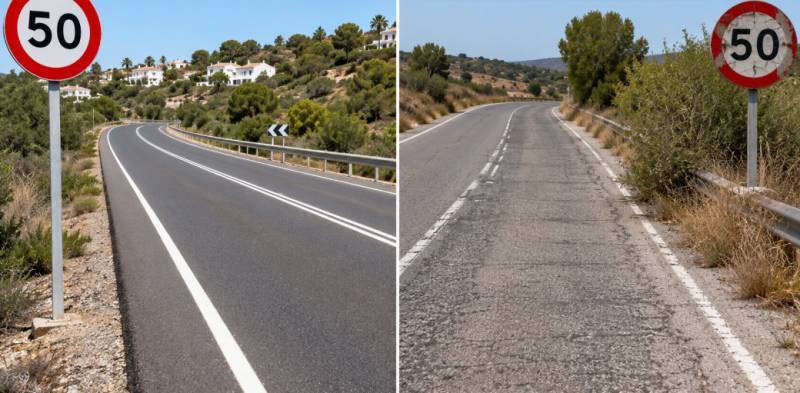
If you’ve ever been handed a traffic fine in Spain and quietly paid the 50% reduced rate just to make the whole thing go away, you’re in very good company. Most drivers do exactly that. But motoring experts are now reminding people that not every fine is as clear-cut as it might seem, and in some cases, there are genuine grounds to push back.
Under Spanish traffic regulations, road signs must be visible, legible and easy to understand. If a driver can show that wasn’t the case at the time of the alleged offence, there may be a valid reason to challenge the fine. Signs obscured by overgrown vegetation, graffiti or dirt, signs that have faded badly over time, or markings that are barely visible at night could all potentially be called into question.
The same applies to road markings. A solid white line that has worn so thin it’s almost indistinguishable from the tarmac around it, or a pedestrian crossing that has all but disappeared, could make it difficult for authorities to enforce a fine based on those markings.
Under Spanish law, responsibility for maintaining signs and road markings lies with the relevant road authority, whether that is a local council or a provincial body. If they have not kept things in good order, that could work in a driver’s favour.
There is already a real-life example of this working out. Thousands of drivers in San Roque, Cádiz, were refunded after successfully challenging fines issued by a speed camera where questions were raised about how clearly the camera itself was signposted.
It is also worth knowing that a sign may not be legally enforceable if it does not correspond to the official catalogue of authorised Spanish road signs, or if it contradicts another instruction, such as a road marking that conflicts with a vertical sign.
If you think a fine has been issued unfairly, you have 20 calendar days to submit a formal appeal. It is worth gathering as much evidence as possible, including photographs or video of the sign or marking in question. Witness statements, or evidence that other drivers have received similar fines in the same spot, can also help to strengthen your case.
The one trade-off is that appealing means giving up the option of paying the reduced 50% rate. But if the signs genuinely were not up to scratch, it may well be worth it.
Pope hope
Pope Leo XIV’s first visit to Spain is drawing to a close and it’s fair to say he’s packed a lot into a few days.
The first American pope arrived in Madrid on June 6 for a whistle-stop tour that has taken in the Spanish capital, Barcelona and, most recently, the Canary Islands. Along the way, he has met King Felipe VI and Queen Letizia, government officials, young people, migrants, volunteers and Church groups, while delivering a series of messages focused on unity, truth and social responsibility.
On his sixth day in Spain, Pope Leo travelled to Gran Canaria, where he met with local Catholics and organizations helping migrants, and celebrated Mass in a crowded stadium. Watch our video highlights here: pic.twitter.com/a3QynxCrWF
— Vatican News (@VaticanNews) June 11, 2026
One of the themes he returned to repeatedly was the growing influence of social media. Speaking to young people in Madrid, he warned that “many things on social networks deceive us” and encouraged them to always seek the truth rather than getting caught up in misinformation and division.
The most historic moment of the trip came in Barcelona, where Pope Leo blessed the newly completed Tower of Jesus Christ at the Sagrada Família. The event marked a major milestone in Antoni Gaudí’s famous basilica, which has been under construction for more than 140 years and is finally nearing completion.
The final leg of the visit has taken him to the Canary Islands, where he has shone a spotlight on migration. On June 11, the Pope travelled to Gran Canaria, visiting Arguineguín and meeting migrants, aid workers and charities working on the front line of the migration crisis. He also celebrated a large open-air Mass attended by thousands of worshippers.
His final day in Spain, Friday June 12, will be spent in Tenerife, where he is due to visit the Las Raíces migrant reception centre before celebrating a farewell Mass in Santa Cruz de Tenerife. He will then return to Rome, bringing his first official visit to Spain to a close.
Throughout his time in the Canary Islands, the Pope has called for greater compassion towards migrants and warned against becoming indifferent to the loss of life at sea, one of the strongest messages of the entire trip.
Of course, not every headline has been about religion and politics.
Before arriving in Spain, journalists couldn’t resist asking the Pope about the FIFA World Cup. His answer? He’s supporting the United States.
As the first American pope, perhaps that was hardly surprising, although he noted that in previous years he often cheered for Peru because of the many years he spent working there as a missionary.
He also found himself caught in one of Spain’s favourite debates when reporters asked whether he preferred Real Madrid or Barcelona. The Pope diplomatically replied that “the pope is for all teams”, before adding a detail that immediately delighted Madridistas: Robert Prevost, his birth name before becoming Pope Leo XIV, supports Real Madrid.
For football fans, it was probably the most memorable quote of the trip. For everyone else, the visit has offered a glimpse of the priorities likely to define his papacy: dialogue over division, concern for the vulnerable and, apparently, a soft spot for Los Blancos.
Murcia
To begin our Murcia section this week, we actually have to go all the way back to November 2024, when a 27-year-old British man named Aaron was shot four times outside his home in Santiago de la Ribera in what investigators described as a targeted, execution-style attack.
 A masked gunman opened fire in front of Aaron’s girlfriend before fleeing in a getaway car that was later found burnt out in a tunnel on the AP-7 motorway, along with a silenced pistol, ammunition, a balaclava and gloves. First responders on the scene used their bare hands to plug Aaron’s wounds while waiting for medical backup, an intervention that was widely credited with saving his life.
Aaron was left tetraplegic as a result of the attack and spent months in intensive care at Virgen de la Arrixaca Hospital. Now, nearly two whole years later and following a joint investigation with UK police (bafflingly codenamed Operation Esbroya 24) two British nationals believed to be members of a violent criminal gang have been arrested at Alicante-Elche Airport.
Local sources suggested Aaron had relocated to Santiago de la Ribera from Torrevieja to escape problems with a criminal group, though this was never formally confirmed. Now, at last, there seems to be some sort of approach to closure on this gruesome episode that brings the world of international crime a little to close for comfort.
Talking of which, the latest crime statistics for the Region have just come out, coincidentally, and they show that crime across Murcia rose by 7.4% in the first quarter of 2026 compared to the same period last year, with 18,672 offences recorded between January and March.
It may surprise you to learn that Los Alcázares topped the table for crime rates, at 71.74 offences per thousand inhabitants, though notably that figure actually represented a fall in overall crime there. Águilas came second and Murcia city third, with the capital recording a sharp rise in fights and a 13.3% increase in sexual assaults. That said, Murcia’s overall rate of 47.1 offences per thousand inhabitants still sits just below the national average.
To round off the grim Murcia news, there was a terrible accident this Wednesday on the Playa de Percheles beach in Mazarrón when two young British men sounded the alarm that a friend of their had struck the rocks and was unresponsive.
Several people had already managed to get the swimmer out of the water by the time emergency teams arrived, and despite emergency resuscitation efforts, the man, aged 25, died. So tragic, and the summer is not even fully in swing yet. Please, please, please be careful out there in the water, everyone!
On a considerably lighter note, anyone with a spare €2.4 million and a flair for the dramatic might want to cast their eye towards Perín, near Cartagena, where a genuine castle has just come onto the market.
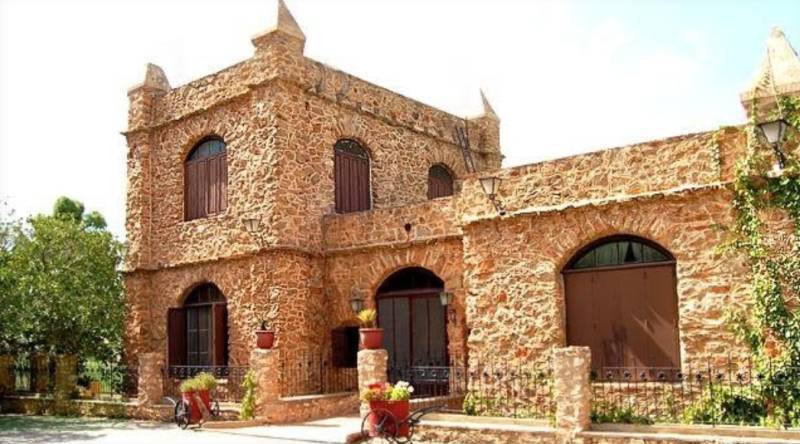
Castillo del Pinar, better known locally as the Castillo de Perín, is a 524-square-metre modernist mansion built in the Gaudí-influenced style of the late 19th century, set within an 83,000-square-metre estate with sweeping views over the Mar Menor. The property has an interesting international pedigree: it was originally built as part of the operations of a British company supplying drinking water to Cartagena, and later passed into the hands of a Swedish consul.
More recently it has been operating as a restaurant and events venue, but its listing suggests a wide range of possibilities, including rural tourism, a campsite or simply living there as a rather spectacular private home. Fancy it?
And if, while you’re living in the lap of luxury in your new castle, you’ve got children who need schooling, the new figures from Spain’s Ministry of Education should be music to your ears as they confirm that Murcia leads the whole of Spain for bilingual schooling, and by a significant margin, at that: 98.7% of primary pupils in the Region study at least one subject in a foreign language, as opposed a national average of just 40%.
Every single child in early childhood education in Murcia has contact with a foreign language, and the Region also ranks third nationally for the proportion of pupils studying a second foreign language.
Very useful in a Region where tourism is such a huge part of the economy, as proved by a report from BBVA Research that shows Murcia was one of Spain’s strongest performers for tourist spending in early 2026. According to the study, the Region ranked second in the country for growth in tourist spending during the first four months of the year, trailing only Castilla-La Mancha.
That growth was driven by more visitors actually coming to the Region, rather than each visitor spending more, a healthy sign for the area's growing appeal as a destination. Long live Murcia!
Plenty going on around the Region in the coming days, as ever. In Lorca, today marks the start of both a paprika-based ‘Pimentón’ tapas route and a weekend-long Cheese Fair, while Los Alcázares palys host to an arts and crafts market on Saturday morning and a live screening of the opera of Romeo & Juliet in the evening. Also on Saturday, La Manga’s Puerto Tomás Maestre has a ‘Marina Day’ with food, sailing and fun for all ages!
See more things going on around the Region by using our EVENTS DIARY:
Spain
Yet more good news if you have older children – or even grandchildren or young friends – living in Spain: the Spanish government has just approved the fourth edition of its Summer Youth Programme, giving anyone aged 18 to 30 the chance to travel around this country and other parts of Europe at a fraction of the normal cost between July 1 and September 30.
 The discounts are available to anyone born between 1996 and 2008 who holds Spanish nationality or legal residency, which means expat families with NIE cards are covered too.
The headline offer is 90% off medium-distance trains and state-run ALSA buses, with AVE and other long-distance high-speed services at half price, capped at a saving of €30 per ticket. There is even a 50% discount on a 10-day Interrail Global Flexible Pass. Registration opens shortly on the Ministry of Transport website, and must be completed at least 24 hours before purchasing a first ticket.
The programme has grown steadily since it first launched in 2023, with a record 1.55 million young people signing up last year and 6.8 million trips taken, and this year’s budget has been bumped up by €10 million to €130 million to keep pace.
And if all that to-ing and fro-ing gets those youngsters feeling a bit frisky, well there’s more good news for them there as the Spanish government has also announced that, from 2027, anyone aged between 16 and 22 will be able to collect condoms for free from pharmacies across the country.
The move is backed by a €9 million investment from the Ministry of Health and comes in response to a significant rise in sexually transmitted infections: Spain recorded more than 93,000 STI cases in 2024, the highest figure in over a decade. Chlamydia was the most common, followed by gonorrhoea and syphilis.
The free condom scheme will follow a model already in place in France, allowing young people to collect condoms at pharmacies without needing a doctor’s visit, with the initial aim of reaching 3 million young people nationally. Alongside the free condom scheme, Spain has also authorised its first self-sampling kit for STI diagnosis, letting people test privately at home, and is stepping up monitoring of drug-resistant gonorrhoea strains. The broader ambition is for HIV and STIs to no longer represent a public health problem in Spain by 2030.
And, while we’re in the chemist’s, it’s also interesting to note that there is a change coming to your local pharmacy that will remove a quirk many see as typically Spanish.
 If you have ever stood at a pharmacy counter watching a member of staff carefully cutting barcodes off medicine boxes with a box cutter and sticking them onto sheets of paper using sellotape and thought, “That seems so unnecessary in the age of smartphones”, you will be pleased to know those days are numbered.
The government has approved a decree to replace the old paper coupon system with a digital verification model, a change that Health Minister Mónica García described as saying goodbye to “box cutters, stickers and bureaucratic red tape”.
Each medicine will now carry a unique digital identifier that tracks it through the entire supply chain, making it harder for counterfeit packaging to enter circulation and improving traceability across the board. The old system has been costing Spanish pharmacies an estimated €80-90 million a year, and once the new approach is fully rolled out, it is expected to save the equivalent of 4.9 million sheets of paper and 14 million coupon cuts annually.
Around 22,000 pharmacies already have the foundations in place, and the transition will be gradual, with both systems running in parallel until every autonomous community is ready to make the switch completely. It may be sad to say goodbye to something so quaint and quintessentially Spanish, but it just makes sense.
Alicante
If you find yourself near Torrevieja’s salt lagoons at any point over the coming weeks, it is well worth making the detour. Thousands of flamingo chicks have just hatched at the Parque Natural de las Lagunas de La Mata y Torrevieja, adding the newest generation to a colony that now numbers somewhere between 14,000 and 18,000 birds.
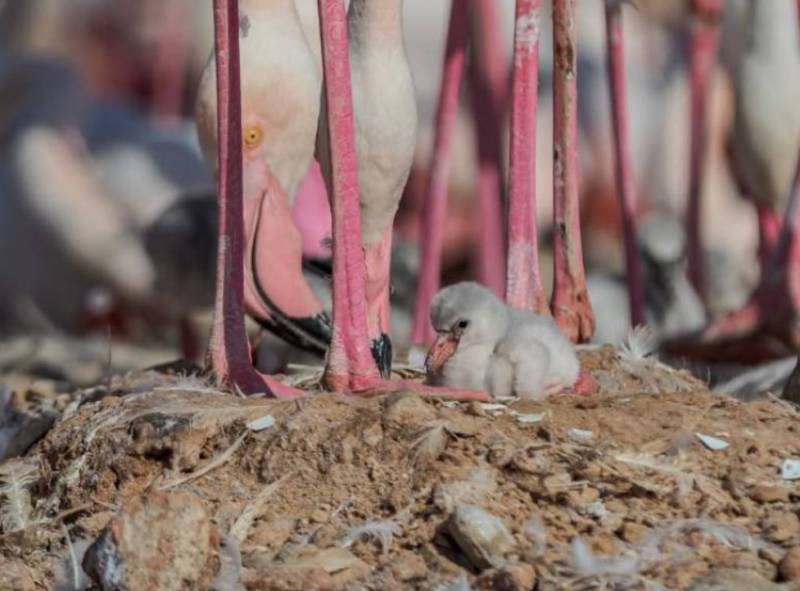
What makes this particularly special is how recently it all began – flamingos only started breeding successfully at Torrevieja again in 2020, making the growth of this colony in such a short time a genuinely remarkable conservation story. For now, tiny grey fluffy chicks (and yes, they are born grey, not pink!) are taking their first steps on the lagoon shores, watched over by thousands of brilliantly pink adults.
It is fleeting, it is beautiful and it will not last long. Binoculars are recommended, and going along in the early morning will give you the best light. Just remember that visitors are asked to stick to the official viewpoints and stay well clear of the nesting areas during the breeding season!
From one body of Torrevieja water to another… the city’s outdoor swimming pools reopened for the summer this week, giving residents and visitors an affordable way to cool off as temperatures rise across the Costa Blanca. The Sports Complex offers a 25-metre pool for both recreational swimming and training, alongside a separate leisure pool for families.
Entry is just €3 per visit, or €2 at the reduced rate, with a 20-visit combined pool and gym pass available for €40. Discounts apply to large and single-parent families, Youth Card holders, over-60s, people with a disability of 33% or more, and victims of gender violence or terrorism. Tickets can be booked in advance through the Torrevieja Deportes platform.
Further up the coast in Benidorm, a rather clever scheme is returning for another summer, and has just received some well-deserved international recognition. The famous resort’s Beach Item Reuse Points project, first launched in June 2024, has been highlighted as an example of best practice in municipal waste management in the European Commission’s Green City Accord report.
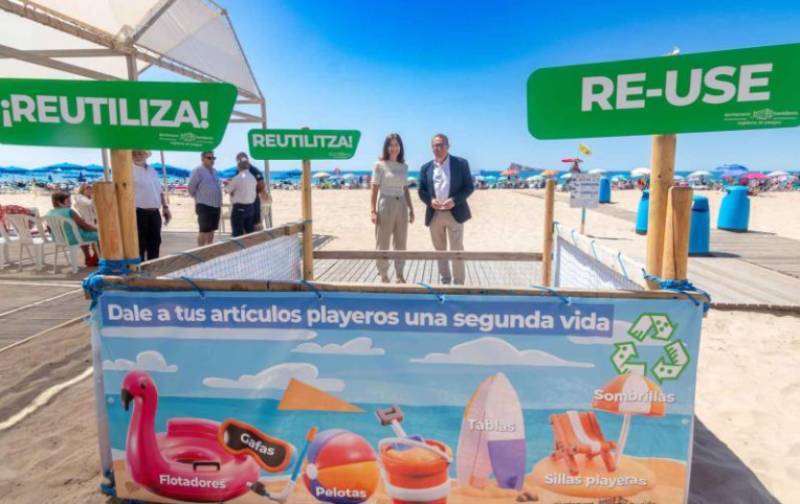
The concept is wonderfully simple: visitors who no longer need their beach gear – umbrellas, hammocks, inflatables, buckets, spades, mats – can drop items off at designated collection points, where other holidaymakers can pick them up free of charge.
The problem it addresses is a real one. Every year, an enormous number of beach items end up in hotel bins or abandoned in corridors because their owners cannot take them home on the plane. The collection points themselves are made from recycled materials originally used on Benidorm’s beaches during Covid, and any items not in good enough condition to be reused are taken to appropriate disposal points rather than simply being left to rot.
It just goes to show that sometimes the best environmental ideas are not always the grandest; sometimes they are just the ones that are easy to understand, easy to use and genuinely make a difference. If you are heading to Benidorm this summer, the swap points are there and ready. One person’s unwanted lilo could be exactly what someone else needs!
Andalucía
And lastly, in Andalucía, a British tourist in his 50s owes his life to a brave and selfless group of strangers after suffering a cardiac arrest last Sunday while walking with his family along the coastal path between Burriana Beach and Carabeíllo Beach in Nerja (Málaga).
Within seconds of him collapsing, bystanders called the emergency services, and a firefighter who happened to be passing took charge of initial first aid alongside another member of the public. Two lifeguards arrived shortly afterwards with a defibrillator, and the group performed CPR until paramedics reached the scene and successfully restored his pulse.
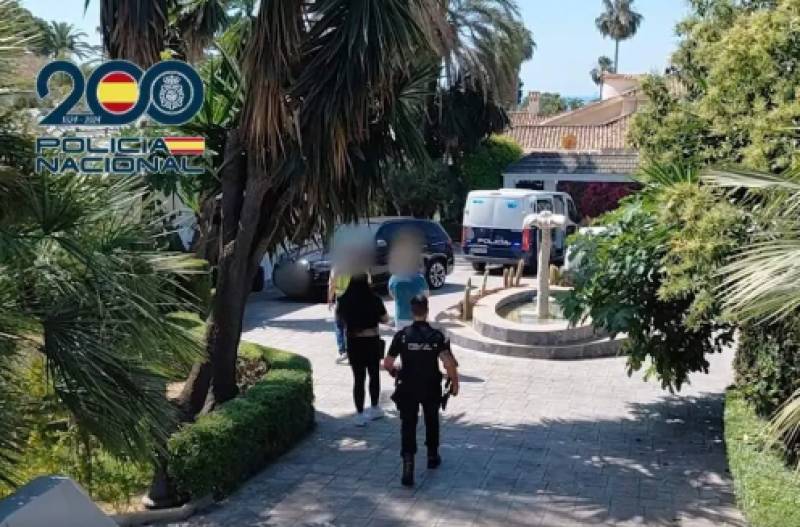 Elsewhere on the Costa del Sol, a major police operation has dismantled one of the largest sex trafficking networks in the region, freeing 29 women and arresting 22 people following an investigation that began in August 2025.
Operation Gavage targeted a family clan allegedly running two large brothels from luxury villas in Marbella and Benalmádena, disguised as tourist accommodations. At the head of the organisation, police say, was a 72-year-old woman and several of her children. The women subjected to exploitation were controlled through a debt bondage system, excessive working hours, minimal rest and extensive interior surveillance.
Investigators recovered nearly €300,000 in cash, froze €1.1 million in bank accounts and placed measures on real estate valued at over €6.5 million, with financial connections to Dubai also identified. Behind the headline figures lies a grim reality: 29 women systematically exploited inside properties dressed up as holiday lets on one of Europe’s most visited coastlines.
On a more optimistic note, the long-awaited auditorium in Málaga city – a project that has been talked about, postponed and redesigned for over two decades – appears finally to be moving forward. City mayor Francisco de la Torre announced this week that construction could begin as early as October or November 2026, following a market consultation period and formal bidding process.
The finished venue will seat close to 2,000 people in its main hall, with a 465-seat chamber hall, rehearsal rooms, a library, a restaurant and 500 parking spaces. The price tag has grown considerably since the project was first proposed in 2001, reaching €209 million today.
The central government declined to contribute the €45 million requested, a decision De la Torre described as an “absolute lack of interest”, though the Andalucían regional government is putting in €25 million and the city itself €20 million. Naming rights and private patronage are expected to make up much of the remainder.
Finally, drivers in Andalucía may want to look away now. A study by comparison platform Rastreator finds that four of the five most expensive provinces in Spain for car insurance are in the region, with Almería topping the national rankings at an average of €333 per year!
Young drivers and owners of electric vehicles face the steepest bills, and overall premiums across Spain have risen by 3% in the past year, with no sign of the trend reversing.

You may have missed…
- How much do you need to earn to be happy in Spain? Someone has actually worked it out!
We all know money cannot buy happiness. But most of us would quietly admit that having enough of it makes life considerably easier. Now, someone has actually tried to put a figure on exactly how much “enough” looks like in Spain, and the answer is both fascinating and, for most people, a little sobering. - Diesel prices in Spain drop to lowest level since Iran conflict began.
There’s a bit of relief at the pumps across Spain this week. Diesel prices have dropped again, falling by 2% to reach €1.61 a litre, which is the cheapest it's been since early March, just before things started ramping up due to the conflict in Iran. - Where in Spain you’ll pay tourist tax this summer and how much it’ll cost you.
If you’re planning a getaway somewhere in Spain this summer, it’s worth knowing that in some parts of the country your accommodation bill will come with an extra charge attached. Charges range from a few cents to €12 a night depending on where you stay and what type of accommodation you choose. - Can your dog travel in the front seat in Spain? Here’s what the law actually says…
If you regularly travel with your dog in the car, it’s worth knowing exactly where Spain’s traffic regulations stand on the subject, because the rules are a little more nuanced than most people realise. - 5 great theme park ideas for exploring Spain from Murcia this summer.
Although Spain is a large country, getting away is not that difficult, and within fairly easy striking distance are a large number of water parks, theme parks and others which suit the needs of practically every family.
And that’s it for this week. Thank you for reading and we’ll be back with more next week.
Until then!










Find more information by AREA, TOWN or URBANISATION .....
Cabo de Palos
Cartagena
El Carmoli
Islas Menores and Mar de Cristal
La Manga Club
La Manga del Mar Menor
La Puebla
La Torre Golf Resort
La Union
Los Alcazares
Los Belones
Los Nietos
Los Urrutias
Mar Menor Golf Resort
Pilar de la Horadada
Playa Honda / Playa Paraiso
Portman
Roldan and Lo Ferro
San Javier
San Pedro del Pinatar
Santa Rosalia Lake and Life resort
Terrazas de la Torre Golf Resort
Torre Pacheco
Cartagena
El Carmoli
Islas Menores and Mar de Cristal
La Manga Club
La Manga del Mar Menor
La Puebla
La Torre Golf Resort
La Union
Los Alcazares
Los Belones
Los Nietos
Los Urrutias
Mar Menor Golf Resort
Pilar de la Horadada
Playa Honda / Playa Paraiso
Portman
Roldan and Lo Ferro
San Javier
San Pedro del Pinatar
Santa Rosalia Lake and Life resort
Terrazas de la Torre Golf Resort
Torre Pacheco
Aguilas
Aledo
Alhama de Murcia
Bolnuevo
Camposol
Condado de Alhama
Fuente Alamo
Hacienda del Alamo Golf Resort
Lorca
Mazarron
Puerto de Mazarron
Puerto Lumbreras
Sierra Espuna
Totana
Aledo
Alhama de Murcia
Bolnuevo
Camposol
Condado de Alhama
Fuente Alamo
Hacienda del Alamo Golf Resort
Lorca
Mazarron
Puerto de Mazarron
Puerto Lumbreras
Sierra Espuna
Totana
Abanilla
Abaran
Alcantarilla
Archena
Blanca
Corvera
El Valle Golf Resort
Hacienda Riquelme Golf Resort
Lorqui
Molina de Segura
Mosa Trajectum
Murcia City
Peraleja Golf Resort
Ricote
Sucina
Abaran
Alcantarilla
Archena
Blanca
Corvera
El Valle Golf Resort
Hacienda Riquelme Golf Resort
Lorqui
Molina de Segura
Mosa Trajectum
Murcia City
Peraleja Golf Resort
Ricote
Sucina
Urbanisations
CamposolCondado de Alhama
El Valle Golf Resort
Hacienda del Alamo Golf Resort
Hacienda Riquelme Golf Resort
Islas Menores and Mar de Cristal
La Manga Club
La Torre Golf Resort
Mar Menor Golf Resort
Mazarron Country Club
Mosa Trajectum
Peraleja Golf Resort
Santa Rosalia Lake and Life resort
Terrazas de la Torre Golf Resort
La Zenia
Lomas de Cabo Roig
Important Topics:
CAMPOSOL TODAY Whats OnCartagena SpainCoronavirusCorvera Airport MurciaMurcia Gota Fria 2019Murcia property news generic threadWeekly Bulletin
CAMPOSOL TODAY Whats OnCartagena SpainCoronavirusCorvera Airport MurciaMurcia Gota Fria 2019Murcia property news generic threadWeekly Bulletin