








- EDITIONS:
 Spanish News Today
 Alicante Today
 Andalucia Today
Spanish News Today Editors Roundup Weekly Bulletin June 26

TOP STORIES: "Spain records hottest June days in at least 75 years as heatwave smashes records" & "Spain sets minimum scooter age at 15 and makes helmets compulsory nationwide"
Whether you’re in Spain right now or not, you may have noticed it’s been a tad warm recently. It’s not yet July but already this heatwave we’ve been having has been smashing temperature records left, right and centre.
But it’s not just the heat itself which is irritating. There are a whole host of other problems associated with these high temperatures which Spain is having to reckon with, as we see in depth in this week’s Spanish News Today Editor’s Roundup Weekly Bulletin.
Something in the air
 Spain has spent the past week locked in a spell of extreme heat that has pushed thermometers (and people’s patience!) into uncomfortable territory. Across the country, nights have barely cooled in some coastal areas, daytime temperatures have surged past 40°C in places and weather stations have started rewriting the record books for June.
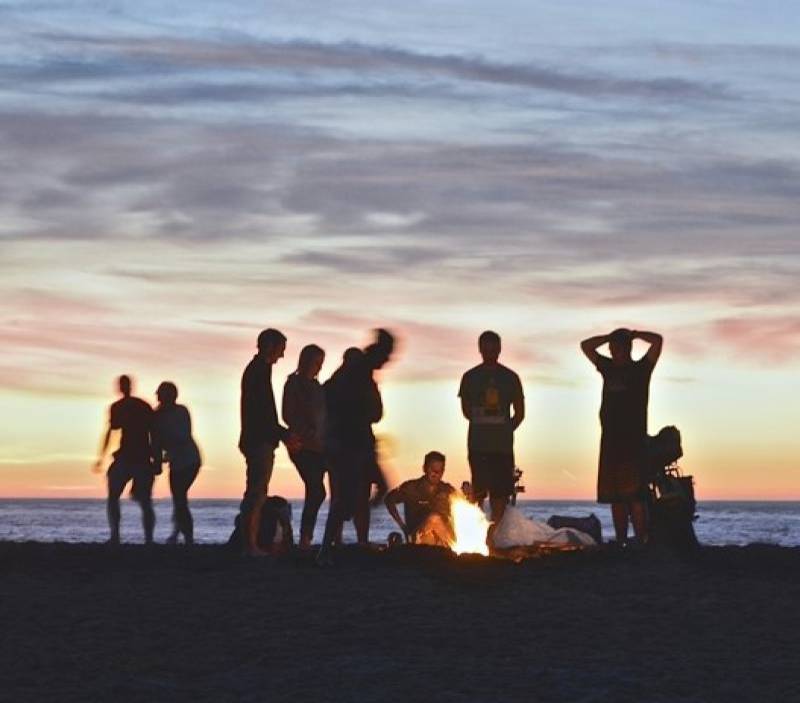
Against that backdrop, Tuesday night’s San Juan celebrations played out in the usual way along the coast, with bonfires, fireworks and packed beaches from Alicante to Málaga and beyond.
In Cartagena, officials had already been moving to reduce risk before the festivities properly began. A bonfire in Los Martínez was removed early in the evening after it was judged unsafe due to its position close to dry vegetation and a recycling area.
Firefighters had been inspecting sites in the run-up to San Juan, with dozens checked across the municipality. It was a reminder that while the night is often seen as a carefree start to summer, the conditions around it were anything but ordinary this year.
The reason for that extra vigilance has been clear enough. Much of Spain has been suffering through a prolonged heatwave that has kept temperatures well above seasonal norms. In Almería, overnight temperatures have been particularly striking. At Almería Airport, readings stayed above 30.8°C on Sunday June 21, the first time a minimum above 30°C has been recorded in June within AEMET’s mainland network.
That figure alone would normally stand out, but what has made it more notable is how long it lasted. Temperatures remained above 30°C through the night for several consecutive days, creating what meteorologists describe as ‘exceptionally intense’ tropical nights.
It’s not just the highs that have been unusual, but the lack of recovery once the sun goes down. That matters in practical terms because it removes the body’s chance to cool down, particularly in homes without air conditioning. Along stretches of the Mediterranean coast, nights have felt closer to early morning heat rather than given any real sense of relief and respite.
During the day, the situation has been more extreme still in parts of the country. Areas of southern and central Spain have reached or exceeded 40°C already, with the State Meteorological Agency issuing repeated heat alerts and urging caution during peak hours.
For many, that has meant adjusting routines, avoiding outdoor work in the middle of the day and relying on shaded or indoor spaces where possible. For others, particularly those working outside or travelling, there has been little choice but to carry on in difficult conditions.
But while the headlines tend to focus on the hottest places, the contrast across Spain has been just as striking. Inland and higher-altitude areas have been sitting in completely different conditions at the same time. In Salvacañete in Cuenca, temperatures dropped to a mere 9.6°C on the morning of June 22, showing just how sharp the variation can be depending on where you are.
AEMET has now confirmed that June 22 and 23 were the hottest June days recorded in Spain since at least 1950. The agency reported an average temperature anomaly of +7.1°C across mainland Spain over those two days, which reflects just how far above normal conditions have been.
Several other days from this spell have also entered the top 10 warmest June days on record, meaning this is not a brief spike but a sustained period of exceptional heat, and even areas not typically associated with extreme heat have been affected.
In Tama, Cantabria, temperatures reached 43.7°C on June 23, setting a new all-time high for the location. Bilbao Airport has already recorded multiple days above 40°C this year, a threshold that used to be rare but is now appearing more frequently in official data.
Taken together, the figures point to something broader than a one-off weather event. Heatwaves in Spain have become more frequent, longer and more widespread over recent decades, with meteorological records showing a clear upward trend in both duration and intensity since the late 20th century. What used to be isolated events are increasingly overlapping, affecting larger areas at the same time.
And of course, with these extreme temperatures, wildfires usually aren’t very far behind.
In Murcia, firefighters were eventually able to bring under control a fire along the banks of the Segura River near La Arboleja after reeds and scrubland burned close to residential areas. The blaze triggered around 100 emergency calls as smoke spread across parts of the city and ash fell in nearby districts. Fire crews worked to secure the riverbank and prevent flare-ups in remaining hotspots, where dry vegetation can reignite even after initial control is achieved.
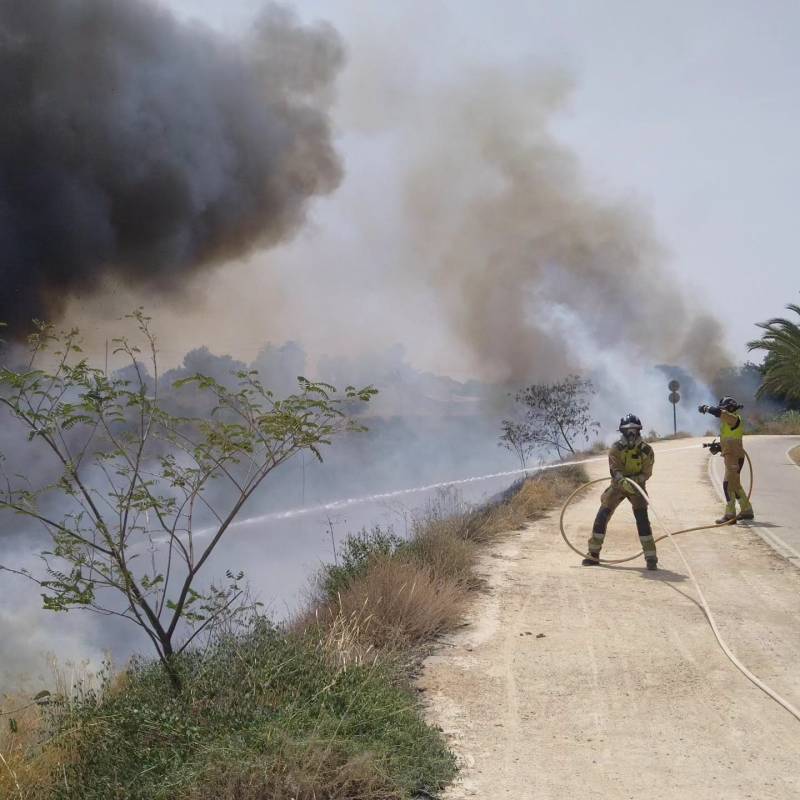 On Sunday, firefighters were called out again to several smaller fires in the same general area, including Barriomar, Puebla de Soto and Javalí Nuevo. The largest of these burned around 2,000 square metres of reeds and scrub in Barriomar near the MU-33 motorway, while another nearby fire affected just a small patch of land on Camino Hondo. A further incident was reported in Los Pujantes, in Puebla de Soto, where reeds were again burning.
In Santa Pola, Alicante, emergency services dealt with another fire affecting reedbeds near Rio Safari and the surrounding natural park. Firefighters from Santa Pola and Elche were supported by helicopters and specialist forest units. While the affected area was relatively limited, the proximity to protected land added pressure on crews working to contain it quickly.
No injuries were reported in either incident, but the conditions that led to the fires were worryingly similar. Prolonged heat dries out vegetation and reduces moisture in the ground, meaning that once ignition occurs, flames can spread more easily and flare-ups become harder to prevent. Even small incidents can escalate quickly when temperatures remain high for days on end.
And it couldn’t come at a worse time. In Murcia, forest firefighting teams have warned that they may move ahead with a partial strike at the end of June if ongoing talks with regional authorities fail to deliver progress on staffing and working conditions.
Representatives have said that three-hour daily walkouts are being considered for several days, although minimum emergency cover would still be maintained during any action. The timing has raised concern because it comes during the early stages of the high-risk summer period, when temperatures are already climbing and vegetation is becoming increasingly dry.
Fire crews have already responded to several incidents in recent weeks, and unions argue that resources and staffing levels are not keeping pace with demand. Negotiations are continuing, but firefighters have warned that without a concrete proposal, industrial action is increasingly likely at exactly the moment when emergency cover is most critical.
The fires were dealt with quickly enough, but they also added to a problem that has been creeping in alongside the heat, which is worsening air quality in several parts of Spain.
A study by environmental group Ecologistas en Acción estimates that around 33 million people in Spain were exposed in 2025 to pollution levels above new EU limits set to come into force in 2030. The report highlights ozone pollution in particular, which tends to rise during prolonged periods of heat and strong sunlight.
Basically, the same conditions that drive extreme temperatures and dangerous wildfires also help create and trap pollutants in the atmosphere. That means heatwaves don’t just bring discomfort or fire risk, they also affect the air people breathe, especially in urban corridors and heavily trafficked areas, but increasingly in rural parts as well.
Air pollution isn’t distributed evenly across the country either. Cities tend to record higher nitrogen dioxide levels due to traffic, but ozone pollution often builds up over wider areas during hot, still conditions, meaning the impact can stretch well beyond major urban centres.
Taken together, the recent heatwave, fire activity and pollution levels have led to repeated alerts from the authorities over the past week. AEMET forecasters have warned that high temperatures are likely to continue in the short term, with conditions expected to remain well above average in several parts of the country.
Scoot over
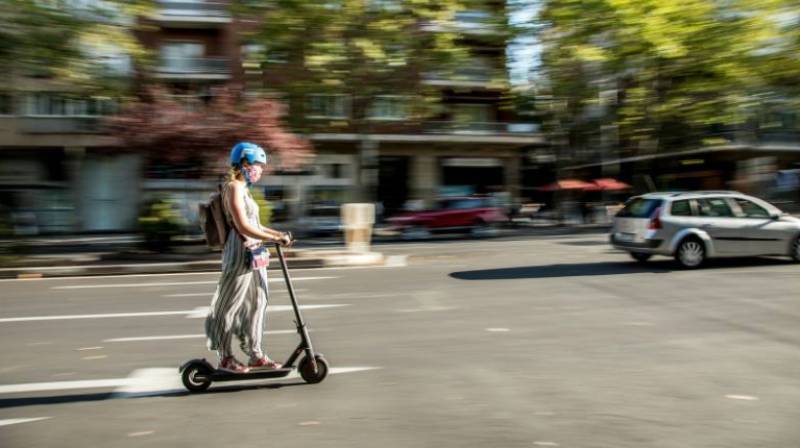
Spain has spent years trying to work out what to do about electric scooters. Not ban them, not fully embrace them, but somehow stop them becoming a source of endless arguments between riders, drivers and pedestrians.
But, believe it or not, they may finally have got it right. The days of seeing someone fly past a café terrace on an electric scooter with no helmet, headphones in and one hand on their phone could soon be numbered… thank goodness!
The government’s latest changes to Spain’s road regulations introduce a couple of things that have been missing for a long time: clarity and consistency. From this October, scooter riders across the country will have to be at least 15 years old, wear a helmet and use reflective clothing at night or in poor visibility. Break the rules and you’ll be looking at a €200 fine – which for most 14-year-olds is a lot of money!
Judging by social media, there will be no shortage of riders complaining about bureaucracy, personal freedom and yet another regulation. However, it’s worth remembering that scooters have enjoyed something of a free ride for years. Pun absolutely intended.
Across Spain, local councils have been making up their own rules as they go along. In one town, helmets were required. In another, they weren’t. Some municipalities cracked down on dangerous riding. Others barely seemed to notice it was happening. The result was confusion for riders and frustration for everyone else.
The reality is that scooters stopped being a novelty a long time ago. They’re now a normal part of life in towns and cities up and down the country. Schoolchildren use them. Commuters use them. Delivery riders use them. And the tourists certainly use them. Treating them differently from every other vehicle on the road was becoming increasingly difficult to justify.
What’s interesting about these new rules is that most of them aren’t particularly radical. Wearing a helmet on a vehicle capable of travelling at 25kmh isn’t exactly an outrageous demand. Nor is making sure riders can be seen after dark. In truth, many people probably assumed these requirements already existed.
The same applies to some of the motorcycle changes that will be introduced as part of the same reform. The decision to effectively ban riding in sandals may sound amusing, but anyone who has ever come off a motorbike knows that skin and tarmac are a terrible combination. Sometimes health and safety rules exist because somebody learned the lesson the hard way.
If there’s one weakness in the whole package, it’s the same weakness that affects almost every traffic law in Spain: enforcement.
New regulations are announced every year. The challenge comes six months later when people discover whether anyone is actually checking. If the police apply the rules consistently, they’ll make a noticeable difference. If they don’t, we’ll be back to watching riders zigzag through pedestrians and wondering why nothing ever changes.
For once, though, the DGT deserves a little credit. Rather than declaring war on scooters, it has accepted a simple fact: they’re here to stay. The question was never whether Spain should allow them. It was how long Spain could continue without clear national rules.
It turns out the answer was about five years too long.
Don’t forget to join our Driving in Spain Facebook group for regular updates!
Murcia
One of the biggest Murcia stories from this week centred on Alhama de Murcia Town Hall, which has finally completed a legal process more than a decade in the making. The council has officially taken ownership of the former Polaris World office building in Torre Pacheco after recovering part of a long-standing debt linked to the collapse of the once-powerful property developer.

For those who don’t know, the saga dates back to 2013, when Alhama secured a mortgage over the building as protection against around €3 million owed by Polaris companies in unpaid taxes and planning-related debts. Following bankruptcy proceedings and a failed auction, the council successfully bid €800,000 for the property in 2021, offsetting that amount against the outstanding debt rather than making a cash payment.
Although the agreement was reached several years ago, the legal transfer has only now been finalised. The building is currently valued at more than €2 million and the council plans to auction it off, potentially generating a significant financial boost for the municipality. Local officials say any proceeds would be invested in urban regeneration projects, public facilities, infrastructure improvements and community development initiatives without increasing municipal debt. Let’s hope so, eh?
Meanwhile, holidaymakers and residents travelling through Murcia Airport this summer have been given more transport options thanks to an expansion of the ever-popular Airport Buses network. The company has strengthened connections between the airport and destinations across the Costa Cálida, southern Costa Blanca and northern Almería.
The service already linked Murcia’s Corvera Airport with key locations including Cartagena, La Manga, Torrevieja, Orihuela Costa, Mazarrón, Águilas and San Juan de los Terreros. In a further expansion, routes to Mojácar and Vera Playa have been added after Airport Buses took over services previously operated by its sister company, Exclusive Airport Shuttles.
The expanded network offers travellers a practical alternative to driving, parking charges and costly taxi journeys during the busy summer season. Families and groups are expected to benefit particularly from the service, which allows passengers to pre-book seats online and travel directly to the airport from a wide range of coastal and inland locations.
While tourism infrastructure is gearing up for the summer influx, emergency services have already faced an early test of the region’s fire preparedness.
Elsewhere, tragedy struck on the coast of Águilas this week when the body of a young swimmer who disappeared at sea was recovered following an intensive three-day search operation. The discovery was made near Playa de Matalentisco, close to the location where the 23-year-old was last seen calling for help before vanishing beneath the water.
But it’s not all bad news on Murcia’s beaches. On a more positive note, one of Murcia’s best-known natural attractions has received national recognition. The beach of Calblanque Regional Park has been named among the 10 finalists in a nationwide competition organised by Condé Nast Traveller to find Spain’s best beach of 2026.
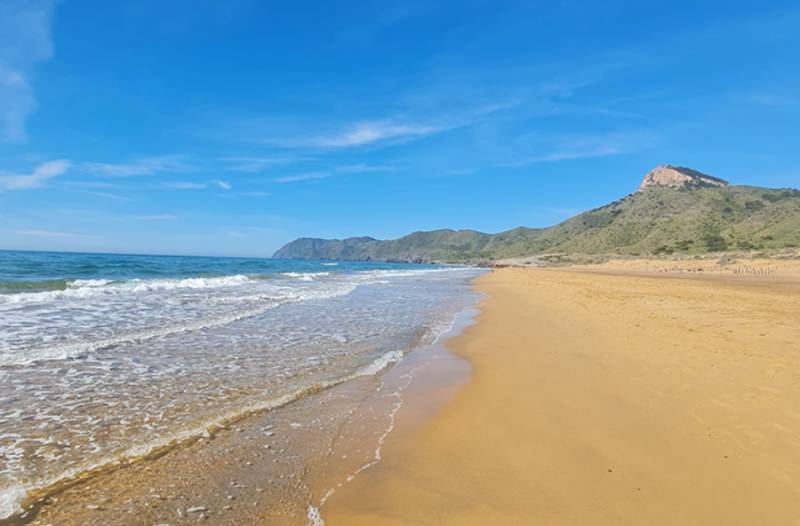
The protected coastal area, renowned for its unspoilt landscapes, wild coves and natural surroundings, is competing against some of Spain’s most famous beaches. Having finished seventh in last year’s rankings, supporters will be hoping Calblanque can climb higher when the final results are announced.
Coming up in Murcia soon, we’ve got free open-air salsa sessions on offer in Los Alcázares this Saturday evening, once it starts to get a bit cooler; a festival celebrating music, water sports and food in Santiago de la Ribera across Friday and Saturday; and – throughout all of July and August – free beach fitness sessions taking place in San Javier every day of the week. Cool!
Remember to go to our EVENTS DIARY for more events and activities coming up soon in the Region of Murcia:
Spain
It wouldn’t be summer in Spain without the tourists, and the country looks to be on course for another extraordinary year in tourism, with new forecasts suggesting there may be more than 100 million international visitors in 2026. The optimistic outlook comes as the country continues to strengthen its position as one of the world’s most popular holiday destinations.
According to new research by Oxford Economics, Spain could attract as many as 109 million foreign visitors this year, around 12 million more than last year and enough to set a new all-time record. The forecast reflects a combination of changing travel patterns and Spain’s enduring appeal among international visitors.
Analysts suggest that the ongoing instability in parts of the Middle East has encouraged some travellers to seek alternative destinations, while many Europeans are increasingly choosing holidays closer to home. Spain appears to be benefiting from both trends.
The country’s tourism infrastructure, wide range of accommodation options and reputation for offering good value for money continue to attract visitors across all market segments. From budget travellers looking for affordable sunshine to luxury tourists seeking high-end experiences, Spain has managed to position itself as a destination capable of appealing to a broad range of holidaymakers.

Additional data from travel marketing platform Sojern paints an equally positive picture. Flight bookings to Spain have increased by 32% compared with the same period last year, while hotel search activity has risen by 28%.
Demand remains particularly strong across Europe, but one of the most notable trends is the continuing growth in visitors from the United States. American travellers now account for almost one in five hotel searches related to Spain and represent the country’s largest long-haul tourism market.
Domestic tourism is also thriving, with travel bookings within Spain increasing even faster than international demand. Industry experts believe the strong figures will provide a welcome boost not only for hotels and tourism businesses but also for retailers, restaurants and many other sectors that benefit from visitor spending.
Spain is currently outperforming several of its southern European competitors, including France and Portugal, reinforcing its position as one of Europe’s leading tourism destinations.
Still, as they almost always do in summer, a tragic incident in Tenerife has cast a shadow over one of Spain’s most popular tourist resorts when an 88-year-old British man died in hospital after being seriously injured during a violent mugging in Los Cristianos, a resort area on the island.
The victim, known to friends as Ray, was reportedly attacked alongside his 79-year-old wife outside an apartment complex when a suspect attempted to steal her handbag. During the struggle, Ray was knocked backwards, suffering a severe fall in which he struck his head.
Emergency services responded quickly and managed to revive him after he suffered a cardiac arrest at the scene. He was taken to hospital in critical condition but died several days later despite the efforts of medical staff.
Tributes have since been paid by friends and members of the local community, while flowers have been left at the scene of the attack. The incident has sparked renewed concern among some residents and visitors regarding street crime in the area.
The investigation remains ongoing, with Spain’s National Police continuing efforts to locate and arrest the suspect. No arrests had been announced at the time of reporting.
Meanwhile, for those looking towards the skies, this weekend could provide a rare treat for astronomy enthusiasts. A large asteroid known as 1997 NC1 is due to make a close pass by Earth on Saturday June 27, offering stargazers in Spain and elsewhere across the Northern Hemisphere an opportunity to observe the object using modest equipment.

According to the European Space Agency, the asteroid measures somewhere between several hundred metres and more than 1.5 kilometres in diameter, making it a substantial object by asteroid standards.
Scientists have been keen to stress that there is absolutely no risk to Earth. The asteroid's closest approach will still place it around 2.56 million kilometres from the planet, approximately six and a half times farther away than the Moon.
Travelling at nearly nine kilometres per second, the asteroid is expected to make its closest approach during the early afternoon. Although invisible to the naked eye, it should be possible to observe it with a small telescope or powerful binoculars under suitable conditions.
The main challenge for observers may come from the night sky itself. A bright full moon, known as the Strawberry Moon, is due just a few days later and could make spotting the asteroid more difficult.
Alicante
Let’s start our Alicante section this week with the good news, and there is plenty of it if you are a frequent flyer. Valencia Airport is gearing up for its busiest summer ever (not surprising given the glut of tourists this year), with 110 routes operating this season, connecting the city to 32 international markets through 40 different airlines. Nearly 4.7 million seats will be available, which is 11% more than last summer.
The headline addition this year is that, for the first time, Valencia now has direct connections to all four Scandinavian capitals, Oslo, Copenhagen, Stockholm and Helsinki, with Finnair operating the brand-new link to Finland.
Rabat has also joined the network for the first time, via Ryanair. Tourism councillor Paula Llobet described it as “a milestone that strengthens our presence in one of the most sustainable and valuable markets for the destination.”
For UK travellers, the options remain excellent, with flights to Heathrow, Gatwick, Luton and Stansted, plus Manchester, Birmingham, Bristol, Edinburgh and East Midlands all on the schedule. Italy, Germany, North Africa and Eastern Europe are all well served too, and for those with more ambitious plans, there is even a direct connection to Montreal.
Not bad for a city that sometimes plays third fiddle to Madrid and Barcelona!
On a slightly less sparkling note, those heading to the Puerto beach in Pilar de la Horadada on Tuesday this week would have found it closed for swimming after water tests revealed faecal contamination levels at more than twice the legal limit under Spanish bathing water legislation.
Which is, to put it mildly, not what you want to hear when you have your towel under your arm. The beach itself remained open for sunbathing and strolling, just not for actually getting in the water.
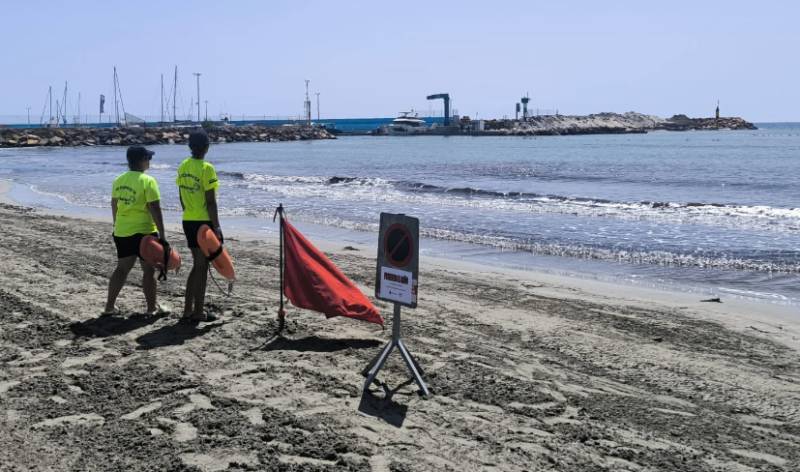 The closure lasted roughly 24 hours. Fresh samples taken on Wednesday morning showed the water was safe again, and the beach duly reopened. The cause is still under investigation, and the Ayuntamiento has promised to keep the public updated.
It is perhaps worth a raised eyebrow that this was the second such closure in the Vega Baja area within a week, following a similar incident in Torrevieja.
Puerto beach is normally one of the jewels of the Pilar coastline, a 684-metre stretch sheltered by the marina, with Blue Flag status, full facilities and environmental certifications to its name. Hopefully a blip rather than a pattern.
From one kind of emergency to quite another, and this last story is the one that will stay with you. On the afternoon of June 12, a 64-year-old German tourist collapsed on a bus in Alicante city centre.
By the time Policía Nacional officers arrived, two Policía Local colleagues were already on the floor of the bus performing CPR on the man, who had no pulse and had stopped breathing entirely. Officers immediately called for a defibrillator from a nearby station, and three electric shocks were administered alongside continuous CPR.
Eight minutes. That is how long those officers worked on him before he started breathing again and his pulse returned. If you have ever done a CPR course, you will know that eight minutes is an extraordinarily long time to keep going, and an extraordinarily long time to wait.
A SAMU emergency medical team then took over, stabilising him before transferring him to the intensive care unit at Alicante General Hospital.
The story has a genuinely lovely ending though. Days later, once the tourist was on the road to recovery, the officers went to visit him in hospital. He and his wife thanked them in person. You can imagine what that conversation felt like.
Police officials took the opportunity to stress the importance of regular CPR and defibrillator training for officers, and frankly, in this case, it speaks for itself.

Andalucía
For Andalucía this week, we start in Almería with a story that has shaken the community and made headlines across Spain. On Sunday June 21, a 44-year-old German woman (yes, another German) on holiday was subjected to a violent and deeply disturbing attack inside her motorhome at a parking area near the mouth of the Andarax River.
At around 5.30pm, a 21-year-old man reportedly forced his way into the vehicle armed with a knife and a stick, attempted to rape her and then subjected her to a brutal beating that left her with severe facial injuries, multiple cuts and bruises.
Thankfully, the assault was interrupted when a passerby heard screaming from inside the vehicle and repeatedly sounded his car horn, causing the attacker to flee into nearby vegetation.
Emergency services and police arrived quickly, and the woman was treated at the scene before being taken to hospital.
What followed was a dramatic sequence of events, as officers searching the area located the suspect nearby. He bolted towards the sea and dived into the water in an apparent bid to escape.
Despite rough conditions and strong waves, he managed to swim around 100 metres from shore before exhaustion got the better of him and he began to sink. Five police officers entered the water to bring him back, which they did, though not without difficulty; the sea conditions were poor and the suspect reportedly did not cooperate. All five officers later needed medical attention for injuries sustained during the rescue.
The man, who police say is currently undocumented, was subsequently arrested on suspicion of sexual assault and causing injury.
Good news, now, as the Andalusian regional government has announced it is putting €46 million into frontline community social services.
The money will be shared between 97 municipalities and provincial councils, all with populations of more than 20,000 inhabitants, and is primarily aimed at maintaining the staff who work in these centres day to day. Seville’s Ayuntamiento alone will receive close to €3.5 million.
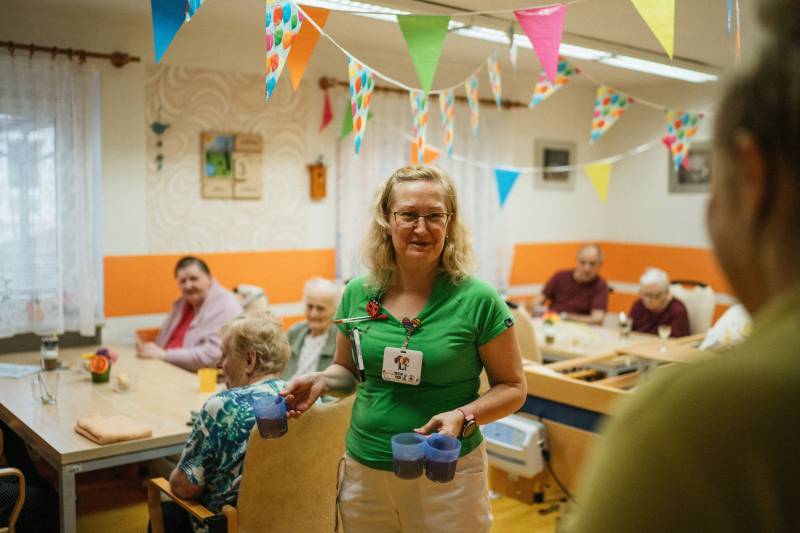 Andalucía already has the largest network of community social service centres in Spain, with 253 facilities employing more than 50,000 professionals and serving over one million people each year. These are the places people turn to when life gets difficult, whether that is financial pressure, a child at risk or an elderly person needing support.
A specific strand of the funding is directed at teams working with children and families under the Lopivi programme, which focuses on the prevention and early detection of violence towards children, as well as support for parents.
The regional government, led by President Juanma Moreno, said the investment demonstrates “a clear commitment to strengthening the network of community social services” and to the “quality of the public social services system”. Behind those words are real people, and a lot of them.
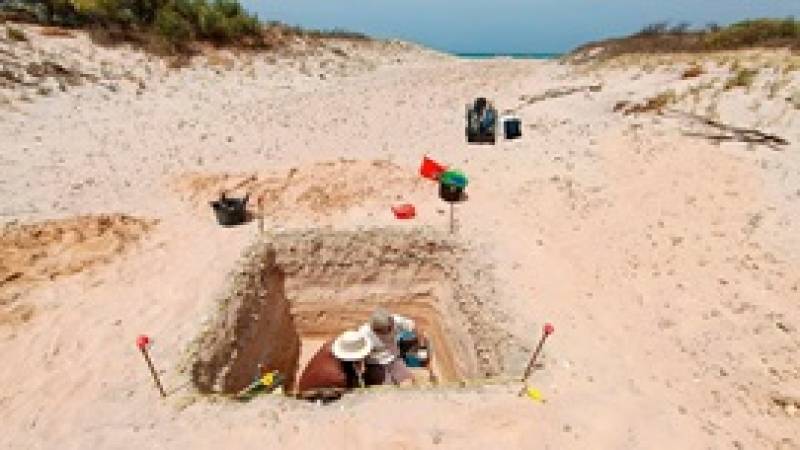
And finally, we end on something that feels like a lovely little gift from history. Researchers announced just a few days ago that what could be the remains of a Roman shipwreck have been found off La Caleta, one of Cádiz’s most famous beaches.
Archaeologists working as part of the Vestigium project, led by the Andalusian Institute of Historical Heritage, documented fragments of amphorae scattered across a 24-metre stretch of seabed near the San Sebastián reef. The cargo, dating to the 1st century AD, appears to have consisted of containers used to transport oil and salted fish, exactly what you would expect from a Roman merchant vessel.
The researchers also took the opportunity to re-examine archaeological materials that have been sitting in the Museum of Cádiz since the mid-20th century, and among the new findings is a previously unidentified ritual object of Eastern origin.
Andalucía’s acting Minister of Culture and Sport, Patricia del Pozo, said the project “has highlighted the richness and fragility of the intertidal heritage of the Andalusian coast and revealed new information about the cultural legacy on the beaches of Cádiz”.
If you have ever walked along the famous city beach of La Caleta and watched the waves come in, it is quite something to think that the cargo of a Roman trading ship has been quietly resting just beneath the surface for more than 2,000 years.
You may have missed…
- Getting a text or email about an unpaid fine? It could be a scam targeting Spanish drivers.
If you have received a message telling you that an unpaid traffic fine has doubled because you missed the payment deadline, stop before you click anything. The DGT has issued a warning about a phishing scam targeting drivers, and it is convincing enough to catch people out. - Over-52s on unemployment benefits in Spain are three times less likely to find work than other jobseekers.
If you are in your 50s and receiving unemployment benefit in Spain, the chances of finding work are significantly lower than for other unemployed people. That is the finding of a new study published by the Bank of Spain as part of its 2025 Annual Report, and for anyone in or approaching this age group, the details are worth understanding. - Spain now has more than 3,600 speed cameras and the number is still growing.
If you drive regularly in Spain, the chances are there are significantly more cameras watching you than there were even a year ago. That’s because new figures show that the country’s road network now has no fewer than 3,621 speed cameras in operation. - Six beautiful Spanish islands you can visit this summer without catching a flight.
From Murcia to Galicia, these island getaways offer crystal-clear waters, history and spectacular scenery. - Remember when a coffee cost less than a euro? Here is how much everyday prices have changed in Spain.
Inflation has been gradually eroding the value of money for years, and the gap between what things cost then and what they cost now is sharper than most people realise. Here is a look at some everyday items and how much the price tag has changed.
There we are for this week, then. Hope you liked it as much as always. See you again next week.
Bye!










Find more information by AREA, TOWN or URBANISATION .....
Cabo de Palos
Cartagena
El Carmoli
Islas Menores and Mar de Cristal
La Manga Club
La Manga del Mar Menor
La Puebla
La Torre Golf Resort
La Union
Los Alcazares
Los Belones
Los Nietos
Los Urrutias
Mar Menor Golf Resort
Pilar de la Horadada
Playa Honda / Playa Paraiso
Portman
Roldan and Lo Ferro
San Javier
San Pedro del Pinatar
Santa Rosalia Lake and Life resort
Terrazas de la Torre Golf Resort
Torre Pacheco
Cartagena
El Carmoli
Islas Menores and Mar de Cristal
La Manga Club
La Manga del Mar Menor
La Puebla
La Torre Golf Resort
La Union
Los Alcazares
Los Belones
Los Nietos
Los Urrutias
Mar Menor Golf Resort
Pilar de la Horadada
Playa Honda / Playa Paraiso
Portman
Roldan and Lo Ferro
San Javier
San Pedro del Pinatar
Santa Rosalia Lake and Life resort
Terrazas de la Torre Golf Resort
Torre Pacheco
Aguilas
Aledo
Alhama de Murcia
Bolnuevo
Camposol
Condado de Alhama
Fuente Alamo
Hacienda del Alamo Golf Resort
Lorca
Mazarron
Puerto de Mazarron
Puerto Lumbreras
Sierra Espuna
Totana
Aledo
Alhama de Murcia
Bolnuevo
Camposol
Condado de Alhama
Fuente Alamo
Hacienda del Alamo Golf Resort
Lorca
Mazarron
Puerto de Mazarron
Puerto Lumbreras
Sierra Espuna
Totana
Abanilla
Abaran
Alcantarilla
Archena
Blanca
Corvera
El Valle Golf Resort
Hacienda Riquelme Golf Resort
Lorqui
Molina de Segura
Mosa Trajectum
Murcia City
Peraleja Golf Resort
Ricote
Sucina
Abaran
Alcantarilla
Archena
Blanca
Corvera
El Valle Golf Resort
Hacienda Riquelme Golf Resort
Lorqui
Molina de Segura
Mosa Trajectum
Murcia City
Peraleja Golf Resort
Ricote
Sucina
Urbanisations
CamposolCondado de Alhama
El Valle Golf Resort
Hacienda del Alamo Golf Resort
Hacienda Riquelme Golf Resort
Islas Menores and Mar de Cristal
La Manga Club
La Torre Golf Resort
Mar Menor Golf Resort
Mazarron Country Club
Mosa Trajectum
Peraleja Golf Resort
Santa Rosalia Lake and Life resort
Terrazas de la Torre Golf Resort
La Zenia
Lomas de Cabo Roig
Important Topics:
CAMPOSOL TODAY Whats OnCartagena SpainCoronavirusCorvera Airport MurciaMurcia Gota Fria 2019Murcia property news generic threadWeekly Bulletin
CAMPOSOL TODAY Whats OnCartagena SpainCoronavirusCorvera Airport MurciaMurcia Gota Fria 2019Murcia property news generic threadWeekly Bulletin