



- EDITIONS:
 Spanish News Today
 Alicante Today
 Andalucia Today
Spanish News Today Editors Roundup Weekly Bulletin Mar 6

TOP STORY: "The Iran conflict, and how Spain both is and isn’t involved" & "Spain's miserable winter weather could finally be coming to an end, according to the UN"
Happy reading!
The Iran conflict, and how Spain both is and isn’t involved
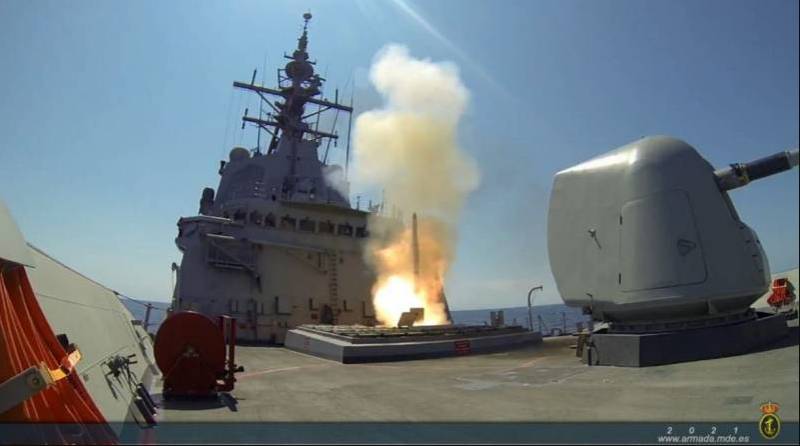
I don’t think there’s anyone in the world this week who hasn’t been following the situation rapidly unfolding – or unravelling, perhaps, is the word – in the Middle East. Even people who don’t normally follow the news have been glued to their phones, waiting for updates on whether World War III has broken out yet, or whether that will be tomorrow.
When that despot in Tel Aviv and his maniacal sidekick in the White House decided, last Saturday (how long ago it feels!), to do away with all pretence of respect for international law, human rights, national sovereignty and go ahead and start bombing Iran without even consulting any other world leaders or the UN or anyone, it triggered off a chain reaction of events that, in one way or another, is already affecting every single person in the world, and will continue to have lasting ramifications for months, if not years, to come.
The missile attacks were highly targeted, with decision making helped by Artificial Intelligence to pinpoint top priority objectives like taking out Ayatollah Ali Khamenei, who had ruled (read: oppressed) Iran with an iron fist for almost 40 years, and the 175 who were killed at the Shajareh Tayyebeh girls’ elementary school, because if there’s one thing Iran has too many of it’s educated girls.
And now, nearly a week on and with rockets still flooding into Iran from US and Israeli military bases around the region, and with Iranian missiles firing back at embassies and airports, it looks like this will not be a short conflict. No doubt Trump was hoping for another Venezuela – get in, take out the guy at the top, get out – but Iran says it is prepared for serious retaliation and a protracted war, which could mean four years and counting, like that Russia-Ukraine thing we all thought would be over so soon and which continues to drag on.
So far, so bad. But how does any of this relate to Spain?
Well, more than you might think. Spain’s political reaction at the outset of the conflict was swift but carefully calibrated. President Pedro Sánchez called for an “immediate de-escalation” on Sunday March 1, a day after the attacks began. Speaking at the traditional gala dinner marking the opening of the 20th edition of the Mobile World Congress at the Museu Nacional d'Art de Catalunya in Barcelona, he urged all parties to resume dialogue as soon as possible. The world, he said, stands at a crossroads between “war or peace”, and Spain was clear about its choice.
Crucially, he reasoned that it is possible to oppose both Iran’s “hateful regime” and what he described as an “unjustified, dangerous and illegal intervention” at the same time. King Felipe VI, who was also there at the event, echoed his comments.
“We call for restraint in the use of force, respect for civilian life, a diplomatic solution and the restoration of dialogue for peace,” said the King.
Following up this logic, Spain’s government took a step which many other countries did not, and refused the United States permission to use its naval base in Rota (Cádiz) and the air base in Morón (Seville) for operations linked to the strikes on Iran.
That decision triggered a sharp reaction from Donald Trump. During a meeting at the White House with German Chancellor Friedrich Merz on Tuesday, Trump described Spain as “a terrible partner” within NATO and claimed he had instructed Treasury Secretary Scott Bessent to “cut off all dealings” with Madrid.
 “We’re going to cut off all trade with Spain. We don’t want anything to do with Spain,” he said, adding that “nobody” would tell him he could not use Spanish facilities.
A typical response. Just like the tariff war of a few months ago (how quickly the whole news cycle seems to move with this guy!), he’s threatening to use trade as a weapon to get his own way. In theory, if he did do that – and that’s a big IF, assuming it’s not all just hot air – he would be jeopardising €16.7 billion worth of goods that his country imports from Spain and €30.1 billion that it exports, leaving a trade deficit for Spain of more than €13.4 billion.
In Brussels, a spokesperson for the European Commission underlined that any threat to a member state is effectively a threat to the European Union as a whole and expressed confidence that Washington would honour existing trade agreements. Presumably based on the evidence that Trump is always careful to honour and respect the existing social and legal order.
A day after this Tuesday’s spat, on Wednesday March 4, The White House claimed that Spain had agreed to “cooperate” with the US Army, but the Spanish government denies this. Indeed, just on Wednesday morning, Sánchez said that Spain would not be “complicit”.
They did, however, on Thursday morning, decide to send a frigate to Cyprus to help protect naval forces and strengthen European air defence after an Iranian drone attack on the British base at Akrotiri. The government says the mission is a defensive act of solidarity with Cyprus and its EU partners, and not an act of war, or getting involved in the conflict directly.
Quite apart from whether that threat materialises or not, the Iran conflict will make itself felt anyway, not least in the fact that it will drive prices up globally. Just between Iran and the United Arab Emirates lies the Strait of Hormuz, a narrow maritime passage through which around 20% of the world’s oil and a third of global liquefied natural gas flows. Any disruption there has immediate consequences for energy prices, inflation and trade.
Since the strikes began, Brent crude, Europe’s benchmark, has climbed above $80 a barrel, having closed the previous week at $72.48. Analysts warn that if tensions escalate further, prices could approach $100.
For drivers in Spain and around the world, the impact is obvious and tangible. Suppliers have already announced price increases, with diesel potentially rising by around 12 cents per litre and petrol by roughly six cents in the short term, while the Spanish consumer organisation OCU estimates that pump prices could climb by a further eight to ten cents per litre in the coming weeks.
That said, because petrol stations purchase their fuel in advance and prices reflect a combination of crude costs, wholesale markets, logistics and taxes, it can actually take up to two weeks for rises in oil prices to be fully reflected at the forecourt.
In addition, Spain is somewhat cushioned by the fact that only around 5% of its oil imports and 2% of its gas imports pass through the Strait of Hormuz. Thankfully, Spain’s oil and gas supplies are diversified, including imports from Algeria and several African countries. Even so, energy is traded globally, and higher prices elsewhere inevitably feed through to electricity bills and transport costs.
Stock markets have also come under pressure, naturally. The Ibex 35, Spain’s stock market, has fallen, while banks, which carry significant weight in the index and are sensitive to economic uncertainty, have been particularly affected.
And then there’s the fact that, if supply chains and freight and logistics are all affected, and transport costs go up because of increased fuel prices, it means that these increases are ultimately passed onto the consumer when to comes time to buy things at the shop.
Around a third of global fertiliser supplies pass through the Strait of Hormuz, and the region produces about 15% of the world’s polyethylene used in packaging. Spanish agriculture depends on these inputs. Sustained disruption, especially if oil exceeds $100 a barrel, could push up the price of fruit, vegetables and other essentials in the months ahead. As if it wasn’t already getting ridiculously expensive just to do the weekly shopping!
Of course, air travel has also been directly affected, with thousands of flights in and around the Middle East, and those which would normally fly over airspace in that region, being cancelled, rerouted or otherwise disrupted. That’s because, effectively, there are so many other lethal objects flying through the skies around there that it’s really not a good idea to fly a plane through there unless you want to get shot down.
If you have been affected by the travel disruption, there is consolation in that passenger rights remain in force under EU law. While armed conflict is considered an extraordinary circumstance under case law linked to EU Regulation 261/2004, meaning airlines may not owe compensation, they must still offer refunds or rebooking and provide accommodation and meals if travellers are stranded. So don’t cancel your flights if you’ve got any booked, as doing so may forfeit your right to a refund.
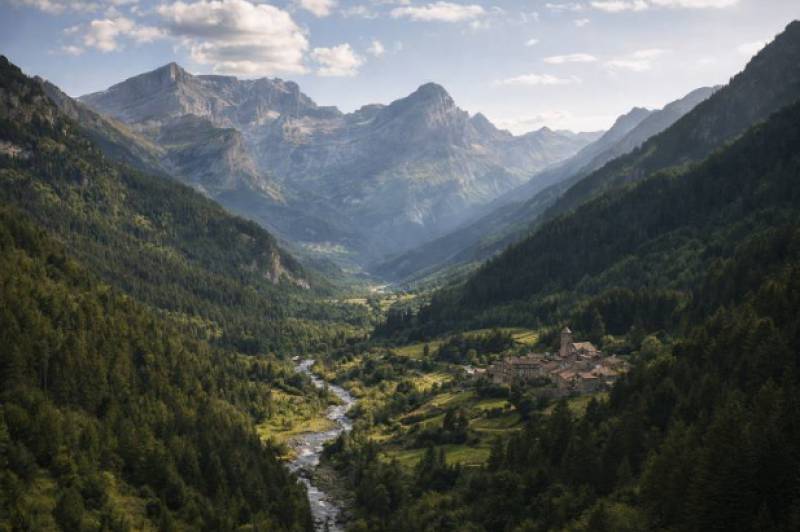 So, given all this, you might be wondering where in Spain you could be safe if World War III breaks out. Well, as you might imagine large strategic and industrial hubs such as Madrid and Barcelona would likely be higher-risk areas, along with any regions hosting significant military infrastructure, including perhaps San Javier in Murcia.
In contrast, more remote, mountainous and sparsely populated regions such as the Aragonese Pyrenees, the Sierra Nevada, northern León, the Sierra de Gredos in Ávila, Galicia and the Basque Country might offer relative isolation due to the rugged terrain and lower strategic value.
For somewhere a bit less… rainy… the Canary Islands and Balearic Islands, by virtue of their geographic isolation, could also be lower-priority targets. You’d just have to be aware that you’re living on an island, and resources need to be more carefully managed there.
Okay, so all that is still (theoretically) a long way off. This is not yet a World War, and for now Spain remains far from the battlefield. No need to panic… not just yet, at any rate.
Murcia
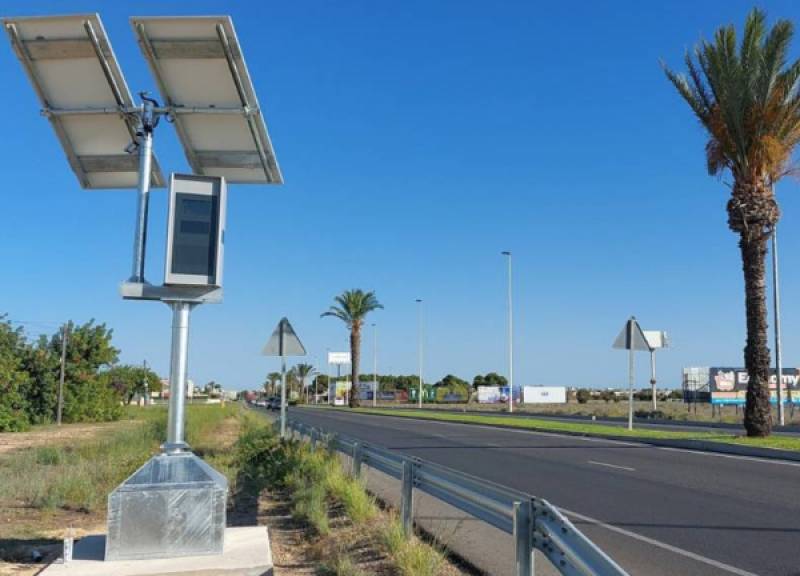
And now let's have a look at what's been happening across the Murcia Region. First up, if you're driving around Murcia, pay attention as the DGT (Dirección General de Tráfico) has installed a brand-new fixed speed camera on the RM-620, along the Pozo de la Higuera road near the Almería border.
This is part of a national plan with 33 new cameras going live this week across 11 regions, with a total of 122 new speed-control points expected by the end of the year. Some are fixed cameras, like the one in Murcia, while others are “tramo” or average-speed cameras.
The good news is that all new cameras are clearly signposted, and their locations are available on the DGT website and shared with navigation apps. And for the first month, anyone caught over the limit will just get a warning letter. After that, standard fines apply.
The DGT has said that this isn't about punishing drivers, it's about safety. Higher speeds make accidents more likely and more severe, so they hope to reduce serious injuries and fatalities. So yes, slow down if you are driving through Murcia this spring!
And speaking of spring, allergy sufferers are in for a tricky season. Murcia is known as the “Garden of Spain,” and it also seems to have more allergy sufferers than anywhere else in the country. Everyone seems to have streaming eyes and noses here this time of year. Maybe it's because the cities and towns are surrounded by greenery, pine forests, and farmland.
It’s certainly a beautiful backdrop, but it comes with a downside, pollen is a real challenge here. After weeks of rain followed by warmer weather, experts are warning that pollen counts could be even higher than usual.
Cypress pollen, which peaked earlier this year, is still lingering, while plane and pine trees are just starting to release their particles. Add humidity, mould, and the Saharan dust into the mix, and breathing issues may flare up in two stages: first from humidity and the dust, then from fresh pollen as plants really get going.
SEAIC, the Spanish Society of Allergy and Clinical Immunology, recommends taking allergy medication early and consistently, keeping windows closed during peak pollination hours, and limiting time in parks or heavily planted areas if possible. Sunglasses, dehumidifiers, and daily checks of pollen levels can also help. And if you're unsure exactly what triggers your symptoms, an allergy test with your doctor can make a huge difference in managing the season.
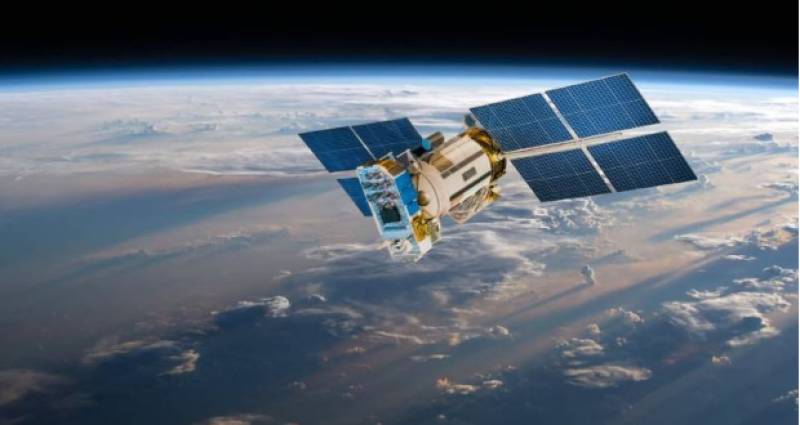 On a brighter note let's switch to some exciting news, and the old San Javier airport is getting a futuristic makeover. It's been chosen as a European Space Agency Business Incubation Centre, turning abandoned runways into a base for aerospace innovation. The centre, co-financed with the Spanish Space Agency, will support up to four startups at a time, potentially bringing 12 new space-sector companies to the area over three years.
Work is already underway, with a technology centre set to open next summer. The site will also host the OM2 project, a centre for the recovery and conservation of species from the Mar Menor, and events like UNVEX 2026, Spain’s biggest drone gathering. Mayor José Miguel Luengo called it “good news for the entire Region of Murcia and for San Javier.”
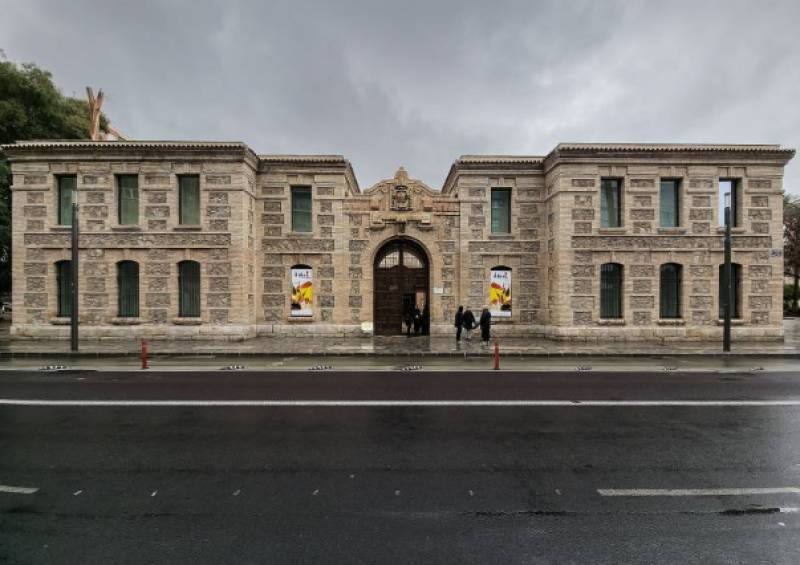
Back in the city, and Murcia's La Cárcel Vieja, its “old prison,” is finally reopening on March 26 after years of restoration. The historic building now has an extra 480 square metres of exhibition space, new multipurpose rooms, improved accessibility, and a freshly opened courtyard facing Calle Torre de la Marquesa. The reopening kicks off with a Jaume Plensa exhibition. Heritage councillor Rebeca Pérez called it “a great opportunity for Murcia,” praising the careful preservation of the building's historic features.
And for those living on the coast, Lo Pagán in San Pedro del Pinatar is getting a €5 million makeover. Over the next three years, 25 projects will revamp streets, public spaces, and sports facilities to strengthen Lo Pagán as a year-round tourist town. Highlights include a refurbished esplanade with better seating and surfaces, a new bike lane along the promenade, and improved access to the Parque del Mar stage.
 Town centre streets will be more pedestrian-friendly, rainwater management systems upgraded, and security will be improved in the town. The plan also covers new beach playgrounds, upgraded lifeguard huts, and the completion of a health centre. Mayor Pedro Javier Sánchez called it “a complete plan to improve everyday life for residents and visitors and to make Lo Pagán shine as it deserves.”
For more activities and events coming up soon in the Region of Murcia, all you have to do is take a look at our EVENTS DIARY:
Spain

 Renfe has revealed plans to set up its own bus company to deal with disruptions to train services, instead of relying on hiring coaches at short notice whenever there’s a problem.
Alicante
It looks like we can expect some flight disruptions at Alicante-Elche Airport this month and for once, it’s not because staff have gone on strike.
The airport’s runway is being closed every night until March 29 between midnight and 5.59am so workers can get on with a series of improvement projects. The main job is building a brand new taxiway designed to help aircraft move around the airfield more smoothly, which should make operations quicker and more efficient in the long run.
Because of the overnight closures, a handful of flights that normally arrive just after midnight or leave around 5.30am to 5.45am have already been shifted slightly. Airport operator Aena has advised passengers in that window to double check with their airline just in case their schedule has changed.
The taxiway project alone carries a price tag of €13.8 million, and that’s only part of the work happening behind the scenes. Crews are also resurfacing the existing parallel taxiway and repairing a section of runway 10 where the asphalt has been damaged. Altogether it’s a fairly major package of upgrades designed to keep Alicante’s ever-busy airport running smoothly as passenger numbers continue to grow.
From planes to police investigations now, and there has been another worrying development in a case that has already made plenty of headlines in the Vega Baja and far beyond.
A 33 year old Czech man, Michael Maly, was shot dead in the early hours of March 1 in the Rocío del Mar area of Rojales. A neighbour raised the alarm at around 1.30am after spotting a man lying in the street with a serious head wound on Calle Pleamar.

Emergency services rushed to the scene and paramedics attempted to resuscitate him but he was pronounced dead shortly afterwards. The Guardia Civil confirmed that no arrests have been made so far and investigators are keeping all lines of inquiry open.
The case has attracted particular attention because Maly had previously been arrested in connection with the murder of Northern Irishman John George. George’s body was discovered under a lemon tree in Rojales in January 2025.
Maly had been released on bail during that investigation, with conditions including handing over his passport and reporting to court every 15 days. According to sources close to the case, forensic tests later found blood belonging to John George on number plates taken from Maly’s vehicle, although a judge decided the existing bail conditions could remain in place.
Investigators have previously said that Maly’s cooperation helped them locate George’s body, although he denied any involvement in the killing and claimed he had only recently become friends with the main suspect.
That main suspect is Northern Irish national Jonathan Alan Smyth, who was arrested in Portugal after an international manhunt and later extradited to Spain. He is accused of being the last person to see John George alive but has denied the allegations. After several months in custody he was released on €100,000 bail in December 2025, with the case still moving slowly towards trial.
The investigation into both deaths is continuing.
Back to something a little more upbeat, and Alicante city’s port has just kicked off its 2026 cruise season in style.
The huge Carnival Dreams paid its first ever visit to Alicante this week, docking with more than 3,600 passengers on board. It’s the first of 112 cruise ship visits expected this year and if forecasts are correct it could end up being a record breaking season.
Last year around 230,000 cruise passengers passed through Alicante. This time around the total could climb to more than 325,000, bringing an estimated €84 million boost to the local economy.
March alone will see six more ships calling in after the Carnival Dreams, but things really ramp up later in the year. October is expected to be the busiest month with 20 cruise visits, including several days when two or even three ships arrive at once.
For businesses around the port and the city centre it’s always a welcome sight. Restaurants, cafés, shops and tour guides all benefit when thousands of visitors step off those floating hotels and head into town to explore Alicante’s old streets, castle and waterfront.
Andalucía
A shock rippled through Fuengirola on Sunday when a five-year-old girl was almost taken from her family at the town’s busy market. The horrifying incident happened while the child’s father was working at one of the stalls. Relatives noticed a stranger, a 45-year-old man from Finland, allegedly trying to lead the girl away.
Thankfully, quick-thinking family members and bystanders intervened immediately, managing to restrain the man until officers from the Policía Local arrived. He was arrested on the spot and taken before the courts to begin an investigation. It is understood that the market was crowded as usual, but the swift reaction of those nearby prevented the situation from escalating further.
No details have yet been released about the man’s motives, but the priority now, say police sources, is supporting the family and clarifying exactly what happened. For many locals, it has been a chilling reminder of how important it is to stay alert, even in familiar surroundings.
From tense moments in Fuengirola to big dreams in Málaga - it seems the Costa del Sol is never short of surprises. This week saw the unveiling of plans for a colossal new €150 million shopping complex near the Martín Carpena Sports Palace.
Businessman Tomás Olivo, one of Spain’s wealthiest property developers, has submitted designs for a sleek 115,000-square-metre shopping destination on the site of the former Azucarera industrial park. The proposal includes three levels of shops, restaurants, leisure spaces and 20,000 square metres of landscaped greenery, plus parking for around 3,000 cars.
 The design comes courtesy of Málaga architect Ángel Asenjo and UK-based Chapman Taylor, known for major retail projects worldwide. Olivo’s company, General de Galerías Comerciales, hopes to begin work as soon as all zoning, traffic and environmental checks are approved, with construction likely to take three or four years.
Olivo already owns popular centres such as La Cañada in Marbella and Nevada in Granada, so expectations are high that this mega-mall could do for Málaga what those have done for their cities: attract shoppers, diners and jobs in droves. Whether it will delight or dismay locals who prefer quieter streets remains to be seen, but there’s no doubt it will make a mark on Málaga’s skyline.
While Málaga looks to the future, Fuengirola is focused firmly on keeping its streets fresh and fragrant, thanks to a rather unexpected by-law update. Dog owners there now risk fines of up to €750 if they fail to rinse away their pet’s urine from pavements and walls.
The rule isn’t entirely new. Locals will know the ayuntamiento has long encouraged owners to carry little bottles filled with water and a splash of vinegar to pour over any patches their pooches leave behind. But what was once good manners is now the law, following a motion passed in February’s municipal plenary session.
Mayor Ana Mula said the goal is simple: “to keep neighbourhoods clean and pleasant.” The ayuntamiento insists it isn’t looking to hand out fines but hopes the change will encourage responsible ownership, especially as warmer months approach and, let’s be honest, dog wee in the sun isn’t anyone’s favourite smell.
Fuengirola has already run public reminders across local TV and social media and even handed out bottles to residents. So if you’re walking with your four-legged friend, make sure you pack your vinegar water and stay on the right side of the law.
And from Fuengirola’s rules of the street to Jerez’s rules of rhythm, music lovers have a real reason to get excited. The Corrs, yes, those Corrs, have just confirmed a one-night-only Andalucía show this summer.
The Irish family band will headline the Tío Pepe Festival in Jerez on August 13, performing at the beautiful Bodega Las Copas venue. Fans can expect a nostalgic night filled with hits like Runaway, So Young and, of course, Breathless. It’s their only concert in Andalucía this year, and given their four-decade career and over 40 million albums sold, tickets are expected to disappear fast.
The Corrs announced the show with typical Celtic charm, calling it their “first date announced for 2026” and praising the “beautiful Tío Pepe Festival.” For anyone who remembers them from the Talk On Corners and In Blue era, it’s a chance to relive their biggest hits in the most Andalusian of settings - a Jerez wine cellar under the stars.

You may have missed…
- When do clocks go back this month of March?
Just as we were getting used to the winter routine, the clocks are about to change once more. If you’ve found yourself wondering whether they go forward or back this month, don’t worry, you have plenty of company. - Murcia remains Spain's most car dependent region.
A whopping 72% of residents rely on their car as their main mode of transport, making Murcia the most car-dependent city in Spain. - Torrevieja backs a future tram connection to Alicante Airport.
During a recent visit to Elche Town Hall, Torrevieja’s mayor publicly backed the long-term expansion of the planned Elche tram system, suggesting it could eventually stretch south towards Vega Baja, with the airport acting as the key transport hub. - Spain bucks global trend as child obesity rates dip.
Spain stands out in the latest World Obesity Atlas 2026, released today on World Obesity Day, as one of just 15 countries worldwide to see a drop in childhood obesity and overweight rates among 10 to 19 year olds between 2010 and 2025. - European Bizum arrives: Free instant payments across Germany, Portugal, Italy and the Nordics from 2026.
Free instant payments between Spain and much of Europe are set to become a reality from 2026, after Bizum agreed to make its system compatible with several major European mobile payment platforms.
And that’s all we have for you for another week. As ever, thank you so much for reading all the way to the end (assuming you actually did and didn’t just skip down to this part!).
Have a great weekend!
Cartagena
El Carmoli
Islas Menores and Mar de Cristal
La Manga Club
La Manga del Mar Menor
La Puebla
La Torre Golf Resort
La Union
Los Alcazares
Los Belones
Los Nietos
Los Urrutias
Mar Menor Golf Resort
Pilar de la Horadada
Playa Honda / Playa Paraiso
Portman
Roldan and Lo Ferro
San Javier
San Pedro del Pinatar
Santa Rosalia Lake and Life resort
Terrazas de la Torre Golf Resort
Torre Pacheco
Aledo
Alhama de Murcia
Bolnuevo
Camposol
Condado de Alhama
Fuente Alamo
Hacienda del Alamo Golf Resort
Lorca
Mazarron
Puerto de Mazarron
Puerto Lumbreras
Sierra Espuna
Totana
Abaran
Alcantarilla
Archena
Blanca
Corvera
El Valle Golf Resort
Hacienda Riquelme Golf Resort
Lorqui
Molina de Segura
Mosa Trajectum
Murcia City
Peraleja Golf Resort
Ricote
Sucina
Condado de Alhama
El Valle Golf Resort
Hacienda del Alamo Golf Resort
Hacienda Riquelme Golf Resort
Islas Menores and Mar de Cristal
La Manga Club
La Torre Golf Resort
Mar Menor Golf Resort
Mazarron Country Club
Mosa Trajectum
Peraleja Golf Resort
Santa Rosalia Lake and Life resort
Terrazas de la Torre Golf Resort
La Zenia
Lomas de Cabo Roig
CAMPOSOL TODAY Whats OnCartagena SpainCoronavirusCorvera Airport MurciaMurcia Gota Fria 2019Murcia property news generic threadWeekly Bulletin