








- EDITIONS:
 Spanish News Today
 Alicante Today
 Andalucia Today
Spanish News Today Editors Roundup Weekly Bulletin May 1
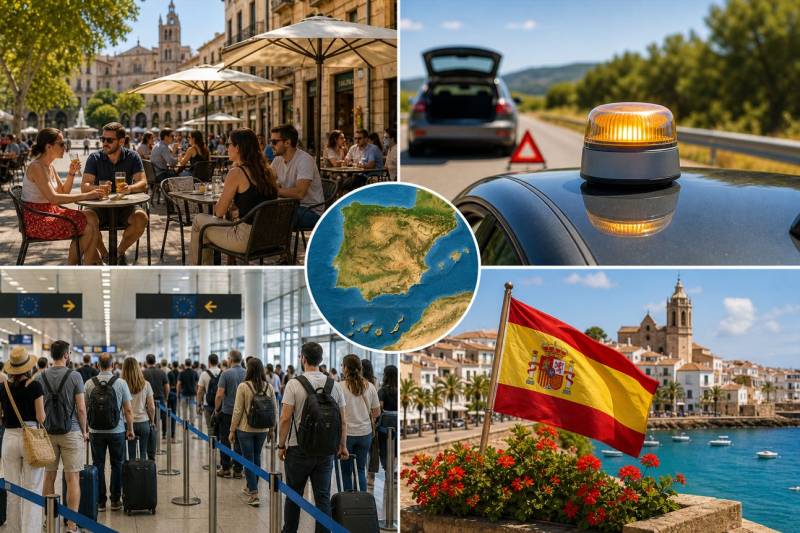
TOP STORIES: "Spain’s bar terraces may have to close during extreme heat under new rules" & "4 months on, how successful really are the new V-16 breakdown beacons?"
Happy Friday, everybody! Pinch, punch, first of the month – today is the first day of May and a national bank holiday, creating a long weekend for the whole of Spain. It’s just a shame there’s so much rain forecast, along with thunderstorms. Still, there should be plenty to keep us entertained, from the traditional Cruces de Mayo festivities taking place in many towns across the country to the famous San Javier Air Show in Murcia… not to mention, of course, a deep read of the latest edition of the Spanish News Today Editor’s Roundup Weekly Bulletin! Enjoy 
Spain’s bar terraces may have to close during extreme heat under new rules
Despite what you may have read in the press, Spain’s bar terraces aren’t disappearing altogether this summer, so no need to panic. However, you might find your usual outdoor table suddenly becomes off limits when the heat really ramps up.
New rules around extreme temperatures mean bars and restaurants now have to treat heatwaves as a serious workplace risk, not just an uncomfortable part of summer. In simple terms, if it’s too hot for staff to safely work outside, terrace service may have to stop.
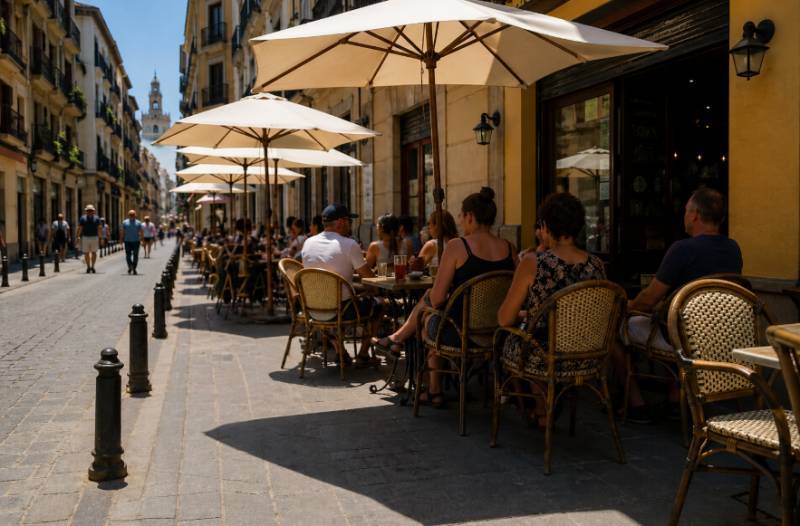
The key trigger will be the official alerts issued by Aemet, Spain’s State Meteorological Agency. When an orange or red warning is in place for high temperatures, businesses are expected to assess the risk and act accordingly. That could mean cutting back hours on the terrace, shifting service indoors or closing outdoor seating completely during the hottest part of the day.
That said, it’s by no means a blanket ban and terraces can stay open if the venue can make conditions safe for staff. This includes proper shade and cooling systems like fans, as well as regular breaks for waiters and access to water. If those measures are in place, many bars will carry on as normal, especially in tourist areas where terraces are a big part of the business.
If they can’t guarantee safe conditions, though, they’re expected to stop outdoor service. Indoor areas aren’t affected, so you’ll still be able to grab a drink or something to eat, you just might not be sitting outside in the sun.
These rules haven’t come out of nowhere. Spain actually brought in other protections for outdoor workers like gardeners and builders a few years ago, which already allow or require work to be stopped during extreme heat. The hospitality sector is now being pulled more clearly into that framework as temperatures continue to climb during the summer months.
Bars and restaurants will need to take note that there are real consequences for getting it wrong. Businesses that ignore the rules and keep staff working in unsafe conditions can face hefty fines, particularly in more serious cases.
In case there was any doubt, Spain’s summer heat is no joke. People have legitimately died in the past because it’s been so hot, and we know that episodes of extreme and prolonged heat are becoming more common in the summers. Now it seems the country’s rulemakers are taking that threat seriously, thank goodness.
How successful really are the new breakdown beacons?

You’ve got yours sitting in the glovebox already, I’ve no doubt, but hopefully you never have to use it. Still, should the worst happen, it’s best to use it than not use it.
Yes, this is Spain’s new V16 emergency lights, which were supposed to make breakdowns safer and easier and instead have just turned into one of the most ignored rules on the road right now.
Despite becoming mandatory on January 1, the majority of drivers still aren’t using them when things go wrong. According to new figures from Netun Solutions, more than 83% of roadside incidents in Spain are happening without the legally required beacon being activated.
That’s a huge gap when you look at the scale of breakdowns across the country. Spain sees close to 11 million road incidents every year, with around 40% needing roadside assistance. That works out at roughly 12,000 call-outs every single day.
Out of those, only about 2,000 involve one of the connected V16 lights being used, based on data from the Ministry of the Interior.
Rather than motorists deliberately flouting the rules, a lot of it seems to come down to confusion. Many drivers still aren’t clear that the connected version of the V16 is now the one required, not the older non-connected models that were widely sold before the rule change. Others simply don’t realise the device is compulsory at all.
There’s also a bit of hesitation around the tech itself. The system links to the Dirección General de Tráfico (DGT) platform, sending your location in real time to warn other drivers. While that’s exactly what makes it safer, some motorists are not entirely comfortable with the idea of their position being broadcast, especially if they are travelling alone at night, when the tracking signal system could – in the worst of hands – become a geolocator for criminals to find easy victims.
The idea behind the V16 is that, instead of getting out of the car and placing a warning triangle on the road, which has led to serious accidents in the past, you can stay inside and activate a small flashing beacon that alerts other drivers instantly.
The technology is already out there, sitting in glove compartments across the country. It’s just not being used anywhere nearly as much as the rules intended.
Remember, you can find all the latest motoring and travel news on our website or join the Driving in Spain Facebook group for regular updates
Border enforced?
 If you’ve flown recently or have a trip coming up, you may already have heard about the queues. Spain’s airports have been under pressure following the rollout of the EU’s new Entry/Exit System, and for some passengers, particularly those arriving from the UK, waits at passport control have stretched to as much as three hours.
The system, which came fully into force on Thursday April 10, replaces traditional passport stamping with biometric checks. First-time non-EU travellers now need to provide fingerprints and a facial image, which has inevitably slowed things down, especially during busy periods like Easter.
Airports including Madrid, Barcelona, Málaga, Alicante and Palma say the system itself is working as intended, as we have previously reported. The issue, they admit, is the sheer volume of passengers passing through at once.
In response, Spain airports operator Aena has introduced a series of practical tweaks to help ease the pressure. For instance, families and passengers with reduced mobility can now be redirected to traditional passport control lanes if biometric queues exceed 25 minutes. There are also efforts to stagger flight arrivals and better manage crowd flow during peak times.
Importantly, Spain has made it clear it will not suspend the system, unlike Greece, which has temporarily relaxed biometric checks for some travellers, such as Britons. Instead, the focus here is on making the process run more smoothly.
With summer approaching, how well these changes work in practice could make all the difference to travellers heading to Spain.
Murcia
Now let’s take a look at what’s happening in the Region of Murcia, where there has been plenty going on this week. For starters, the new Corvera Hills Residences urbanisation near Murcia International Airport is progressing nicely as the development moves into its latest construction phase.
The project, promoted by locally based agency Just Murcia Property, will eventually include 500 modern homes, with this phase featuring two-bedroom apartments and larger villas, with communal swimming pools and landscaped gardens.

A key part of the project is also the redesign of the Corvera Hills golf course, which has been given a more technical layout and is now the only course in Spain to use Bermuda Río grass, a variety that stays green year-round while using very little water.
Its location is also likely to appeal to buyers looking for a quieter pace of life while still being close to Murcia city, local services and the airport. Because of its less built-up design, the homes are aimed not just at holiday buyers and retirees, but also for people looking to live there full-time or work remotely.
Essentially, the longer-term plan is to create a full community, with a shopping centre, hotel and a clubhouse restaurant. Should be good to have another thriving residential community in the area!
Not far away, there was welcome news this week as Murcia city announced plans to clean up several of its neglected municipal plots that have become a familiar but unwelcome sight in many towns.
Most people live near one of these plots or will be familiar with them: they are usually empty pieces of land that have been left sitting untouched for years, often dry and dusty in summer, muddy after rain and quickly covered in weeds and overgrowth. They can easily become a dumping ground for old furniture and plastics, building waste and other items.
For nearby dog owners, they often become the local loo, which can create another problem for those living close by. For residents who live beside them or look out onto them each day, they can take away from the appearance of an otherwise lovely area.
Now, at least the city of Murcia is taking action, launching a new plan to clean, clear and secure neglected municipal plots across the municipality, with an initial investment of almost €300,000.
The work will include removing rubbish and debris, clearing weeds and overgrown vegetation, and pruning trees and shrubs where needed. Damaged fencing will also be repaired, while new fencing, gates and locks will be installed in areas that need better protection to help prevent illegal dumping in the future.
The hope is that publicly owned land will no longer have that neglected feel, but instead be kept clean, cared for and properly maintained long after the summer months have passed.
A very different landscape is already looking gorgeous elsewhere as spring is putting on quite the show across inland Murcia. Earlier in the year, we had the almond blossom in places like Mula, followed by Cieza’s peach blossoms, and now it is the turn of the orange blossom in the Valle de Ricote and the lavender fields of Moratalla.
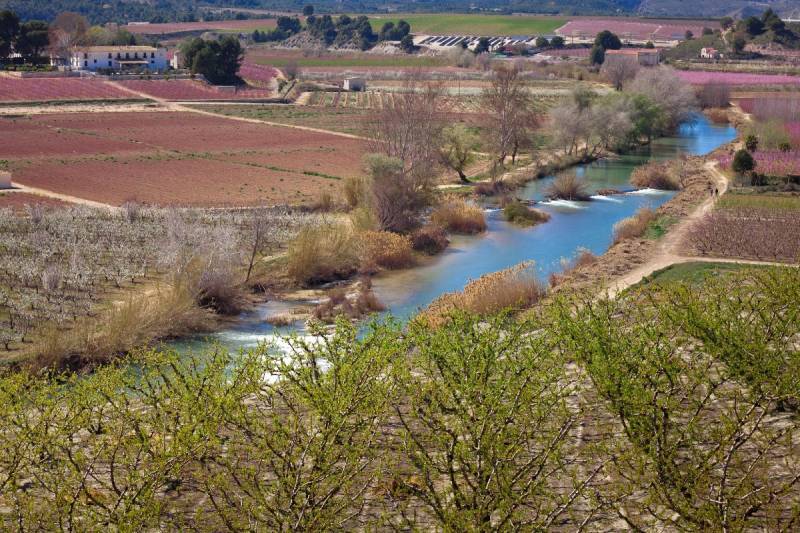 One of the best ways to experience the Ruta de la Floración del Azahar (Orange Blossom Season) is taking a circular route through villages such as Ulea, Ojós, Ricote and Villanueva del Río Segura. You can walk it, cycle it or drive it over a day or weekend, stopping at viewpoints, orchards and small local spots along the way. There are also guided visits to citrus farms where you can walk among thousands of trees, learn about the fruit and taste it straight from the orchard.
Food is also a big part of the experience. Traditional sweets such as bizcochos borrachos (drunk sponge cake!) are still made locally and can be found in small bakeries and cafés rooted in the area’s history. There are plenty of other activities and workshops to take part in as well.
While the Valle de Ricote smells of citrus fruits, Moratalla turns purple with lavender at this time of year and fills the air with its scent. And Moratalla really makes the most of the lavender season with a packed programme of events. Under the name Lalavand, the area arranges oodles of activities that run from spring into early summer.
To San Javier now, and there was one news story this week that was hard to miss. Police officers ended up stripping down to their undies and diving into the Mar Menor while chasing a suspected burglar who tried to escape by swimming towards nearby boats moored off Santiago de la Ribera.
 The man had allegedly broken into a house in the early hours of the morning, forcing open a window before fleeing through nearby streets and leaving the property ransacked. After initially disappearing, he was later spotted back near the scene, which led to a chase on foot that eventually reached the seafront.
From there, he made for the water in an attempt to reach nearby boats, but without a second thought, the cops shed any unnecessary equipment that could weigh them down in the water and dived in after the fugitive. After a desperate chase, the police finally managed to catch up with the suspect just a few metres from the boats.
During the arrest, the suspect resisted, lashing out and struggling in the water like a hooked fish, before being subdued and brought to the shore, where he was restrained with the assistance of more officers. As for the dripping wet hero officers, presumably the next step was to go back to the station to be *ahem* ‘debriefed’. Not your average day on patrol in the usually quiet Mar Menor towns!
Of course, the San Javier-Mar Menor area is due to be anything but quiet this weekend, as pretty much the entire Region and their dog will be down on a beach in Santiago de la Ribera, staring open-mouthed into the sky as the annual Air Show kicks off! It’s just a shame that the weather forecast is for such a wet weekend, but providing the weather holds out for long enough, it should also be a big weekend for other outdoor activities, from the Caballos del Vino (Running of the Wine Horses) in Caravaca, the Cruces de Mayo in Cartagena, the Los Mayos festival in Alhama de Murcia and the local fiestas in Abanilla.
See our EVENTS DIARY for more events and activities coming up soon in the Region of Murcia:
Spain
Across Spain as a whole, the latest round of doctors’ strikes has once again left thousands of patients in limbo, causing cancelled appointments, delayed surgeries and a fair bit of confusion at clinics across the country.
This is now the third major stoppage of the year so far, and while reliable turnout figures are hard to pin down, the strike seems to be achieving its aim of causing as much disruption as possible. In the Region of Murcia alone, more than 4,600 appointments were affected on day one, including nearly a third of scheduled operations.
For patients, it’s incredibly frustrating, of course, but most people understand the striking doctors’ position and sympathise with them. Even though there are countless people who have turned up to appointments that no longer exist, as well as plenty of other sad stories, on the whole patients are supportive of doctors’ demands for improved working conditions, shorter hours and an overhaul of the structure of the profession.
The trouble is that sympathy doesn’t make waiting lists any shorter, and with further strike dates already lined up throughout May and June, the situation is only going to get more tense and tricky for everyone involved unless the parties can finally come to an acceptable resolution.

There was also a major international incident involving many Spanish citizens and natives of other countries that went under the radar of most media outlets this Thursday, when at least 22 boats from the Global Sumud Flotilla – which was delivering humanitarian aid from Spain, France and Italy to Gaza – were intercepted by Israeli forces in international waters off Crete and around 175 activists taken captive.
The Spanish contingent of the flotilla had set sail from Barcelona two weeks earlier on their mission, but did not expect to be detained at sea in what activist groups such as Greenpeace have termed a “violation of international humanitarian rights”. Israeli officials stated that naval forces issued warnings to the vessels and only intercepted those that did not comply, saying that any detained activists were being taken to Israel “peacefully,” an action that complies with international law.
However, the fact that jamming signals were used to block the boats’ emergency communications systems and that the status and welfare of the detainees is currently unknown is worrying for the international community. Spanish President Pedro Sánchez wrote on X, “Israel is once again violating international law by attacking a civilian flotilla in waters that do not belong to it” and assured that Spain “is doing everything necessary to protect and assist the detained Spaniards”. The world will be watching closely how this situation develops.
In air travel news, Ryanair has warned that they could shrink their operations in Spain for the first time ever, blaming rising airport fees for forcing them to downsize. Already, millions of seats have been cut from regional airports, with more reductions on the way. While the airline has hundreds of new aircraft on order over the next decade, not a single one is currently earmarked for Spain.
True to form, Ryanair chief executive Michael O’Leary has been blunt about his opinions, arguing that Spain is pricing itself out of the low-cost market with its airport fee hikes while other countries are rolling out the welcome mat.
That matters, particularly for smaller regional airports that rely heavily on budget airlines to keep passenger numbers ticking over. If those routes disappear, so do the tourists, and with them a chunk of local economic activity, which is already under threat from the spectre of rising fuel costs and global instability.
Still, Spain continues to think big and plan much further ahead than that, as evidenced by its latest joint proposal with Ireland: an enormous undersea electric cable between the two countries stretching more than 1,000 kilometres across the Atlantic Ocean.
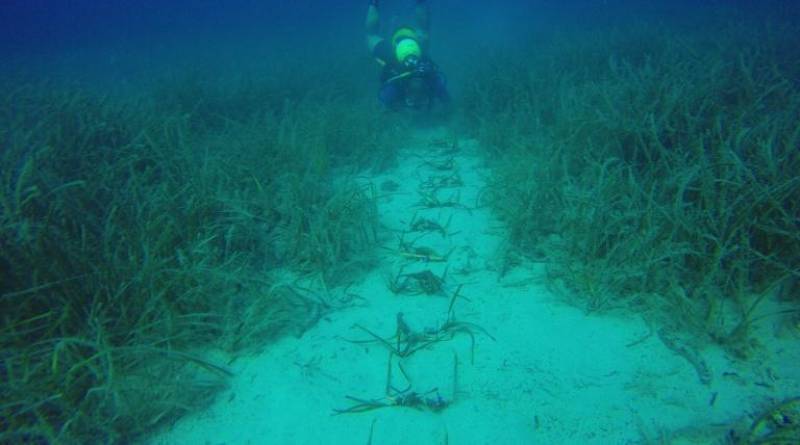
The main motivation behind the idea is to be able to optimise energy usage across the two EU member states. When Spain produces more solar energy than it needs, it could send the surplus north. When Ireland’s wind farms are generating at full tilt, the flow could reverse.
In theory, it could be absolutely revolutionary for the way we think about renewable energy capabilities and how possible it really is to meet our climate protection goals. In practice, of course, laying a cable across deep ocean waters is anything but simple, and the project is still in the very early feasibility stage.
What it does do, though, is highlight a big shift in priorities. Spain has spent years building up its renewable energy capacity but still struggles to export that power efficiently due to limited connections with the rest of Europe. Ireland faces a similar issue from the opposite direction. Linking the two would not solve everything, but it would be a step towards a more flexible, interconnected system.
For now, it remains an ambitious idea rather than a confirmed project, with costs likely to run into the billions and years of engineering work ahead if it ever gets the green light, like that channel tunnel that’s also supposed to connect the south of Spain with Morocco at some stage in the distant future. Never say never – stranger things have happened!
Alicante
Alicante Airport is getting a new upgrade this summer that will be very welcome to anyone who’s ever wished they could skip that painfully long security queue before a flight.
A fast-track security lane is being introduced at the airport, allowing passengers to pay for priority access through the security checkpoint and into the departure area. It doesn’t remove any of the standard checks, but it does give passengers a dedicated lane designed to cut waiting times, particularly useful during the busy morning rush when several flights tend to depart close together.
The service, which already operates at busy Spanish airports such as Madrid-Barajas, Barcelona-El Prat, Palma de Mallorca and Málaga, is expected to launch in Alicante in June. It will be located close to the main check-in area and clearly signposted, with passengers able to book in advance or arrange access on arrival through airlines.
Pricing has not yet been confirmed, but it’s been described as an affordable add-on rather than a premium-only extra.
The timing couldn’t be better really, especially for UK flyers, since the EU’s Entry/Exit System (EES) has just been formally rolled out. This system adds biometric checks to the process for non-Schengen travellers and it’s definitely slowed things down.
And while airports are busy finding ways to speed things up inside the terminals, Torrevieja has been focusing its attention a little closer to the ground, with new investment aimed at improving some of its most popular beach spots.
The city council has approved a €385,000 contract for improvement works at the Cala Piteras, Playa del Cura and Cabo Cervera beaches, with upgrades designed to make access safer and more comfortable across all three locations.
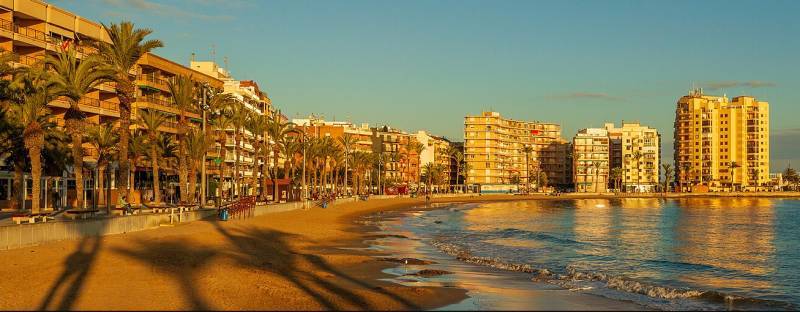
At Cala Piteras, the work will focus on improving access to the sea in a more rugged natural setting, with upgraded ramps, new railings and better safety features to help visitors navigate the rocky terrain more easily.
Playa del Cura, one of Torrevieja’s busiest city beaches, is set for a wider refresh of walkways, ramps and access points, along with improvements to accessibility for people with reduced mobility.
Further along the coast at Cabo Cervera, plans include repairing worn infrastructure, upgrading access routes and bringing facilities in line with current accessibility standards.
All three projects share the simple aim of making it easier and safer for people to get down to the beach, particularly during the busy summer months when footfall is at its highest.
In Orihuela Costa, there was tragedy when a late-night fire broke out on Calle Liberiades on Saturday April 25. Emergency services were called to a detached property shortly after 10pm after reports of a fire. According to the Alicante Fire Consortium, the blaze started in the kitchen before spreading through the rest of the house.
Paramedics attempted resuscitation on a 77-year-old woman at the scene, but she was later pronounced dead.
Three other residents, two women and a 78-year-old man, were taken to Torrevieja Hospital suffering from smoke inhalation. The woman who died was the homeowner, who shared the property with an elderly English-speaking couple.
Eight firefighters attended the incident from the Torrevieja station, supported by police and medical teams. The fire was brought under control and the operation was completed by around 11.45pm.
Andalucía
 At the fairground this week, Seville’s April Fair has had quite a dramatic scare. Also last Saturday evening, a cable snapped on the Steel Max ride in Calle del Infierno, leaving four people injured, including two children. The attraction’s capsule crashed mid-ride before hanging several feet above the ground, prompting a rapid emergency response.
Firefighters cordoned off the ride, while Civil Protection teams and Policía Local helped secure the area and Policía Nacional took charge of the investigation. The ride is one of the fair’s more extreme attractions, launching riders high into the air at great speed, so the incident has naturally raised safety concerns as the festival continues.
The fair itself remains one of Andalucía’s great annual gatherings, but after this latest scare, attention has stayed quite firmly on safety checks for the rest of the week.
Málaga airport has added another tempting destination to its summer schedule, with Ryanair bucking the trend of its scale-back by launching a new route to Košice in Slovakia. The twice-weekly service, which runs until October 22, opens up a city that is often described as one of Slovakia’s hidden gems, thanks to its Gothic, Renaissance and Baroque old town.
Flights from Málaga will operate on Mondays at 4pm and Thursdays at 1.30pm, while the return leg from Košice International Airport will run on Mondays and Thursdays too. Košice is one of four new Ryanair routes added this summer, alongside Katowice, Bratislava and Pardubice.
In total, the airline will run 589 weekly flights from Málaga this summer, an 8% increase on last year, with 91 routes now on offer. For anyone looking for a less obvious European break, this one ticks plenty of boxes.
And elsewhere in Andalucía, Granada is pushing hard to improve its own air travel links after another tough year for foreign tourism. The province wants to restore the London-Gatwick and Bilbao routes, while also adding Warsaw and Valencia.
The Provincial Council has approved a €427,533 budget amendment to support the campaign, with president Francis Rodríguez calling it “a starting point”. The plan comes after foreign visitor numbers fell again, including a steep drop in the city of Granada itself.
If the proposals go ahead, the airport would eventually offer 10 domestic routes, alongside its international connections. Granada’s leaders clearly see better air access as one of the keys to turning tourism around.
And finally, Málaga is now home to what is being billed as Spain’s most iconic Lego exhibition, with a new show at the OXO Video Game Museum running until November 1, ‘Lego Gaming: The Exhibition’.
The exhibition has arrived on the Costa del Sol after its run in Madrid, and it places Lego’s history alongside its long relationship with the gaming world. The display is split into seven themed areas, covering different eras and franchises from the Lego gaming universe: there are large-scale sculptures and interactive spaces where visitors can try classic games and build with the famous bricks themselves!
One of the standout pieces is a Super Mario sculpture made from 22,176 bricks and weighing 52kg, and – new for Málaga visitors – a special area devoted to Lego Pokémon sets!
I’ll press Play on that!

You may have missed…
- Pink licence plates are coming to Europe, but what do they mean for Spain?
Drivers in Spain are already used to seeing more than just the standard white number plates on the road, but a new system being introduced in France could take things a step further: pink licence plates for vehicles with temporary registration! - Buying homes sight unseen is reshaping the property market.
Buying property without even seeing it in person first is becoming more common, with high-spending foreign buyers and investors driving a growing number of purchases, in some cases completed after nothing more than a video call! - New Murcia high-speed train station faces possible delay beyond 2026.
The long-awaited high-speed rail station in Murcia could face further delays, with several key parts of the project still under construction despite earlier promises that it would be ready soon. - Spain’s wage tax burden rises further after the pandemic.
Spain has seen the biggest increase in wage tax pressure among Europe’s largest economies since the pandemic, with the tax wedge climbing by 1.6% since 2019, although Spain still sits below Germany, France and Italy. - Rare Blue Moon to light up Spanish skies this May.
The night sky over Spain is set to put on a rare show this May, with not one but two full moons appearing in the same month in what’s known as a Blue Moon.
And that’s it for this week’s news. Thank you for reading and we’ll have another edition for you next week.
Bye!









Find more information by AREA, TOWN or URBANISATION .....
Cabo de Palos
Cartagena
El Carmoli
Islas Menores and Mar de Cristal
La Manga Club
La Manga del Mar Menor
La Puebla
La Torre Golf Resort
La Union
Los Alcazares
Los Belones
Los Nietos
Los Urrutias
Mar Menor Golf Resort
Pilar de la Horadada
Playa Honda / Playa Paraiso
Portman
Roldan and Lo Ferro
San Javier
San Pedro del Pinatar
Santa Rosalia Lake and Life resort
Terrazas de la Torre Golf Resort
Torre Pacheco
Cartagena
El Carmoli
Islas Menores and Mar de Cristal
La Manga Club
La Manga del Mar Menor
La Puebla
La Torre Golf Resort
La Union
Los Alcazares
Los Belones
Los Nietos
Los Urrutias
Mar Menor Golf Resort
Pilar de la Horadada
Playa Honda / Playa Paraiso
Portman
Roldan and Lo Ferro
San Javier
San Pedro del Pinatar
Santa Rosalia Lake and Life resort
Terrazas de la Torre Golf Resort
Torre Pacheco
Aguilas
Aledo
Alhama de Murcia
Bolnuevo
Camposol
Condado de Alhama
Fuente Alamo
Hacienda del Alamo Golf Resort
Lorca
Mazarron
Puerto de Mazarron
Puerto Lumbreras
Sierra Espuna
Totana
Aledo
Alhama de Murcia
Bolnuevo
Camposol
Condado de Alhama
Fuente Alamo
Hacienda del Alamo Golf Resort
Lorca
Mazarron
Puerto de Mazarron
Puerto Lumbreras
Sierra Espuna
Totana
Abanilla
Abaran
Alcantarilla
Archena
Blanca
Corvera
El Valle Golf Resort
Hacienda Riquelme Golf Resort
Lorqui
Molina de Segura
Mosa Trajectum
Murcia City
Peraleja Golf Resort
Ricote
Sucina
Abaran
Alcantarilla
Archena
Blanca
Corvera
El Valle Golf Resort
Hacienda Riquelme Golf Resort
Lorqui
Molina de Segura
Mosa Trajectum
Murcia City
Peraleja Golf Resort
Ricote
Sucina
Urbanisations
CamposolCondado de Alhama
El Valle Golf Resort
Hacienda del Alamo Golf Resort
Hacienda Riquelme Golf Resort
Islas Menores and Mar de Cristal
La Manga Club
La Torre Golf Resort
Mar Menor Golf Resort
Mazarron Country Club
Mosa Trajectum
Peraleja Golf Resort
Santa Rosalia Lake and Life resort
Terrazas de la Torre Golf Resort
La Zenia
Lomas de Cabo Roig
Important Topics:
CAMPOSOL TODAY Whats OnCartagena SpainCoronavirusCorvera Airport MurciaMurcia Gota Fria 2019Murcia property news generic threadWeekly Bulletin
CAMPOSOL TODAY Whats OnCartagena SpainCoronavirusCorvera Airport MurciaMurcia Gota Fria 2019Murcia property news generic threadWeekly Bulletin