








- EDITIONS:
 Spanish News Today
 Alicante Today
 Andalucia Today
Spanish News Today Editors Roundup Weekly Bulletin September 4
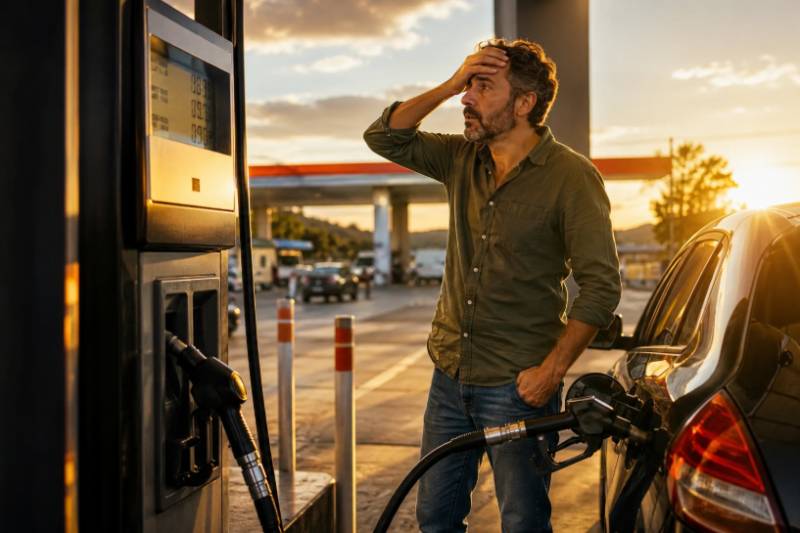
TOP STORIES: "Diesel drops in price this week thanks to Spanish fuel discount" & "Spain records its deadliest summer for heat-related deaths"
Well, that's the hottest summer on record officially confirmed, and Spain's bank balance is feeling the heat almost as much as the rest of us. Between eye-watering electricity bills, health insurance premiums that keep climbing and inflation creeping back above 4%, this week's newsletter reads a bit like one long receipt nobody wanted to look at.
At least diesel drivers are getting a bit of relief at the pump, even if the rest of us are stuck watching the numbers go the wrong way.
It's not all doom and rising prices, mind. There's a Greek-island lookalike just down the road from Benidorm, an entire month dedicated to chocolate in Pilar de la Horadada, and Take That fans can start counting down to next summer's tour.
So grab a cold drink, brace yourself for the grim bits, and settle in for this week's round-up from across the country.
Hot as hell
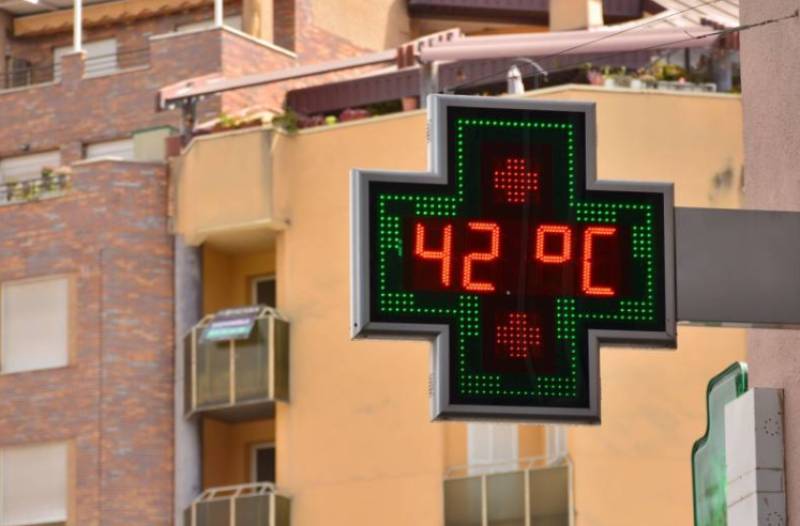
Spain's summer has officially gone from excruciatingly hot to something rather more serious.
A staggering 5,234 deaths have been provisionally linked to excessive heat between June and the end of August, making this the deadliest summer for heat-related deaths since Spain's monitoring system began in 2015.
And before we all imagine 5,234 people collapsing from heatstroke, there's an important bit of context here. That's not what the figure means.
Spain's MoMo mortality system estimates the number of deaths associated with excessive temperatures by looking at mortality figures alongside temperature data and the number of deaths that would normally be expected. Extreme heat can put enormous stress on the body and make existing conditions such as heart, lung and kidney problems considerably worse.
In fact, only around 2-3% of the summer deaths attributed to excessive temperatures are thought to be directly caused by heatstroke.
The figures are particularly stark when you look at who is dying. Of those 5,234 deaths, 5,068 were among people aged over 65, with more than 3,200 involving people aged over 85. That's around 63% of all the deaths recorded.
Women have also been disproportionately affected, accounting for 3,143 deaths compared with 2,091 among men.
And the problem clearly got worse as the summer went on. There were 937 deaths linked to excessive heat in June, rising to 2,025 in July and then another 2,149 in August.
None of this will come as a huge surprise to anyone who has spent the past few months in Spain wondering whether their air conditioning bill is going to require a small bank loan.
We've had a pretty extraordinary summer, with four separate heatwaves between June and early August, while temperatures were already running well above normal from around the middle of May.
According to Aemet, mainland Spain has just experienced its hottest summer on record, with the provisional average temperature a whopping 2.5°C above the 1991-2020 average.
And, rather annoyingly, September hasn't exactly got the memo that summer is supposed to be winding down.
Parts of Spain could still see temperatures above 35°C this week, while Mediterranean coastal areas and the Guadalquivir valley are facing more tropical nights. In other words, those nights when you lie there at 2am questioning every life decision that led you to live somewhere without an industrial-sized air conditioning unit.
The bigger concern, though, is that this isn't simply one freakishly hot summer. Heatwaves are becoming more frequent and are increasingly a serious public health issue, particularly for older people and those with existing health conditions.
So while the rest of us are desperately trying to squeeze the last few beach days out of September, it's worth remembering that extreme heat isn't just uncomfortable. For some people, it can be genuinely dangerous.
And judging by the temperatures still on the way, Spain's summer clearly isn't quite finished with us yet.
Pumped up

If you've been filling up the car lately and wondering why your wallet seems to be getting lighter at an alarming rate, there's finally a little bit of good news. Not cheap fuel good news, obviously. Let's not get carried away. But Spain's diesel discount is about to become considerably more generous.
From Tuesday September 1, the government is increasing the diesel discount to 20 cents per litre, rather than the measly 5 cents that had originally been planned for September.
The reason is fairly simple: diesel prices have been going absolutely the wrong way.
Under the government's anti-crisis measures, the discount increases automatically when diesel prices rise by more than 15% year on year. And according to the latest figures, diesel was 15.7% more expensive in July than it was a year earlier, meaning the safeguard clause has been triggered.
So, if you're driving a diesel car, September should bring a rather more noticeable reduction at the pump.
Petrol drivers aren't quite as lucky. Petrol prices were up 7.3% year on year in July, which sounds bad enough, but it wasn't enough to trigger the bigger discount. Petrol will therefore stick to the original schedule and get a 5-cent-per-litre reduction in September.
The government says this is all part of a flexible system designed to respond to what happens with fuel prices rather than applying the same discount across the board. And, to be fair, that makes sense. If diesel is getting hammered while petrol isn't quite as badly affected, why give both the same level of help?
The bigger problem is that the discount is arriving at a time when fuel prices have already been climbing steadily for weeks.
In fact, fuel prices have now increased for eight consecutive weeks, with diesel reaching €1.861 a litre and petrol hitting €1.723. Diesel is now almost 24% more expensive than it was before the temporary fuel VAT cut ended at the beginning of July, while petrol has risen by almost 20%.
And there's another rather unwelcome number lurking in the background: Spain's inflation rate jumped from 3.6% in July to 4.3% in August.
That's the highest annual inflation rate since February 2023 and the first time it has gone above 4% since April 2023. The National Statistics Institute says higher fuel and lubricant prices were a major factor, along with food prices not falling as much this summer as they did last year.
So while the government is understandably keen to point out that its anti-crisis measures are working, households are probably looking at their supermarket receipts, fuel bills and electricity costs and thinking, are they though?
The government estimates that its measures have knocked around one percentage point off inflation in recent months and says this represents more than 60% of the price increases linked to the conflict in Iran.
The fuel discount is therefore welcome, particularly for anyone who relies heavily on their car. But with prices still climbing and inflation heading back above 4%, it feels a little like we're being handed a bigger umbrella just as the rain gets heavier.
And if you've got a diesel car, September is definitely the month to make use of it.
Health at a price

Private health insurance in Spain has always been one of those things many expats consider worth having. You pay your monthly premium, get quicker access to specialists and avoid spending half your life refreshing the health service appointment page.
The problem is that it's getting seriously expensive.
Health insurance premiums have jumped by 67.6% since July 2020, according to the latest figures from Spain's National Statistics Institute. That's easily the biggest increase among the main types of insurance, with vehicle insurance rising 34.8% and life insurance going up 37% over the same period.
And if you think that's bad, don't look too closely at the longer-term figures.
Since 2006, health insurance has become more than 215% more expensive. That's more than four times the increase in car insurance over the same period.
So what's going on?
Well, part of the problem is that more people are turning to private healthcare because the public system is struggling with increasingly long waiting lists and delays in getting diagnoses and appointments. And let's be honest, if you've ever been told you'll have to wait several months to see a specialist, the temptation to reach for your bank card can be pretty strong.
Unfortunately, when more people pile into private healthcare, insurers have to deal with more claims. Add in inflation and rising healthcare costs and you've got a fairly effective recipe for bigger premiums.
And they're still going up. Health insurance was 8.9% more expensive in July than it was a year earlier, compared with a 6.2% increase across insurance premiums generally.
The slightly bizarre thing about health insurance compared with car insurance is that, although nobody particularly enjoys paying for either, you actually expect to use your health insurance.
With car insurance, you're essentially paying for the possibility that something might go wrong. With health insurance, you're paying because you actually want to see a doctor, get a check-up or eventually find out what that mysterious pain you've been ignoring for six months actually is.
And despite the prices, demand doesn't seem to be slowing down.
Spanish insurance association Unespa expects health insurance to overtake car insurance in terms of revenue by 2027 or 2028. It had previously thought that milestone would arrive even sooner.
A survey of 14,000 people gives a pretty good idea why people are willing to keep paying.
The biggest reason, given by 38%, was wanting easier access to check-ups and specialists. Another 17.3% specifically cited avoiding long waiting lists, while 27.7% simply wanted the reassurance of having cover if something went wrong.
In other words, people aren't necessarily buying private health insurance because they want to. Quite a lot of them are buying it because they don't particularly fancy waiting months to find out whether something is wrong with them.
There's also an interesting regional split. Andalucía, Catalonia, Madrid and the Valencian Community account for around 70% of all health insurance policies, largely reflecting their much larger populations.
Of course, the irony here is that the more stretched the public health system becomes, the more attractive private insurance looks. And the more attractive it becomes, the more people take it out. Which means more claims, rising costs and, inevitably, higher premiums.
Murcia
A man hiding inside a rubbish container in Cartagena has been killed after the bin was emptied into a garbage truck and its contents were compacted. The man, who was homeless, had reportedly been fleeing police after an alleged theft when he climbed into the container on Calle Carlos III in the early hours of Monday morning.
The driver had no idea anyone was inside when the container was lifted and emptied, and the horrific discovery was only made after the truck had compacted the rubbish.
Firefighters were called to recover the man's body, while National Police, Local Police and Scientific Police have been investigating exactly what happened.
It's an awful story in itself, but it has also put the spotlight on a wider issue that has been increasingly visible around Cartagena this summer: homelessness.
The City Council says the number of homeless people hasn't increased dramatically compared with previous years, although more people sleeping in parks and other public spaces has made the problem much harder to ignore.
Mattresses, blankets, bags and other belongings have increasingly been appearing in some of the city's public spaces, leading to complaints about litter and hygiene.
There is plenty of help available, although getting people to accept it is often the hardest part. Between January and July, 543 people received support from Cartagena's Social Services, while 412 used overnight accommodation provided through the city's support network. Around 40 homeless people have been identified so far this year, most of them men aged between 18 and 45.
The council has €170,000 set aside this year for programmes supporting homeless and socially excluded people, while organisations including Cáritas and the Santa Teresa Hospitality Foundation are dealing with dozens of people every day. Some people refuse accommodation or struggle with shelters because of strict rules, addiction or other complicated circumstances, meaning there isn't exactly a quick fix.
From one of Cartagena's most difficult problems to something considerably more positive for the local economy, the Region of Murcia is offering grants to help businesses and autónomos take on permanent employees.
The scheme is aimed at making it easier for small businesses and self-employed workers to take that rather daunting step of putting someone on the payroll.
A full-time hire who has been unemployed long-term can bring a €6,000 grant, rising to €8,000 if they're over 52, while employing a woman who has experienced gender-based violence can qualify for €9,350.
There are additional grants for employing younger people, those at risk of social exclusion or receiving the Minimum Living Income, as well as extra help for businesses taking on their first ever employee. In some cases, employing a woman also adds another 10% to the grant.
Applications have to be made electronically within a month of the employee being registered with Social Security, and the money is available on a first-come, first-served basis until the budget runs out.
Meanwhile, Fuente Álamo is preparing for what could be one of its biggest building projects in decades, with the Hacienda del Álamo development set for a major expansion.
 Plans cover more than 739,000 square metres of land and could eventually result in around 3,000 new homes, alongside the 1,100 homes already planned for the development's first phase.
The new homes are expected to follow Hacienda del Álamo's existing low-density style, with villas and Mediterranean-style apartments rather than blocks of high-rise flats.
Developers will also be responsible for more than €15 million of infrastructure work, including water, sewage, electricity, telecoms and roads, while the council is extending the planning agreement until 2030 to give the project time to get through the necessary approvals.
And Hacienda del Álamo isn't the only place where the past is making headlines. Archaeologists working at the Sierra de Balumba in Santomera have discovered evidence that the hilltop was being used during the Andalusian period between the 10th and 12th centuries, more than 1,000 years after an earlier Iberian settlement had disappeared.
Pottery fragments suggest the site was being used as a strategic control point overlooking the Segura Valley. The discoveries add another layer to an already fascinating site, where archaeologists have found evidence dating back as far as around 1100 BC, along with luxury pottery from Greece and materials that reached the area from places including Egypt, Carthage, Marseille, Ibiza and Cádiz.
The latest excavation involved around 15 students and young archaeologists from Spain and abroad and forms part of the Santomera Milenaria project. The town now hopes to improve access to the hilltop and turn the archaeological site into another local tourist attraction.
If you're looking for something to do this weekend, Lorca's Feria Chica gets under way from September 4 to 8 around the church of the Virgen de las Huertas, with celebrations building towards the September 8 feast day of the city's patron saint.
And over in Caravaca de la Cruz, the final Catas del Camino gourmet evening of the summer takes place on Friday, September 4 at the city's bullring. Starting at 9pm, it features craft beer tasting alongside food and other specialities from the Region, particularly Murcia's north-west.
To see any events coming up soon in the Murcia area, have a look at our EVENTS DIARY:
Spain

There’s a fairly important change coming to Spanish roads from October 1 and if you’ve ever sat at a junction wondering whether you or the pedestrian has actually got the green light, you’ll probably be pleased to hear about it.
The confusing combination of a flashing amber light for drivers and a green pedestrian signal is being scrapped. From October 1, vehicles will no longer be allowed to have a flashing amber light while pedestrians have the green light to cross. Instead, drivers will see a steady red light, making it considerably clearer who has priority.
The change is part of a wider road safety package aimed at protecting vulnerable road users, including pedestrians, cyclists, motorcyclists and people on electric scooters. These groups account for just under half of all traffic deaths in Spain and more than 80% of road deaths in urban areas.
Anyone who has watched a pedestrian step onto a crossing while a car is simultaneously turning through it will understand why the authorities want to remove the ambiguity. Large vehicles can make things even worse when drivers can't see someone already crossing.
The change doesn't mean flashing amber lights are disappearing altogether. They'll still be used in other situations, and municipalities have been given time to reprogramme their traffic lights, so don't expect every junction in Spain to change overnight. The penalty for jumping a red light also remains €200 and four points on your licence.
From traffic lights to something else guaranteed to get people talking, electricity bills have been heading in the wrong direction too. The average household on Spain's regulated tariff paid €96.65 in August, almost 20% more than the same type of household paid a year earlier and the highest August figure since the energy crisis that followed Russia's invasion of Ukraine.
That's despite solar power having another bumper month. Photovoltaic generation was up 27.6% year on year and accounted for around 14.6% of Spain's electricity production, making it the country's biggest source of power during the month.
Unfortunately, all that sunshine hasn't stopped the bills going up. The extreme summer heat has pushed up demand for air conditioning, while solar generation drops once the sun goes down and other forms of generation have to fill the gap. The average wholesale electricity price reached €118 per MWh in August, more than 70% higher than a year earlier.
Changes to taxation haven't helped either. The reduced 10% VAT rate on electricity came to an end in May, with the rate returning to 21% from June. So if you've spent the summer hiding indoors with the air conditioning running, August's electricity bill may have been something of a nasty surprise.
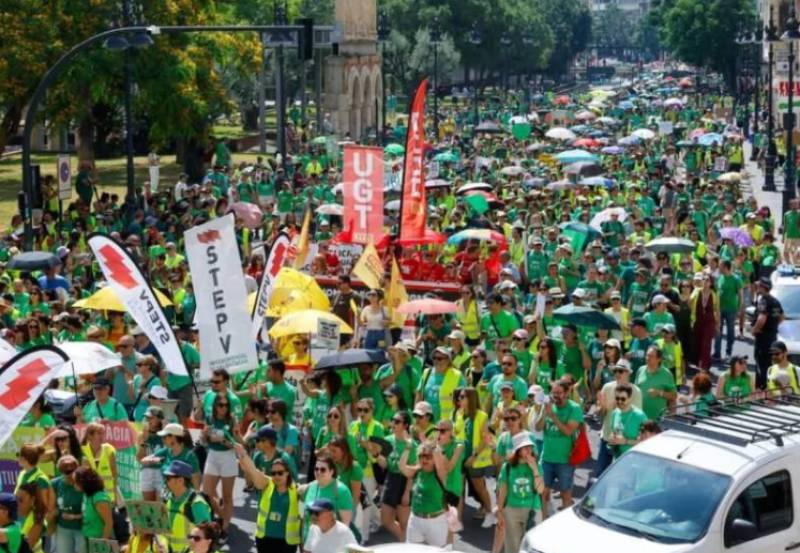 And just as parents are trying to get the kids back into school, some teachers are already preparing to take to the streets. There isn't one nationwide strike, but several regions have disputes brewing, meaning the potential disruption will depend on where you live.
Catalonia is due to see strike action on the first day of term, September 8, while teachers in the Valencian Community are planning demonstrations in Alicante, Valencia and Castellón on September 12. Madrid has an indefinite public education strike planned from October 14, with teachers demanding smaller classes, better pay and more resources. Other protests and possible strikes are also being lined up elsewhere.
The good news for parents is that schools are still expected to open on their scheduled dates. Whether everyone actually stays in the classroom once term gets going is another matter.
And finally, here's a much more important question for anyone who has become accustomed to doing the weekly shop whenever they fancy it: why has Mercadona taken away our Sundays?
More than 300 stores extended their opening hours during July and August, with many opening on Sundays and public holidays in busy tourist areas.
That summer arrangement has now ended, so most Mercadona supermarkets are back to opening from 9am to 9.30pm Monday to Saturday, with Sundays and public holidays generally off the menu.
I know some of you will be relieved to see shop workers getting their Sundays back, while others will be wondering what on earth they're supposed to do when they suddenly realise at 6pm on Sunday that they've forgotten the milk.
Either way, check your local store before making the journey because opening hours can vary, and there's always next summer.
Alicante
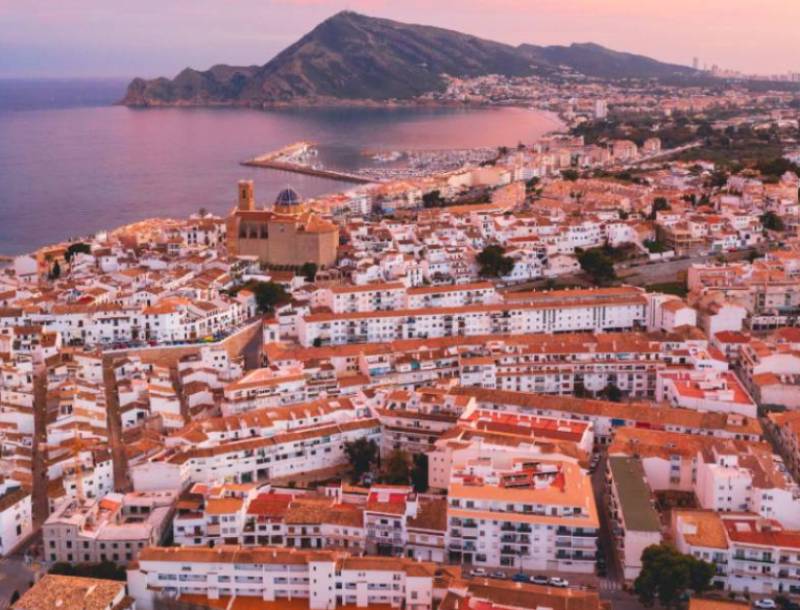
Now over to the Alicante Province, where Altea has been getting some attention in the British press as a quieter alternative to the likes of Mykonos, and it's not hard to see why.
Just 15 minutes from Benidorm, the town feels like a different world, with its whitewashed buildings, winding old-town streets and blue-and-white tiled church overlooking the Mediterranean. While Benidorm is known for its high-rise hotels, busy beaches and nightlife, Altea offers a much slower pace, with pretty streets, restaurants and spectacular sea views.
It may not actually be Mykonos, but for anyone looking for a little Greek-island atmosphere without leaving Spain, it's not a bad option.
Altea's growing international profile comes as foreign buyers continue to have a huge influence on Alicante's property market. New figures from Spain's General Council of Notaries show that foreigners accounted for more than 80% of home sales in eight municipalities across the province.
San Miguel de Salinas topped the list, with international buyers accounting for more than 90% of sales, while Rojales, Algorfa, Benijófar and San Fulgencio all recorded figures above 82%. Even in the larger coastal towns, international buyers are playing a major role, making up 79% of sales in Orihuela and 78.1% in Torrevieja.
Across the province, foreigners accounted for 51.3% of all property purchases, spending more than €6.5 billion in the process.
If all that talk of property has made you hungry, there's a much sweeter reason to head south this month.
 Pilar de la Horadada is celebrating September with its ‘Chocolatea por Pilar de la Horadada’ gastronomic route, giving chocolate lovers an entire month to indulge. Ten restaurants and food businesses are taking part across Pilar de la Horadada, Torre de la Horadada, Pueblo Latino and Pinar de Campoverde, with chocolate desserts priced between €4 and €7.
The route runs until September 30, so there's plenty of time to work your way through a few of them. International Chocolate Day falls on September 13, but personally, I see no reason to wait.
And from chocolate to rock, there's also a big night ahead in San Miguel de Salinas this Saturday. The free Bargustra Rock Festival will bring more than nine hours of live music to the town, starting at 8:00 pm and continuing until 5.30 am. Seven acts are on the line-up, including an Extremoduro tribute, Spanish rock and punk acts, a Ska-P tribute and DJs taking things through to sunrise.
With free entry and space for around 1,000 people inside the municipal marquee, organisers are hoping for a big turnout, although, as the event is free, they won’t know quite how many people to expect until the night gets underway.
Andalucía
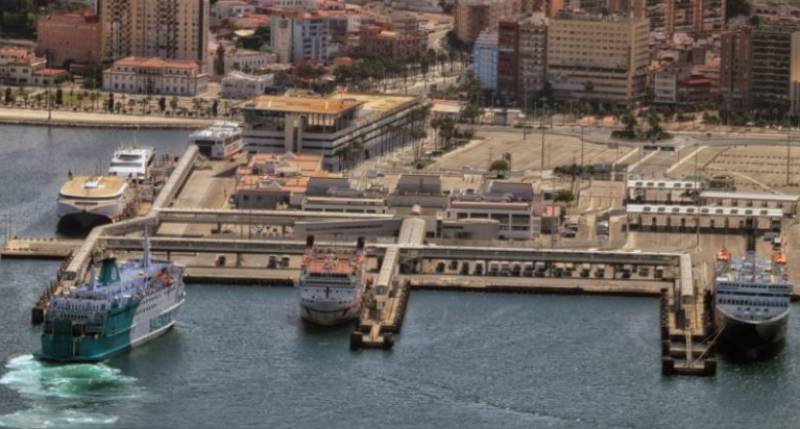
Now over to Andalucía, where a tragic story made the headlines this week after a mother and her daughter died when the car they were travelling in plunged into the sea at the port of Algeciras.
The four passengers, all Moroccan nationals living in the province of Segovia, had been waiting to board a ferry to Tangier when their Audi A4 continued moving forward and crossed the edge of the dock shortly after 12.30am on Wednesday.
The two men in the front of the car managed to escape and were taken to hospital, although one man in his seventies was seriously injured. The two women in the back were unable to get out and were later recovered from the submerged vehicle by Guardia Civil divers.
The exact cause of the accident is still unclear, although police are looking at whether poor visibility or driver error may have played a role.
The accident happened at one of Spain's busiest ferry ports for traffic to Morocco. During this year's outbound Operation Crossing the Strait, Algeciras handled more than 900,000 passengers and 251,000 vehicles.
Meanwhile, there has been plenty of activity of a very different kind in Granada, where earthquakes have continued to shake the area following the much stronger tremor that struck near Alhendín on August 15.
More than 1,300 earthquakes have now been recorded across Granada and its metropolitan area since the magnitude 5.0 earthquake, although most have been too small to be felt. More than 100 have been felt by residents, while the larger, shallow earthquakes have caused damage to homes and buildings in several areas.
The tremors haven't stopped with the arrival of September either. A 3.2-magnitude earthquake in the southern Alborán Sea on September 1 was felt in Granada, Armilla and Churriana de la Vega, as well as in Melilla, although there were no reports of damage. The following morning, five more earthquakes were recorded around Granada within just a few hours, with the strongest measuring 2.3 in La Zubia.
While most of the earthquakes have been small, the sheer number of them is understandably unsettling for people living in the affected areas. Some residents are still unable to return to their homes because of damage, with inspections continuing across the region.
By September 1, the Insurance Compensation Consortium had received 41,228 claims, with the estimated cost of the damage standing at around €105 million. The University of Granada has also estimated that earthquake-related damage to its buildings could cost around €3.5 million.
Thankfully, we can finish on something a little more upbeat, especially if you grew up in the 1990s. Take That have announced six concerts in Spain next July as part of their 2027 Dreamers Tour, including a confirmed date at Fuengirola's Marenostrum on July 11.
The band will also play in Cataluña, Valencia, Madrid and Galicia, although most of the Spanish venues have yet to be announced. The tour takes its name from their upcoming album, Dreamers, which is due out later this year, while a new single, Feel My Love, featuring Irish-American singer-songwriter Michael Patrick Kelly, is being released this Friday.
General ticket sales open on September 4, so if Take That are your thing, you might want to keep an eye on the website.

That’s all for this week. Thank you for reading and we’ll see you again for more next Friday.










Find more information by AREA, TOWN or URBANISATION .....
Cabo de Palos
Cartagena
El Carmoli
Islas Menores and Mar de Cristal
La Manga Club
La Manga del Mar Menor
La Puebla
La Torre Golf Resort
La Union
Los Alcazares
Los Belones
Los Nietos
Los Urrutias
Mar Menor Golf Resort
Pilar de la Horadada
Playa Honda / Playa Paraiso
Portman
Roldan and Lo Ferro
San Javier
San Pedro del Pinatar
Santa Rosalia Lake and Life resort
Terrazas de la Torre Golf Resort
Torre Pacheco
Cartagena
El Carmoli
Islas Menores and Mar de Cristal
La Manga Club
La Manga del Mar Menor
La Puebla
La Torre Golf Resort
La Union
Los Alcazares
Los Belones
Los Nietos
Los Urrutias
Mar Menor Golf Resort
Pilar de la Horadada
Playa Honda / Playa Paraiso
Portman
Roldan and Lo Ferro
San Javier
San Pedro del Pinatar
Santa Rosalia Lake and Life resort
Terrazas de la Torre Golf Resort
Torre Pacheco
Aguilas
Aledo
Alhama de Murcia
Bolnuevo
Camposol
Condado de Alhama
Fuente Alamo
Hacienda del Alamo Golf Resort
Lorca
Mazarron
Puerto de Mazarron
Puerto Lumbreras
Sierra Espuna
Totana
Aledo
Alhama de Murcia
Bolnuevo
Camposol
Condado de Alhama
Fuente Alamo
Hacienda del Alamo Golf Resort
Lorca
Mazarron
Puerto de Mazarron
Puerto Lumbreras
Sierra Espuna
Totana
Abanilla
Abaran
Alcantarilla
Archena
Blanca
Corvera
El Valle Golf Resort
Hacienda Riquelme Golf Resort
Lorqui
Molina de Segura
Mosa Trajectum
Murcia City
Peraleja Golf Resort
Ricote
Sucina
Abaran
Alcantarilla
Archena
Blanca
Corvera
El Valle Golf Resort
Hacienda Riquelme Golf Resort
Lorqui
Molina de Segura
Mosa Trajectum
Murcia City
Peraleja Golf Resort
Ricote
Sucina
Urbanisations
CamposolCondado de Alhama
El Valle Golf Resort
Hacienda del Alamo Golf Resort
Hacienda Riquelme Golf Resort
Islas Menores and Mar de Cristal
La Manga Club
La Torre Golf Resort
Mar Menor Golf Resort
Mazarron Country Club
Mosa Trajectum
Peraleja Golf Resort
Santa Rosalia Lake and Life resort
Terrazas de la Torre Golf Resort
La Zenia
Lomas de Cabo Roig
Important Topics:
CAMPOSOL TODAY Whats OnCartagena SpainCoronavirusCorvera Airport MurciaMurcia Gota Fria 2019Murcia property news generic threadWeekly Bulletin
CAMPOSOL TODAY Whats OnCartagena SpainCoronavirusCorvera Airport MurciaMurcia Gota Fria 2019Murcia property news generic threadWeekly Bulletin