








- EDITIONS:
 Spanish News Today
 Alicante Today
 Andalucia Today
Spanish News Today Editors Roundup Weekly Bulletin March 13

TOP STORIES: "After Spain's rail trouble, Renfe launches a new way to track trains in real time, on your mobile" & "San Javier's defunct airport finds yet another new purpose as a €12 million Mar Menor science centre"
Beware the ides of March… but actually it looks like this Sunday, March 15, will mark the turning point towards warmer, sunnier weather in Spain. Whether that will stay for good is another matter, of course.
This week, we’ve got an in-depth exploration into Saint Patrick’s Day and its surprising ties to Spain, plus news from train company Renfe and exciting developments at Murcia’s airports (plural). Read on to find out more…
Track Renfe trains live from your phone
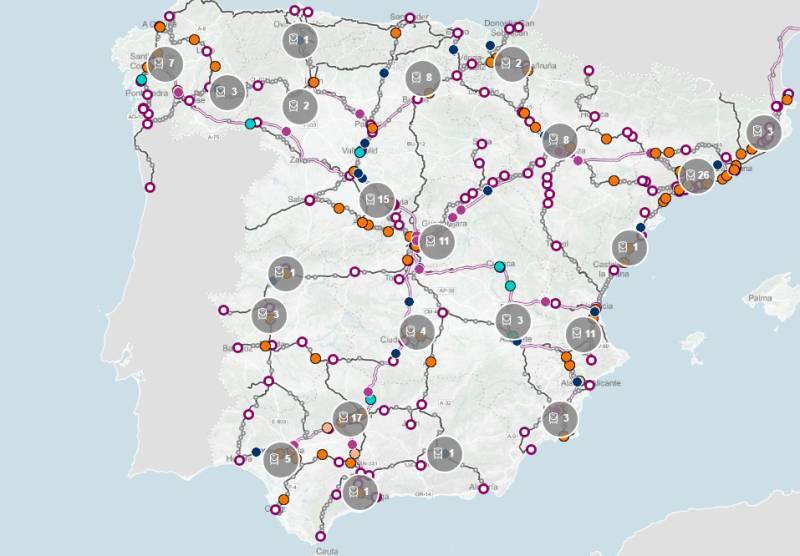
Renfe has launched a clever new website that lets passengers track high-speed and long-distance trains across Spain in real time – a small change that could make a big difference to anyone who travels regularly by rail.
The new site, which you can find at tiempo-real.largorecorrido.renfe.com, shows a live map dotted with moving train icons. Tap on any of them and you’ll see where it’s coming from, where it’s heading, and when it’s due to arrive at each station. Stops already passed are marked in one colour, upcoming ones in another, so you can easily see how your journey’s progressing.
It’s an easy, practical tool, especially useful after the recent talk about rail disruptions. From November, the system will also cover Cercanías and Rodalies commuter lines, making it even more handy for local journeys. Renfe plans to add QR codes inside some trains too, giving passengers quick access to the tracker with a simple scan.
This move forms part of Renfe’s broader effort to improve transparency and planning tools for travellers, and follows the company’s launch of a bus replacement service earlier this month and the publication of more punctuality data and incident updates.
According to Renfe, “With this initiative, Renfe is making real-time information about their train available to passengers.”
For anyone who’s ever waited on a windy, deserted platform wondering where their train’s gone, that’s welcome news indeed.
Runway success
Since they shut down the successful San Javier airport in Murcia in 2019 and replaced it with the Region of Murcia International Airport in Corvera, the San Javier building has stood empty through countless plans to reinvent it which never came to anything, while the Corvera site has failed to live up to its promise and continues to be an economic thorn in the regional government’s side.
However, it looks like that’s all about to change, with one airport reinventing itself in surprising ways while the other begins to show steady, measured growth.
The latest announcement for the old San Javier airport reveals plans to open a €12 million marine science centre dedicated to the study and recovery of the Mar Menorlagoon. The facility will be built on the former airfield and is expected to become one of the most important research hubs in the region for understanding and protecting the fragile lagoon ecosystem.

Of course, anyone who has followed the debacle will know that the Mar Menor has endured a series of environmental crises over the past decade. The lagoon made international headlines during the infamous “green soup” algae bloom in 2016, when excessive nutrients caused an explosion of phytoplankton that turned the water murky green. Then in 2019, oxygen levels in the lagoon collapsed in places, triggering a dramatic fish die-off that shocked residents and environmentalists alike.
In response, the regional government has introduced a number of measures aimed at stabilising the lagoon, including stricter agricultural rules, improvements to wastewater infrastructure and environmental restoration work around the shoreline. The San Javier Mar Menor centre, to be named OM2, is designed to strengthen those efforts with a heavy focus on science and data.
The complex will cover around 15,000 square metres and will house 21 marine tanks along with seven specialised laboratories. Four of those labs will be open to the public, allowing visitors to see some of the work being done. Among the species receiving particular attention will be the seahorse, the fan mussel and the Spanish toothcarp, all of which have been affected by changes in the lagoon’s delicate balance.
The project also follows another recent announcement that the European Space Agency plans to establish a hub at the same site, turning the once-retired airport into an unexpectedly dynamic science and technology location.
And while that’s all going on at San Javier, Corvera airport has just announced there will be two new direct international routes starting this summer season, both operated by the Spanish airline Volotea.
Starting June 28, passengers will be able to fly directly from Murcia to Lille in northern France and Venice in Italy. Both routes will operate twice a week throughout the summer, with more than 7,500 seats available on each connection across a total of 42 flights.
The Lille service will run on Thursdays and Sundays and adds to the existing Murcia-Marseille route, giving the airport direct links to both the north and south of France. The Venice flights, meanwhile, will operate on Wednesdays and Sundays and mark the first time Murcia has ever had a direct connection to Italy.
Tourism officials believe the new routes will further strengthen the region’s accessibility for international visitors. According to Spain’s National Institute of Statistics, the Region of Murcia welcomed a record 1.2 million foreign tourists in 2025, an increase of 6.5% compared to the previous year and double the national growth rate.
And Corvera’s passenger numbers suggest that momentum is continuing into 2026. In February alone, the airport handled 38,224 passengers, representing a year-on-year increase of 24.6%. To put that in perspective, the average growth across Spain’s wider airport network managed by Aena was just 2.8% during the same month.
Flight movements in February reached 408 operations, more than 21% higher than the same month last year. Looking at the first two months of the year combined, Corvera processed over 76,000 passengers, roughly 26% more than during the same period in 2025. Those figures build on a solid performance last year, when the airport recorded just under 950,000 passengers and saw flight operations increase by 7%.
Not only that, but Corvera was also the site of what at first looked like a dramatic serious aircraft accident this Thursday, but which turned out to be a large-scale emergency simulation designed to test the airport’s response procedures.
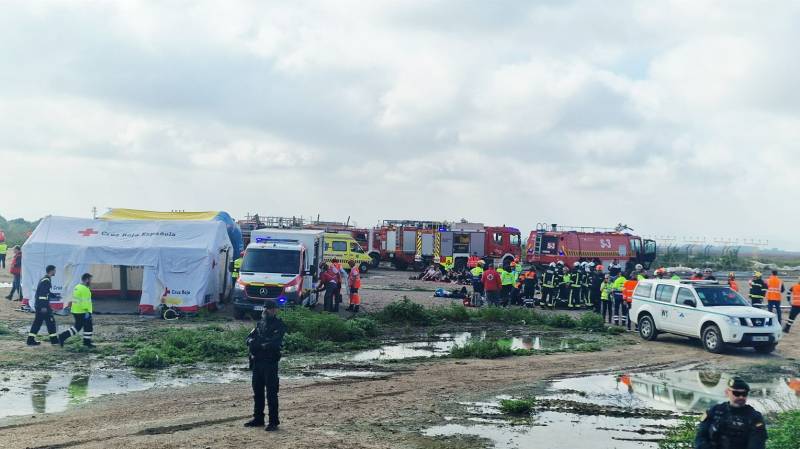
The drill imagined a Boeing 737-800 carrying 125 people losing altitude during its approach and being forced to make an emergency landing outside the airport perimeter near runway 23. In the simulated scenario, the crash caused multiple injuries and several fatalities.
Around 400 people took part in the exercise, including dozens of volunteers who acted as injured passengers. Students and trainees from various regional training centres played victims with different types of injuries requiring medical treatment and evacuation.
For instance, the exercise tested the airport’s procedures for supporting relatives. Inside the terminal, the Family Room was activated, a dedicated space where information and psychological support would be provided to passengers’ families during a real crisis. Actors from the psychology and nursing faculties at UCAM Universidad Católica de Murcia and the XTART training centre portrayed distressed relatives to make the scenario as realistic as possible.
Who knew a random week in March could prove to be such a busy and exciting time for Murcia’s airports?!
Where in Spain has the best St Patrick’s Day celebrations?
Once a year, something slightly ridiculous and very wonderful happens. The world wakes up, looks in the mirror and decides it’s Irish for the day. Everything turns green. Landmarks glow emerald, tinwhistles appear from nowhere and suddenly people who have never set foot in Ireland are confidently shouting “Sláinte!” while downing a pint of Guinness.
Yes, it’s St Patrick’s Day coming up next Tuesday, and Spain, as it turns out, absolutely loves the craic.
March 17 started out as a religious feast day in Ireland, honouring the country’s patron saint, but over the years it’s evolved into a global celebration of all things Irish. According to legend, Saint Patrick banished all the snakes from Ireland, which would be impressive if there had ever been any snakes there in the first place.
He’s also credited with using the humble shamrock to explain the concept of the Holy Trinity, which is why the little three leaf clover has become such a big icon. Add in the colour green, a few fiddles, some traditional dancing and a mountain of stout and you have the makings of a worldwide party.
Chicago famously dyes its river bright green every year, New York has been hosting a massive parade since the 18th century and even Tokyo now throws a surprisingly huge St Patrick’s celebration. The Irish diaspora has taken the festival everywhere and the rest of the planet has happily joined in.
But the best bit is that you don’t have to hop on a plane, because Spain has firmly embraced all things Irish. Across the country the pubs start stocking extra Guinness and shop windows suddenly fill with shamrocks.

Madrid has become one of the biggest St Patrick’s Day hotspots in the country thanks to Ireland Week, a festival that celebrates Irish culture with music, dance and plenty of good old fashioned pub atmosphere. For a few days the Spanish capital turns into something resembling a slightly sunnier version of Dublin.
One of the cheekiest touches happens underground, where the Metro station at Gran Vía temporarily rebrands itself as the Green Vía. Witty. Celtic music fills the corridors, Irish dancers perform for commuters and bewildered tourists suddenly find themselves in the middle of an impromptu jig while trying to catch a train.
Music is a huge part of the celebrations and this year there’s even a tribute concert marking the 50th anniversary of the legendary band U2. A group called Arcana U2 Massive Heads will be belting out the classics, which means there’s a very good chance that someone in the crowd will be dramatically singing along to With or Without You after one too many pints.
But while Madrid might host the biggest city celebration, the Costa Blanca has quietly built one of the most gloriously over the top St Patrick’s Day parties you will find anywhere in Europe (barring Ireland).
If you happen to wander down to Alicante’s Cabo Roig around these dates you’ll quickly realise this is not just a parade. It’s an absolute spectacle. The Cabo Roig St Patrick’s Day Parade has become legendary along the coast and this year, taking place on Sunday March 15, it is expected to attract around 25,000 people.
Basically, the entire strip transforms into a giant rolling festival. Floats rumble along the road, pipe bands blast out traditional tunes, dancers spin through the crowds and stilt walkers tower over everyone like festive green giraffes. Classic cars glide past, motorbikes roar through the route and local businesses compete to create the most outrageous floats they can think of.
Meanwhile the crowds line the streets waving flags, cheering and occasionally attempting Irish dancing after a pint or two. Bars spill out onto the footpaths, music pours out of every doorway and the whole place turns into a cheerful, slightly chaotic street party that keeps going long after the parade itself has finished.
For the huge expat community along the Costa Blanca, it’s the closest thing you will find to a proper Irish style St Patrick’s Day without actually booking a flight to Dublin.
Not all of Spain’s links to Saint Patrick involve parades and partying, though. In the historic city of Lorca (Murcia) there is actually a much deeper connection to Ireland’s patron saint.
The imposing Collegiate Church of San Patricio is believed to be the only church in Spain dedicated to Saint Patrick, and the reason goes all the way back to the 15th century. On March 17, 1452, the Battle of Los Alporchones took place nearby, when Castilian forces defeated troops from the Moorish kingdom of Al Andalus.
The victory stopped a major raid on the surrounding area and because the battle happened on St Patrick’s Day, locals believed the saint had helped protect them. In gratitude they dedicated the church to him, creating one of the most unusual Irish connections you will find anywhere in Spain.
These days visitors can celebrate St Patrick’s Day at Lorca Castle with a special experience that includes exploring the medieval towers, visiting the remains of a synagogue and finishing the day with a locally sourced meal and a well-deserved beer.
Spain might not have invented St Patrick’s Day, but it has certainly embraced it with open arms and a raised glass.
So if you find yourself wondering where the best St Patrick’s Day celebration in Spain actually is, the honest answer is that it depends on what kind of party you’re after. Madrid delivers the big city spectacle, Cabo Roig throws a wonderfully wild coastal bash and Lorca quietly holds on to a fascinating slice of history.
Just remember the golden rule. Wear something green, order a pint, attempt a bit of Irish dancing and don’t worry too much if you get the steps wrong. By the end of the night, everyone else will be doing exactly the same thing. Sláinte!
Murcia
And now let's take a look at what's been happening around the Region of Murcia this week. First up, a slightly unusual story from Mazarrón, where a little island just off the coast will remain in private hands after a proposal to transfer it to the local council hit a dead end.
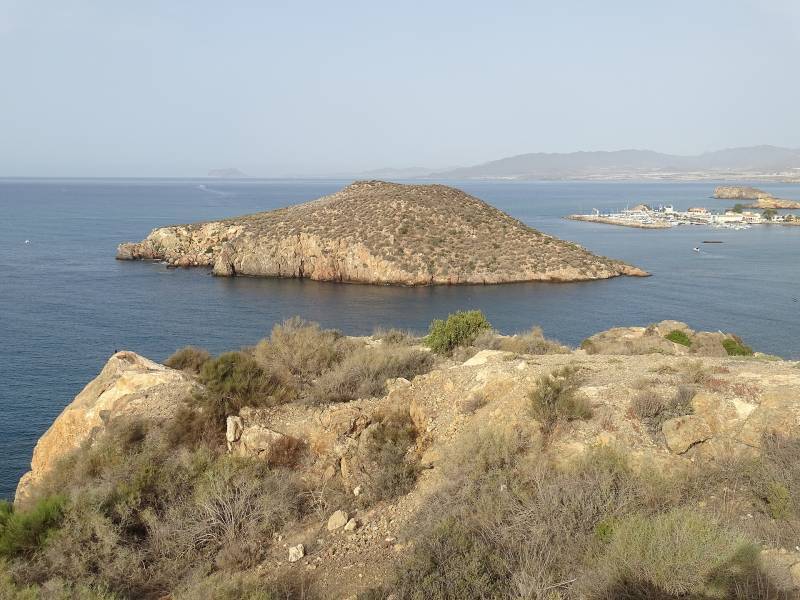 The island, officially called Isla de Mazarrón but also known locally as Isla de Adentro, Isla de Paco or simply La Islica, covers around eight hectares and sits just offshore from one of the municipality’s best-known beaches. Its current owners, Felipe Fuster and Juan Antonio Tolón (neither of whom is Paco) from Alicante, had suggested swapping the island for other land owned by the town hall.
However, the idea quickly ran into difficulties. Because the island is environmentally protected, no building or development is allowed there, which means it has very little commercial value. Some council officials also questioned what the municipality would actually gain from owning it, and the proposal eventually went nowhere.
Despite its quiet appearance today, the island has a surprisingly long history. Mazarrón’s two famous Phoenician shipwrecks, dating back around 2,700 years, were discovered nearby and are now preserved in Cartagena’s ARQUA museum. Archaeologists believe the island may once have played a supporting role in a Phoenician port network.
In the late 1970s, developers even proposed building a hotel complex with homes, a restaurant and an open-air auditorium, but environmental opposition quickly stopped those plans. Today, the island remains largely untouched. A 19th-century house, an old water tank and traces of garden terraces can still be seen, and for now, the only real plan is for the owners to eventually restore the old house and use it as a family holiday home.
In Murcia’s schools, teachers are preparing for a change that will affect many as, starting with the 2026-2027 school year, secondary school teachers who want to teach in bilingual classes will need to hold a C1-level English certificate.
This is all part of a plan introduced three years ago to strengthen what the regional government calls foreign language enhancement and immersion programmes in schools. Teachers were given a three-year transition period to reach the higher level, and many have been studying hard to meet the requirement, and now the deadline is rushing up.
So far, 874 secondary school teachers have already obtained the C1 certificate, while another 170 qualified this year through training centres. Many others have enrolled in advanced courses at the Official School of Languages. Language experts have also weighed in, saying that while a B2 level shows a good command of English, it can still be difficult to teach full subjects and manage classroom discussions without a higher level. So expect to see plenty of teachers cramming before their exams this summer!
Meanwhile, Murcia’s towns and cities are preparing to spend lots of money on new exciting ventures. In San Javier, for example, the town hall has announced plans to install around 72 solar-powered street lights along the RM-F34 cycle lane linking Santiago de la Ribera with the area around San Javier Airport. This route runs alongside the fence of the Air Force Academy and remains one of the few sections without lighting, which makes it difficult to use after dark. The new lights should make this popular route safer for everyone.
The route is part of an important connection between Santiago de la Ribera and Los Alcázares and is also part of the cycling route around the Mar Menor, where it tends to get really busy during the summer months.
In Caravaca de la Cruz, where there are less than two months to go until the famous Running of the Wine Horses during the Fiestas de la Cruz, the town hall has announced a €217,000 programme to support the embroidery tradition behind the event.
While the dramatic race up the castle hill is the main event, the beautifully embroidered shawls that decorate the horses are just as important to the celebration. These intricate pieces are created by members of the fiesta groups, often women who spend hundreds or even thousands of hours working on the designs.
The new funding package will allow 10 trainees to receive nine months of paid training in silk and gold thread embroidery, helping ensure the craft continues to be passed on to future generations.
 And finally, looking a little further ahead, a major new €7 million sports project has been announced in Lorca. Plans have been unveiled for an international kart racing circuit designed to attract competitions, tourism and large events. The 32-hectare complex will include a 1,630-metre karting track built to international standards, along with training circuits, spectator stands and leisure areas.
Promoters also say the venue could host concerts, exhibitions and other large gatherings, with parking, green areas and facilities including a café and events space. If everything moves forward as planned, the first phase of the project could be completed by 2027, with the rest of the complex following the year after.
All in all, it's been another positive week in Murcia with plenty of plans taking shape and goof times to look forward to in the coming weeks and months!
In the more immediate future, if you want to find something do this weekend or next week, check out our EVENTS DIARY for more events and activities coming up soon around the Region of Murcia:
Spain
After months of relatively good news on the electricity front, wholesale prices have shot up dramatically. In just seven days, the cost of electricity on the wholesale market jumped from an average of €15 per megawatt hour on March 1 to €119.42 the following Monday, an increase of roughly 700%.
That means that around eight million Spanish households on regulated tariffs are likely to notice the difference when the next bills arrive, and you won’t be surprised to hear that the main culprit for this rise is the war in Iran.
The sharp rise in electricity costs is largely being driven by gas prices, which have climbed nearly 70% since the conflict in the Middle East began. The timing is frustrating because Spain had actually been enjoying a strong period for energy costs. A particularly wet winter meant hydroelectric reservoirs were well supplied, while wind power was also producing solid output. By February, wholesale electricity prices had fallen almost 80% compared with January and were 85% lower than at the same point in 2025.
Now that positive trend appears to be reversing. Consumer platform Roams estimates that gas bills could increase by as much as 18% in the coming weeks, while electricity could rise by up to 24%.
There are also changes to the fixed portion of electricity bills, which consumers pay regardless of how much energy they actually use. That component has increased since January 1, partly due to additional grid stability measures introduced by Red Eléctrica following concerns about potential blackout risks following last April’s apagón.
In a Mallorca court this week, eight men accused of gang raping a British teenager in Magaluf back in 2023 have pleaded guilty at the start of their trial, bringing a sudden end to proceedings that had been expected to last for days.
The attack took place in August 2023 at the BH Mallorca Resort and involved seven French nationals and one Swiss man. The British victim, who was 18 at the time, was assaulted for around half an hour in a hotel room while semi-conscious or unconscious. Prosecutors described how the group stripped and assaulted her repeatedly, with several forms of rape carried out during the attack.
Five of the men who raped the teenager received prison sentences of nine or 11 years for sexual assault. Some were given longer terms because they reoffended during the attack or filmed what happened. Three other men who did not rape the victim but filmed the assault were sentenced to two years and three months each.
The assault was extensively filmed and shared on Snapchat, and investigators say the footage ultimately played a crucial role in the case. One suspect alone recorded 14 videos lasting a total of 170 seconds. According to a source close to the investigation, "If the men hadn't filmed what they'd done, they could have got off scot-free."
In Madrid, Spain’s government is turning its attention to another issue that has increasingly spilled from the online world into everyday life: hate speech on social media. President Pedro Sánchez recently unveiled a new monitoring system called HODIO that will analyse social media content using both data tools and expert review, publishing reports every six months that show which platforms host the most hateful content and which are taking action to reduce it.

The initiative forms part of a broader package of measures that includes a proposed ban on social media use for under-16s and a new legal offence targeting the “algorithmic amplification” of hateful messages.
“Hate doesn’t appear out of nowhere. It is cultivated and promoted,” Sánchez said. “If hate is dangerous, social media has turned it into a weapon of mass polarisation, easy to find, easy to use, and extremely profitable for some.”
The scale of the problem is significant. According to the Spanish Observatory on Racism and Xenophobia, more than 845,000 pieces of hateful content were detected across major social networks in 2025 alone. Government data also suggests that three out of four young people in Spain encounter hate speech online, while hate crimes in the country have risen by 41% over the past decade.
Critics, however, have raised concerns about potential censorship, privacy issues and who ultimately decides what qualifies as hate speech. Even so, Sánchez insists the initiative is necessary and believes stronger oversight will help curb the spread of online abuse.
“We are going to stop hate on our social networks, in our streets, and even in our school playgrounds. We have the tools to do it.”
Alicante
A routine police checkpoint in Benidorm led to a significant drug seizure this week after officers from the Nacional Police discovered 119 grams of cocaine concealed in a passenger’s clothing.
The arrest took place during a standard roadside control near the city’s well known English zone. Officers stopped a vehicle to carry out routine checks on both the car and its occupants when suspicions were raised about one of the passengers.
 A search revealed two packets containing a white powder hidden inside the man’s clothing. Subsequent tests confirmed the substance was cocaine and the 26-year-old was arrested on suspicion of drug trafficking.
The discovery quickly expanded into a wider investigation, with police examining a possible network supplying drugs to nightlife venues in the English-speaking entertainment district. Two additional suspects were later detained and officers carried out two house searches which resulted in further narcotics and cash being seized.
Further south along the coast, infrastructure improvements are finally moving forward in Orihuela Costa after the city council published a tender for a new €2.3 million drinking water reservoir designed to strengthen the area’s supply capacity.
For years the coastal district has faced concerns about limited water reserves, an issue that Infrastructure Councillor Víctor Valverde acknowledged dates back more than a decade.
The new reservoir will be built next to the existing facility in the El Canal area and will have the same capacity of 6,000 cubic metres. Once completed, it will effectively double the current reserve, increasing backup supply from roughly five hours to ten in the event of breakdowns or disruptions within the network.
The project carries a budget of just under €2.35 million including VAT and is expected to take approximately eight months to complete once construction begins. Plans also include updated remote control systems, chlorination facilities and improved security measures at the site.
And in nearby Guardamar del Segura, the town council has opened a public tender for a new beach safety contract covering lifeguard, rescue, surveillance and first aid services along its coastline.
The contract, valued at more than €1.3 million, will cover the municipality’s 11 kilometres of beaches and includes accessible bathing assistance for people with reduced mobility. The initial agreement will run for two years, although it may be extended for up to four years in total.
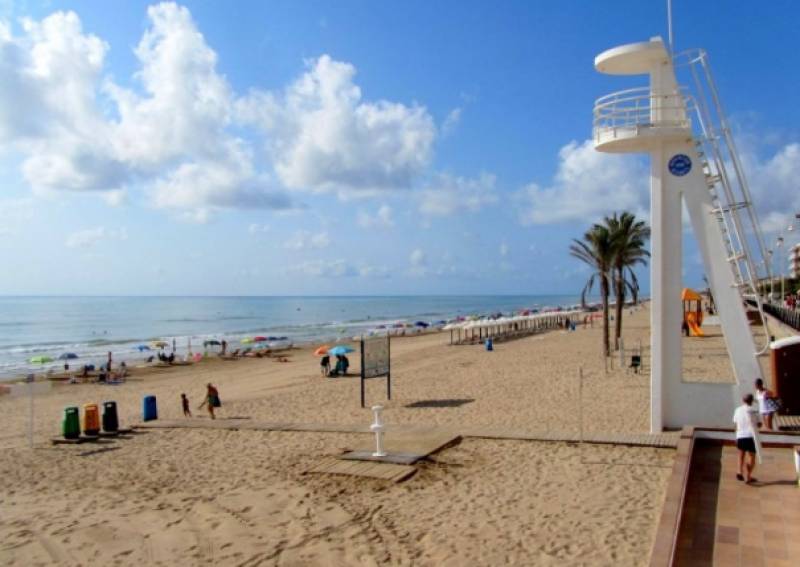
Services will operate according to seasonal demand, with different coverage levels during off season, low, medium and high visitor periods. The council confirmed that maritime safety services during Holy Week will be handled through a separate tender process currently underway.
Companies bidding for the new contract will be required to demonstrate that they have sufficient personnel, equipment and operational capacity to guarantee safety across Guardamar’s entire coastline.
Andalucía
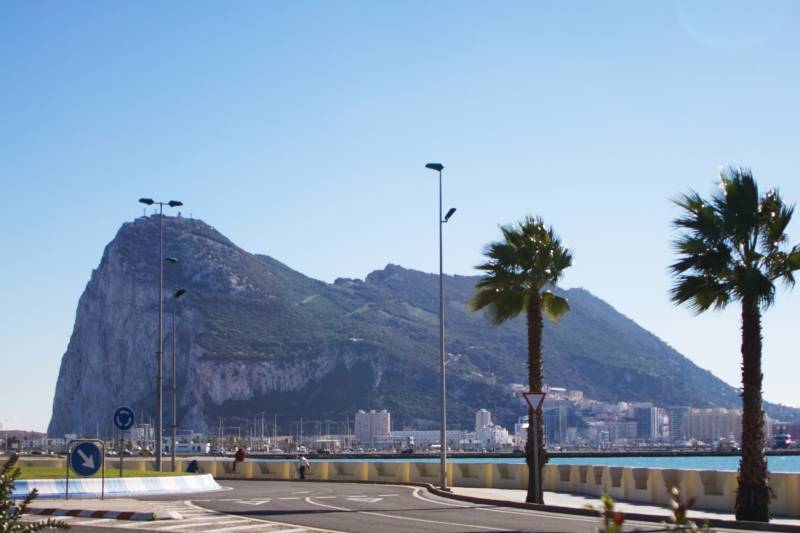 The proposed Gibraltar border deal continues to make headlines in Andalucía, and this week the focus shifted to the people living right next to it in La Línea de la Concepción.
Local leaders say they broadly welcome the historic agreement between the UK and EU, which would see passport controls disappear and Schengen checks moved to Gibraltar’s port and airport. But La Línea’s mayor, Juan Franco, has made it clear that while the changes could bring opportunity, they also bring risk.
Franco warned that “shared prosperity cannot remain a mere declaration”, calling for a concrete plan to ensure his town isn’t left to shoulder the economic impact alone. Rising housing costs, heavier traffic and pressure on infrastructure are already biting, and the council’s limited budget means help from higher levels of government will be essential. The Ayuntamiento is updating a memorandum first drafted last September to highlight specific local concerns, from cross-border pensions to environmental impact.
Meanwhile, the mayor insists some ideas, such as allowing Gibraltar taxis to operate in La Línea, simply won’t fly. Across the border, the deal has stirred debate too, with a small demonstration in Gibraltar calling for a referendum before anything is signed. The removal of the infamous fence may be symbolically uplifting, but as Franco reminds everyone, the real challenge is making sure this “new chapter” benefits both sides in practice, not just on paper.
Just up the coast in Málaga, more than a month after the high-speed AVE connection to Madrid was first interrupted, frustration is mounting at the slow progress in restoring service.
The closure stems from January’s Adamuz accident and the subsequent collapse of a retaining wall near Álora in early February. Since then, direct services have been cut, leaving passengers to detour by bus or via longer routes.
The upshot has been that the Costa del Sol is facing losses of more than €200 million, hitting tourism especially hard just weeks before Easter. There are calls for the government to move faster to try to reopen the AVE line and, while they’re at it, to modernise the entire network, although those two desires are somewhat contradictory.
True, since the Adamuz tragedy it has generally been agreed that Spain’s rail network needs more upkeep and modernisation, and the investment has been promised by the government to do that, but it will take time and in the meantime the existing sections of train track will need to be reopened, even if they’re not brand-spanking shiny and new.
And finally, the diplomatic storm between Madrid and Washington that we talked so much about lats week has reignited talk about the future of two of the most strategically significant US military sites on Spanish soil: the US naval base at Rota in Cádiz and the Americans’ air base at Morón de la Frontera in Sevilla.
To recap, this crisis began to unfold after Spain refused to take part in a US-led military offensive against Iran, declining permission for the Americans to use Rota and Morón for operations. Reactive as ever, Donald Trump threatened to cut trade ties and Republican senator Lindsey Graham even called for the full withdrawal of American forces from Spain.
Spanish Foreign Minister José Manuel Albares chose not to be drawn into the war of words, saying only, “I do not comment on comments.” Analysts quickly noted that any complete pullout would be highly unlikely given the bases’ strategic importance for NATO and Europe’s missile defence operations.
Still, the row has forced a serious rethink of the long-term defence relationship that’s been in place since the 1980s. If the US were ever to go, Spain might either take over full control or shift the facilities’ operation to NATO, options that would significantly change how the bases function. For now, both nations are standing firm, publicly at least, while discussions behind closed doors try to calm the waters. Never a bad option, and may more mature, cooler heads prevail.

You may have missed…
- Murcia photo of the month March 2026.
Here’s the March image of the month taken by the Los Alcázares Digital Camera Club (LADCC), with the theme ‘At Home’. - SOS Mar Menor burger wins ‘Audacious’ award at National Burger Championship.
A burger inspired by the Mar Menor has picked up a national award for creativity at the Spanish National Burger Championship. The burger was created as a tribute to the Mar Menor and combines flavours linked to the local area. It includes a prawn and shrimp fillet, served with parsley ali-oli and lemon zest, topped with an American-style sauce and creamy rice, inspired by the lagoon's traditional caldero dish. - 3 essential things your insurance must cover if you are travelling to Spain or another country.
Whether you are heading to Spain for a short break or travelling further afield, choosing the right travel insurance is not just a formality; it is a safeguard against bills that could otherwise run into tens of thousands of pounds. Here is what good travel insurance should include to avoid some seriously nasty surprises... - Hundreds of families at Villas Caravaning left in limbo as legal battle looms.
The long-running problems at Villas Caravaning in La Manga del Mar Menor have now reached the courts, with the Residents’ Association requesting a court-appointed administrator for the campsite during a hearing at Cartagena’s Palacio de Justicia this Thursday. - Mercadona stores in Spain are about to get a brand-new look!
Are you ready? Spain’s favourite supermarket chain is preparing to welcome an all-new store layout this year, mysteriously titled ‘Store 9’, debuting in 59 outlets across the country in 2026.
That’s all for this week. Thanks for reading and we’ll be back next week 
Happy weekend!










Find more information by AREA, TOWN or URBANISATION .....
Cabo de Palos
Cartagena
El Carmoli
Islas Menores and Mar de Cristal
La Manga Club
La Manga del Mar Menor
La Puebla
La Torre Golf Resort
La Union
Los Alcazares
Los Belones
Los Nietos
Los Urrutias
Mar Menor Golf Resort
Pilar de la Horadada
Playa Honda / Playa Paraiso
Portman
Roldan and Lo Ferro
San Javier
San Pedro del Pinatar
Santa Rosalia Lake and Life resort
Terrazas de la Torre Golf Resort
Torre Pacheco
Cartagena
El Carmoli
Islas Menores and Mar de Cristal
La Manga Club
La Manga del Mar Menor
La Puebla
La Torre Golf Resort
La Union
Los Alcazares
Los Belones
Los Nietos
Los Urrutias
Mar Menor Golf Resort
Pilar de la Horadada
Playa Honda / Playa Paraiso
Portman
Roldan and Lo Ferro
San Javier
San Pedro del Pinatar
Santa Rosalia Lake and Life resort
Terrazas de la Torre Golf Resort
Torre Pacheco
Aguilas
Aledo
Alhama de Murcia
Bolnuevo
Camposol
Condado de Alhama
Fuente Alamo
Hacienda del Alamo Golf Resort
Lorca
Mazarron
Puerto de Mazarron
Puerto Lumbreras
Sierra Espuna
Totana
Aledo
Alhama de Murcia
Bolnuevo
Camposol
Condado de Alhama
Fuente Alamo
Hacienda del Alamo Golf Resort
Lorca
Mazarron
Puerto de Mazarron
Puerto Lumbreras
Sierra Espuna
Totana
Abanilla
Abaran
Alcantarilla
Archena
Blanca
Corvera
El Valle Golf Resort
Hacienda Riquelme Golf Resort
Lorqui
Molina de Segura
Mosa Trajectum
Murcia City
Peraleja Golf Resort
Ricote
Sucina
Abaran
Alcantarilla
Archena
Blanca
Corvera
El Valle Golf Resort
Hacienda Riquelme Golf Resort
Lorqui
Molina de Segura
Mosa Trajectum
Murcia City
Peraleja Golf Resort
Ricote
Sucina
Urbanisations
CamposolCondado de Alhama
El Valle Golf Resort
Hacienda del Alamo Golf Resort
Hacienda Riquelme Golf Resort
Islas Menores and Mar de Cristal
La Manga Club
La Torre Golf Resort
Mar Menor Golf Resort
Mazarron Country Club
Mosa Trajectum
Peraleja Golf Resort
Santa Rosalia Lake and Life resort
Terrazas de la Torre Golf Resort
La Zenia
Lomas de Cabo Roig
Important Topics:
CAMPOSOL TODAY Whats OnCartagena SpainCoronavirusCorvera Airport MurciaMurcia Gota Fria 2019Murcia property news generic threadWeekly Bulletin
CAMPOSOL TODAY Whats OnCartagena SpainCoronavirusCorvera Airport MurciaMurcia Gota Fria 2019Murcia property news generic threadWeekly Bulletin